
Heavy rain on the Central Coast doesn’t mess around. One minute you’re enjoying a peaceful Saturday morning, next thing you know there’s water pooling around your foundation, your driveway’s turning into a river, and you’re standing there with a shovel wondering how much damage this is gonna cost you.
We’ve been handling stormwater management for Central Coast properties since way before everyone started panicking about climate change and bigger storm events. Terrigal to Erina, Wamberal to Copacabra – we know how water moves across these blocks, where it pools, and more importantly, how to get it away from your house before it causes real problems.
See, Central Coast stormwater isn’t like managing water in the suburbs out west. You’ve got sandy soil that doesn’t absorb properly, you’ve got slopes that send everything racing downhill, you’ve got council regulations that change depending on which street you’re on. And when those summer storms hit? If your stormwater system isn’t set up right, you’re not just dealing with a wet lawn – you’re looking at foundation damage, erosion tearing through your garden beds, and water finding its way into places it’s got no business being.
We design and install proper stormwater systems that actually handle what the Central Coast throws at them. Not the basic builder-grade setup that works until it doesn’t. The kind of system that keeps working through those three-day rain events when everyone else’s yards are underwater.
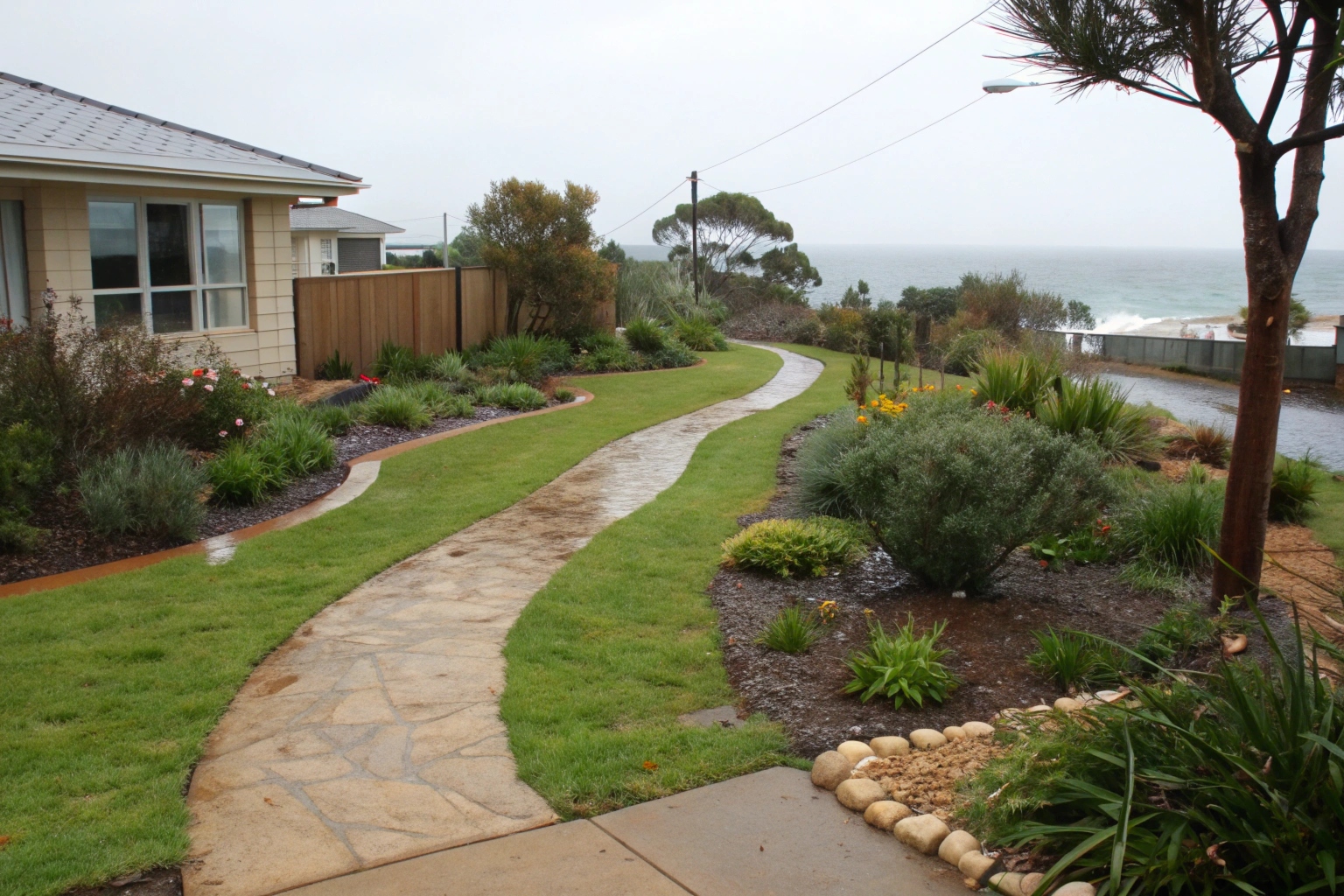
How Stormwater Systems Actually Work
Most people don’t think about stormwater until there’s a problem. Then suddenly you’re googling “why is water pooling in my yard” at 11pm during a storm.
Here’s what a proper Central Coast stormwater system actually involves – and no, it’s not just a couple of pipes shoved in the ground.
Your roof’s the starting point. Every drop of rain that hits it needs somewhere to go that’s not “straight down next to your foundation.” That’s where downpipe diversion comes in – redirecting that water into your collection system instead of creating trenches along your house.
From there, it’s about moving water efficiently. Catch basins grab surface water before it pools. Pit and pipe networks move everything underground where it’s supposed to be. Grated drains intercept water from driveways and paved areas. The whole setup works together – when one part fails, the whole system starts backing up.
Then you’ve got your discharge options. Some properties connect straight to council stormwater systems. Others use absorption trenches to let water soak into the ground slowly. Detention tanks hold water temporarily during heavy rain, releasing it gradually so you’re not overwhelming the street drainage. Rainwater tanks serve double duty – stormwater management plus free water for the garden.
The tricky bit? Making it all work for your specific block. Sloped properties need different setups than flat ones. Sandy Central Coast soil changes how absorption works. Your neighbour’s system might be completely wrong for your place, even if you’re on identical blocks.
Controlling Runoff Before It Controls You
Here’s what happens when you don’t manage runoff properly – and trust me, we’ve seen this play out on plenty of Central Coast properties.
Heavy rainfall overwhelms basic systems fast. That 80mm overnight storm? Your standard residential drainage setup was designed for maybe half that. When water’s got nowhere to go, it finds the path of least resistance – usually straight toward your house, your garage, or that low spot in your yard that turns into a swimming pool.
Your foundation’s the first casualty. Water pooling against your house doesn’t just sit there looking ugly. It’s working its way into cracks, undermining footings, creating moisture problems that turn into structural nightmares down the track. We’ve pulled up pavers around homes where the water damage underneath cost ten times what proper drainage would’ve run.
Then there’s your actual property flooding. Low-lying areas that collect water, driveways that become rivers, garden beds washing away. Once the soil starts moving, you’re not just dealing with mess – you’re dealing with erosion that changes your whole landscape.
Proper runoff control means planning for the worst storms – not the average ones. Overflow capacity for when the main system’s maxed out. Emergency flow paths that direct water away from structures even when everything else is full. Detention that slows everything down instead of sending a wall of water straight to the street.
The Central Coast doesn’t do gentle rain. Your stormwater system shouldn’t pretend otherwise.
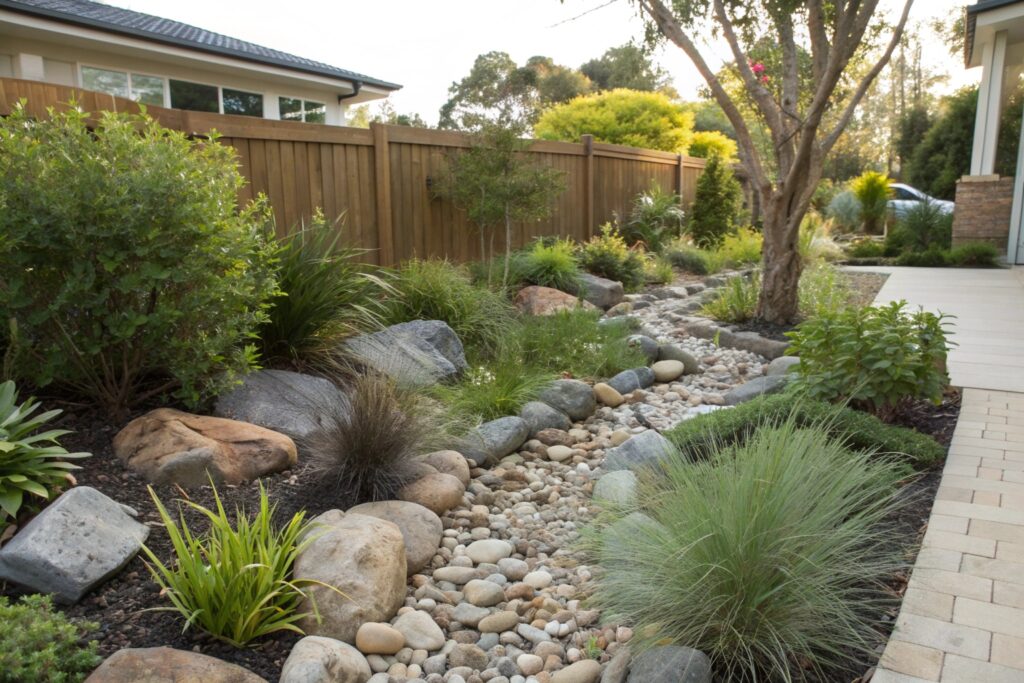
Permeable Solutions That Actually Help
Concrete and paving everywhere sounds great until you realise you’ve created one massive sheet that sends every drop of rain straight into your drainage system all at once.
There’s smarter ways to handle it. Permeable solutions let water soak in where it falls instead of racing across your property looking for trouble.
Porous paving works for driveways and paths – looks like regular paving but lets water filter through instead of running off. Gravel areas around garden beds and along fence lines give water somewhere to go that’s not your lawn or foundation. Rain gardens are basically designed low spots that collect and absorb runoff naturally, plus they look good which your neighbours will appreciate.
The goal is to reduce impervious surfaces – all that concrete and solid paving that doesn’t absorb anything. Every square meter you can make permeable is less water your drainage system has to handle during storms.
Here’s the thing though – permeable doesn’t mean uncontrolled. You still need proper base preparation, you still need to think about where that soaked-in water’s going long-term, and you can’t just throw permeable solutions at a slope and hope for the best.
On Central Coast’s sandy soil, permeable options work better than on clay-heavy ground out west. Water actually has somewhere to go instead of just sitting there. But you’ve gotta balance it with your overall system – some areas need hard drainage, some can handle permeable, some need both working together.
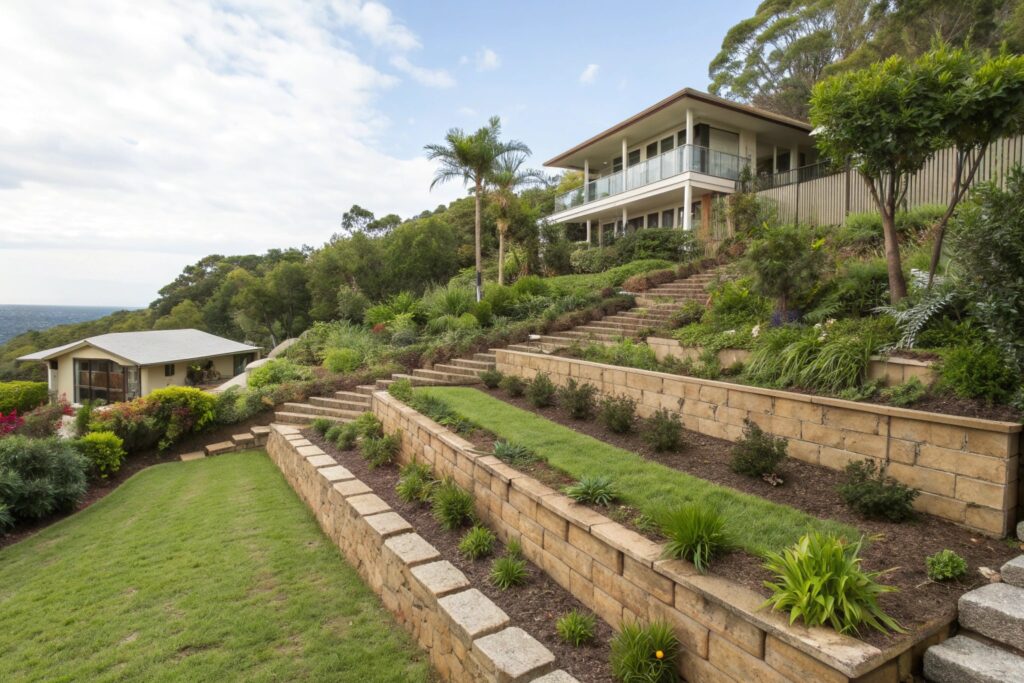
Stopping Erosion Before It Tears Your Yard Apart
Water moving fast enough will pick up whatever’s in its path – soil, mulch, gravel, plants you just paid good money for. That’s erosion, and on Central Coast properties with any kind of slope, it’s a constant battle.
The trick’s controlling water velocity. Slow water down and it drops what it’s carrying instead of ripping through your garden beds. Speed it up and you’re watching your topsoil head toward the street every time it rains.
We use a few different approaches depending on your block. Stepped drainage slows water down through elevation changes. Rock-lined channels handle high flow without washing away. Strategic plantings on slopes hold soil in place while their roots create natural barriers. Retention along fence lines catches sediment before it leaves your property.
Your garden beds are particularly vulnerable – all that nice loose soil and mulch you’ve put down becomes ammunition when water starts moving. Proper edging contains it, drainage around beds diverts water away, and choosing the right ground covers means you’ve got root systems holding everything together.
Slopes need extra attention. The steeper it is, the faster water moves, the more damage it causes. We’ve seen entire garden terraces collapse because someone put in plants and hoped for the best without addressing the water flow underneath.
Protecting your soil means protecting your investment. Every cubic meter that washes away is money and effort you’re literally watching disappear down the drain.
Call us at (07) 4351 4011 or …
Council Compliance and Designing for Central Coast Storms
Council’s got specific rules about stormwater and they’re not messing around – especially when it comes to where your water goes and how it gets there.
Connection approvals are mandatory if you’re tying into street stormwater systems. Can’t just dig a trench and hook up your pipes whenever you feel like it. Different streets have different capacities, different regulations about discharge rates, different requirements for what your system needs to include before council will approve it.
Environmental protection’s a big part of it too. Can’t have sediment washing into waterways, can’t discharge contaminated runoff, can’t create drainage that causes problems for neighbouring properties. Council’s environmental regs cover all that and they’ll ping you if your system’s not compliant.
Here’s what makes Central Coast different – we’re designing for storm intensity that’s gotten worse over the past decade. Those 100mm-in-three-hours events aren’t rare anymore. Your system needs overflow capacity for when the main drainage’s completely maxed out. Emergency provisions for water that’s got nowhere else to go. Resilience built in so the whole thing doesn’t fail the first time you get a proper deluge.
We handle the council side – applications, approvals, making sure your system meets current discharge regulations before we install anything. Last thing you need is finishing a $15k stormwater job only to find out council won’t sign off and now you’re ripping half of it out to fix compliance issues that should’ve been sorted from day one.
Get Your Stormwater Sorted Before the Next Big Rain
Every storm you wait is another chance for water to damage your foundation, wash away your soil, or flood areas that should be staying dry.
We’ll come out and assess your property – look at how water’s moving across your block, where it’s pooling, what’s causing problems now and what’s gonna cause problems later. You get a proper quote based on your specific situation, not some generic price we pulled from thin air.
No obligation, no pressure. If your current drainage’s actually fine and you just needed someone to confirm it, we’ll tell you that. But if you’ve got issues – and most Central Coast properties do – we’ll explain exactly what needs fixing and why.
The stormwater systems we install are designed for Central Coast conditions. Heavy rainfall, sandy soil, council requirements, the works. They’re built to last and they’re built to handle whatever weather comes through.
Stop watching water pool around your house every time it rains. Give us a call and let’s sort your stormwater before it becomes a bigger problem than it needs to be.
Your property deserves drainage that actually works – not just during light showers, but when those proper storms roll through and everyone else’s yards are underwater.
FAQs About Stormwater Management
Depends entirely on what you need. Basic downpipe diversion and some absorption trenches might run $3-5k. Full pit and pipe network with detention tanks and council connections can hit $15-25k. We give you a proper quote after looking at your block – slope, soil type, where water’s pooling, what your council requires.
If you’re connecting to street stormwater systems, yeah, definitely. For on-property absorption trenches and detention tanks, depends on the scope. Retaining walls over a certain height need approval too since they affect drainage. We sort all that before starting so you’re not stuck with compliance issues later.
Water pooling after rain that takes ages to drain. Soggy patches in your lawn. Water stains on your foundation. Erosion gullies through garden beds. Overflowing pits during storms. If you’re seeing any of that, your system’s either undersized, blocked, or wasn’t designed right to begin with.
Sometimes, but usually the whole thing needs rethinking. If your current setup’s failing, adding another pit or pipe might help short-term but you’re treating symptoms not causes. We assess what you’ve got, figure out why it’s not working, then fix it properly.
Week to ten days for most residential properties, longer if we’re doing major earthworks or waiting on council approvals.