
Mediterranean Garden Design Services Central Coast
Want A FREE QUOTE? Click To Call Now!
There’s something about walking through a Mediterranean-style garden that just hits different. That combination of silvery lavender swaying in the breeze, the earthy scent of rosemary warming in the sun, and those gorgeous terracotta tones that somehow make everything feel both elegant and relaxed at the same time.
Here on the Central Coast, we’ve got the perfect conditions for creating these stunning European-inspired gardens. Our climate’s practically begging for Mediterranean garden design – warm summers, mild winters, coastal breezes, and those sandy soils that Mediterranean plants absolutely thrive in.
We’re a local landscaping team based right here on the Central Coast, specialising in Mediterranean garden designs across Terrigal, Avoca Beach, Wamberal, Copacabra, and Erina. What makes these gardens so popular with our clients isn’t just how beautiful they look – it’s how perfectly they suit our coastal lifestyle. They’re drought-tolerant, low-maintenance, and they create incredible outdoor living spaces you’ll actually use year-round.
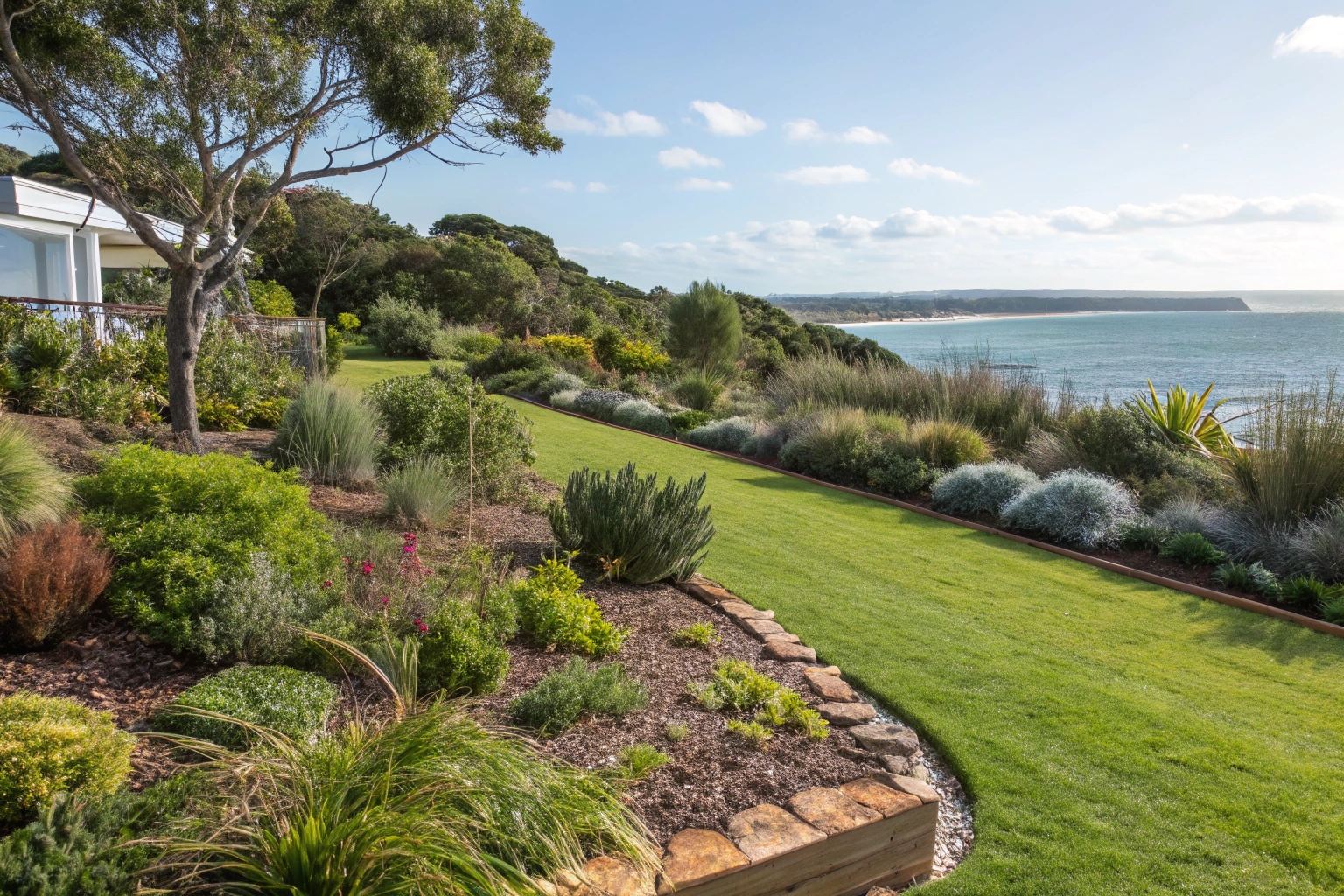
Why Mediterranean Garden Design Works So Well on the Central Coast
The Central Coast’s climate is basically a gift for Mediterranean-style gardens. We get those warm, dry summers and mild winters – exactly what plants from the Mediterranean basin have evolved to handle. Your lavenders, rosemaries, and olive trees aren’t just surviving here, they’re absolutely thriving. Our sandy, free-draining soils are another bonus. Mediterranean plants hate wet feet, and our natural soil conditions give them exactly what they need.
What really makes these gardens work so well here:
- Climate match – Our warm summers, mild winters, and coastal breezes mirror Mediterranean coastlines perfectly. These plants evolved in similar conditions
- Heat and drought tolerance – Those scorching summer days that turn other gardens crispy? Mediterranean plants are built for that. They’re not just tolerating our climate, they’re designed for it
What this means for you is a garden that actually gets easier to maintain as it matures. Once established, these gardens need a fraction of the water that traditional English-style gardens demand.
Hardscaping Elements That Define the Style
The hardscaping in Mediterranean gardens is where you really establish that European feel. Terracotta pavers in warm, earthy tones create the foundation – we use them for patios, courtyards, and pathways anywhere you want that sun-baked, aged look. The colour palette runs through warm terracottas, ochres, soft greys, and cream tones that don’t fight with the landscape.
Gravel paths are both practical and beautiful. They provide excellent drainage, they’re easy to lay in curved or geometric patterns, and that subtle crunching sound underfoot adds to the sensory experience. We use decomposed granite, pea gravel, or crushed limestone depending on the look you’re after.
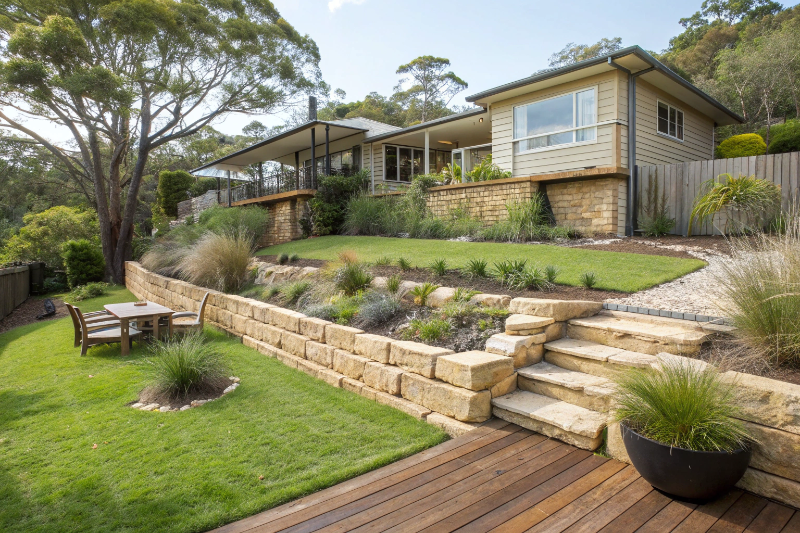
Stone walls – whether dry-stacked, mortared, or rendered – create structure and definition. They’re perfect for retaining soil on sloped Central Coast blocks or creating raised garden beds. Rendered surfaces in white or warm cream tones create that classic villa aesthetic, reflecting light beautifully and providing the perfect backdrop for silvery greens and deep purples.

Signature Plants for Mediterranean Gardens
Lavender’s the absolute star of Mediterranean garden design. We plant it along pathways, as low hedging, or in mass drifts that create these incredible purple waves when they’re flowering. That scent on a warm evening is unbeatable. Rosemary’s just as tough and twice as versatile – we use it as low hedges, feature plantings, or even trained as small topiary specimens. Other aromatic herbs like thyme, oregano, and sage spill over path edges and create that sensory experience that makes Mediterranean gardens so special.
Olive trees are the backbone – we use them as feature specimens, planted in large terracotta pots, or grouped to create shaded groves. Citrus trees add both structure and practicality, positioned in sunny spots where they’ll fruit reliably.
Agapanthus provides those blue and white flower spheres that contrast beautifully against silvery herbs. Ornamental grasses like lomandra and festuca add movement and texture, softening hard edges while handling our coastal winds without looking battered.
Colour Palette & Material Choices
The Mediterranean colour story runs through warm terracottas, soft ochres, cream renders, and grey stone. These aren’t colours you paint on – they come from the materials themselves. Terracotta pots, natural stone, clay pavers, all bring these tones naturally.
Blue accents – whether from agapanthus flowers, painted shutters, or glazed pots – provide contrast without overwhelming. They reference the Mediterranean sky and sea while complementing the warm earth tones beautifully.
We use natural stone wherever possible – sandstone, limestone, travertine – for paving, walls, and features. Exposed aggregate concrete in warm tones gives you the stone look at a lower price point while still delivering that textured, natural finish.
Clay pots in various sizes are essential. Large Ali Baba jars as statement pieces, medium pots for citrus and feature plants, smaller vessels for herbs and succulents. The terracotta weathers beautifully, developing that aged patina that new plastic pots never achieve.
Wrought iron and rustic timber add architectural interest. Gate panels, furniture, pergola posts, trellis screens – these materials age gracefully and contribute to that lived-in European aesthetic.
Call us at (07) 4351 4011 or …
Low-Maintenance Benefits
Here’s what makes Mediterranean gardens so practical for Central Coast lifestyles – they actually require less work as they mature. Those drought-adapted plants aren’t demanding constant attention. Once established, they’re essentially self-sufficient through our dry spells.
The minimal watering requirements mean lower water bills and less time dragging hoses around. Most Mediterranean plants prefer drier conditions to being constantly moist, so you’re not fighting against your own schedule trying to keep everything alive.
Hardy plant choices mean fewer replacements. You’re not replanting burnt-out annuals every season or nursing temperamental species through summer. These plants are survivors by nature, selected over centuries for their ability to handle exactly the conditions we’ve got here on the Central Coast.
The sustainable approach suits our coastal environment. Mediterranean gardens work with our climate rather than against it, using plants that naturally suit our rainfall patterns, temperature ranges, and soil types. You’re creating something that belongs here, not trying to force an English cottage garden into Australian conditions.
Getting Started With Your Mediterranean Garden
The beauty of Mediterranean garden design on the Central Coast is how adaptable it is. Whether you’re working with a compact courtyard or a sprawling property, the principles scale beautifully. We can create a full transformation or focus on specific areas – a Mediterranean-style front garden, a renovated backyard entertaining space, or a formal courtyard entry.
These gardens suit our climate perfectly, they reduce your maintenance burden, and they create outdoor living spaces you’ll actually use. That combination of European elegance and practical functionality is what keeps our clients so happy with their Mediterranean gardens long after we’ve finished installing them.
The drought tolerance, the low-maintenance nature, the timeless aesthetic – Mediterranean garden design delivers all three. If you’re ready to transform your Central Coast property into a sun-drenched retreat that captures that European villa feeling, we’d love to show you what’s possible for your specific space
Frequently Asked Questions About Mediterranean Garden Design
Yes, once they’re established. The first 12-18 months require regular watering to get root systems developed, but after that, these plants are genuinely low-maintenance. Most Mediterranean species need occasional pruning to maintain shape, maybe twice a year, and they’ll benefit from a light feed in spring. But compared to traditional gardens that need constant watering, fertilising, and fussing, Mediterranean gardens are pretty hands-off. The plants actually prefer drier conditions and can look stressed if you overwater them.
Absolutely. That’s the whole point of these plants – they’ve evolved to handle hot, dry summers with minimal water. Once established, most Mediterranean plants can go weeks between waterings during summer. You’ll still want to give deep drinks to things like citrus and newer plantings, but mature lavender, rosemary, olive trees, and ornamental grasses basically look after themselves. Many of our clients report cutting their summer water usage by 40-60% after converting to Mediterranean plantings.
You’ll see immediate impact from the hardscaping and larger plants like olive trees, but Mediterranean gardens genuinely improve with age. In the first growing season (6-12 months), herbs and grasses fill out beautifully. By year two, you’ve got that established look with lavender mounds forming, rosemary hedges thickening up, and everything settling into its space. By year three, your garden’s got that mature, lived-in character that makes Mediterranean landscapes so appealing. The weathering of terracotta and stone actually adds to the aesthetic – these gardens are designed to look better as they age.
We start with an on-site consultation where we assess your space, discuss your vision, and talk about how you want to use the garden. From there, we create a design concept showing the layout, materials, and plant palette. Once you’re happy with the design, we provide a detailed quote breaking down costs by element. Most Mediterranean gardens take 2-4 weeks to install depending on complexity, and we handle everything from council approvals (if needed) to final planting and mulching. You’re involved as much or as little as you want to be.