
Your front yard tells a story before visitors even knock on your door. Right now, that story might be one of patchy lawns fighting Central Coast’s sandy soil, overgrown garden beds that seemed like a good idea ten years ago, or dated pavers that scream “builder’s special.” We get it—you drive past beautifully maintained homes in Terrigal and Avoca Beach, and wonder why your place doesn’t have that same polish.
Here’s the thing about Central Coast front yards: they’re working against you. The salt spray from coastal winds, the sandy soil that drains faster than you can water it, and those surprise downpours that leave puddles near your front door aren’t making your life any easier. You’ve tried the weekend warrior approach—bought plants from Bunnings that looked great in the pot but struggled in the ground, edged the garden beds with good intentions that faded by summer, or started that “simple” DIY project that’s now sitting half-finished two years later.
Central Coast Landscaping has spent over fifteen years transforming front yards across Wamberal, Copacabana, and Erina from “need to fix that eventually” to “wish we’d done this sooner.” We understand what works in coastal conditions because we work here, live here, and know exactly which plants laugh at salt spray and which materials won’t fade under our relentless sun. Your front yard should be something you’re proud of, not something you apologise for when family visits.
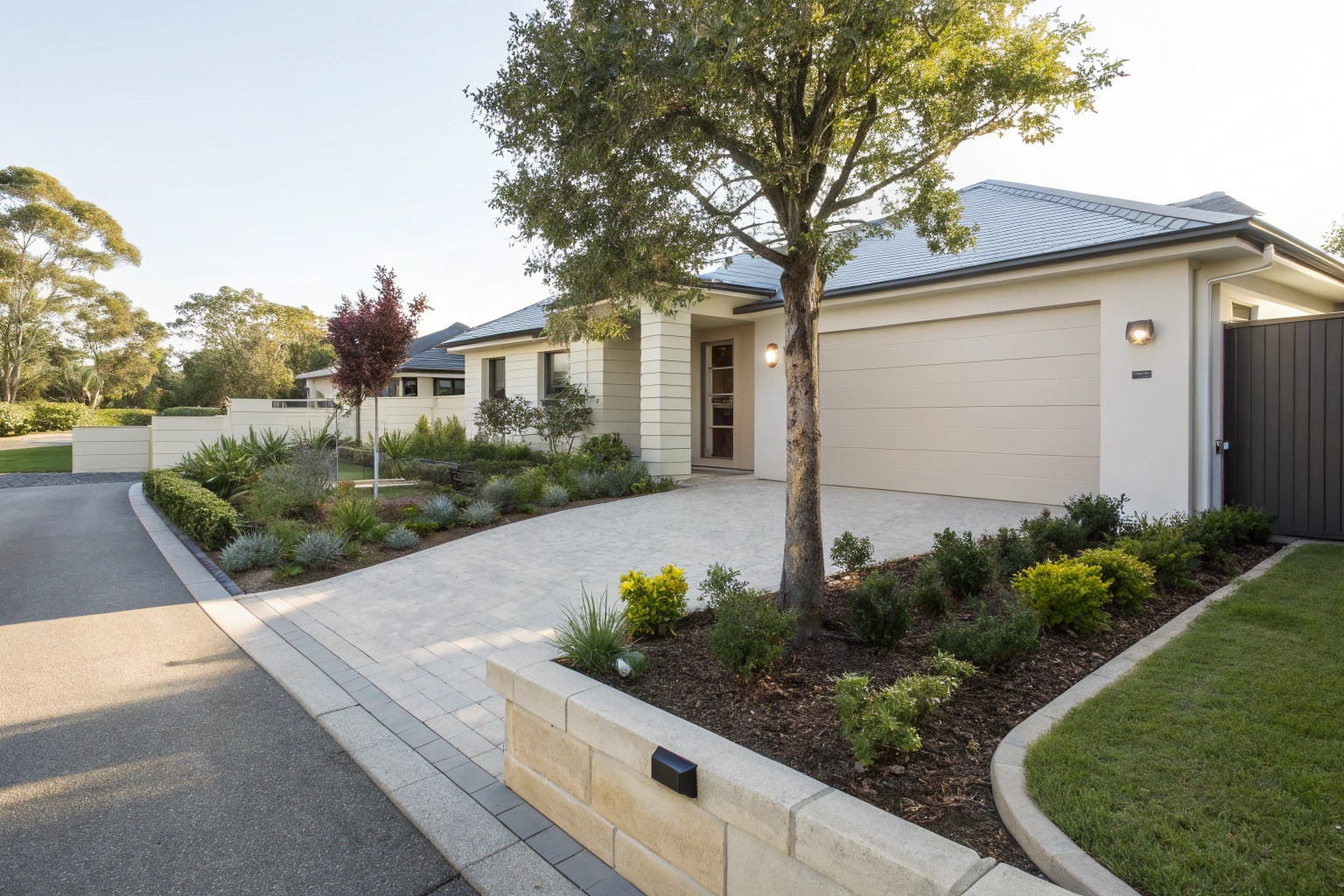
Why Your Front Yard Matters More Than You Think
Remember the last time you drove through your neighbourhood? You probably made split-second judgments about every house without even realising it. “That one looks cared for.” “That place has seen better days.” Your front yard is doing the exact same thing to everyone who passes by—neighbours walking their dogs, potential buyers driving past, your kids’ friends getting dropped off.
The numbers don’t lie here. Real estate agents across Central Coast will tell you that quality front yard landscaping can add 15-20% to your property value. That’s potentially $140,000-$190,000 on a $950,000 home. Even if you’re not selling tomorrow, you’re sitting on unrealised value while paying for a yard that’s working against you instead of for you.
But this goes beyond dollars. There’s the social side that nobody talks about openly but everyone feels. You know that slight embarrassment when hosting family Christmas and they have to walk past the weedy garden beds? Or when you’re the only house on the street that hasn’t done anything since moving in? Your front yard affects how you feel about your home every single day—twice a day if you’re commuting to Sydney or Newcastle for work.
We’ve transformed front yards that were dragging down entire street appeals in Erina and Wamberal. The same homes that were “fine, I guess” became the benchmark that neighbours started comparing themselves to. That shift happens faster than you’d think, usually within weeks of completion.
Front Yard Design Elements That Actually Work Here
Walk down any street in Terrigal and you’ll see what separates the “just okay” front yards from the ones that make people slow down. It’s not about throwing money at the problem—it’s about getting the fundamentals right for Central Coast conditions.
Garden beds and planting zones need definition. Those blurry edges where lawn meets garden bed creates that messy look that’s hard to maintain. We use quality garden edging that holds its shape through our wet winters and dry summers, then fill beds with drought-tolerant natives and coastal species that don’t need constant attention.
Pathways and driveways cop the most use and the most judgment. Cracked concrete paths and oil-stained driveways tell visitors your home needs work before they’ve seen inside. Modern pavers in neutral tones, exposed aggregate, or decorative concrete can transform your entry. We make sure drainage is handled properly too—no more puddles at your front door after those Central Coast downpours.
Lawn areas should be purposeful, not accidental. A well-maintained lawn in your front yard creates that clean, cared-for look, but it needs proper preparation. Central Coast’s sandy soil needs improvement before you lay new turf, otherwise you’re just setting yourself up for the same patchy, struggling lawn you’ve already got.
Feature plantings give your front yard personality. A statement tree near the street, a cluster of coastal banksias, or a screening hedge that softens your fence line—these create visual interest without demanding weekend maintenance.
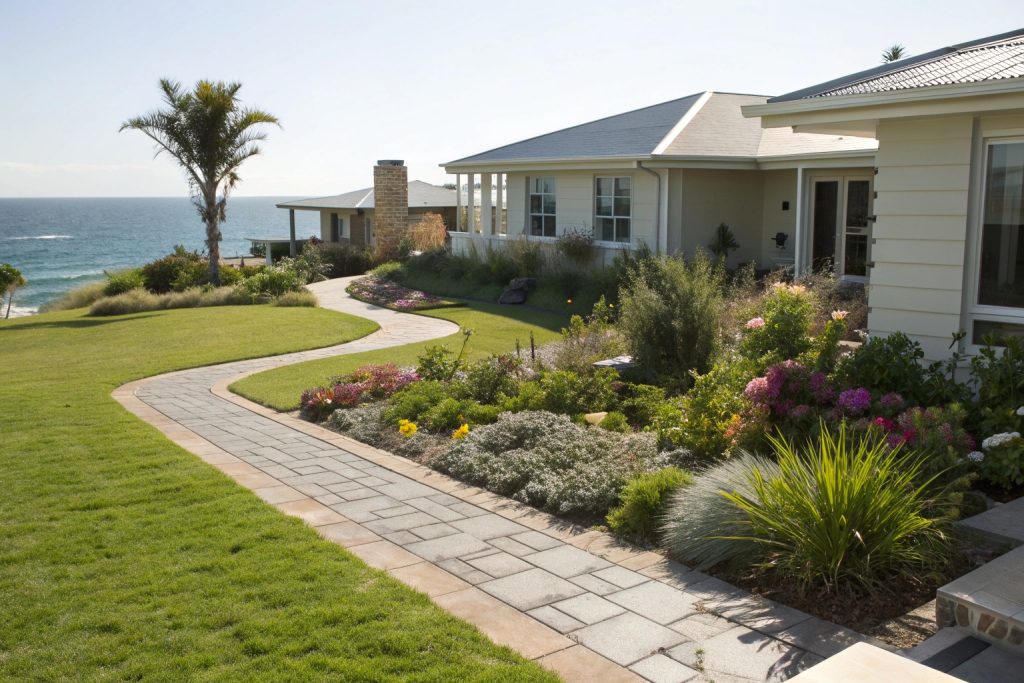
Choosing Plants That Survive Central Coast Conditions
Here’s where most DIY front yard projects fall apart. You pick plants that look amazing at the nursery, get them in the ground, and six months later they’re either dead or struggling. The problem isn’t you—it’s that not every plant is cut out for coastal life.
Salt tolerance is non-negotiable if you’re within a few kilometres of the beach. Coastal winds carry salt spray further than you’d think, especially during storms. We use natives like Coastal Rosemary, Pigface, and Lomandra that actually thrive in these conditions. They don’t just survive—they look better than plants fighting against the environment.
Screening plants solve privacy issues without the harsh look of solid fencing. Lilly Pilly varieties create dense hedges that block views from the street while softening your home’s appearance. For faster coverage, Murraya hedges grow quickly and handle Central Coast’s humidity without getting disease issues.
Feature trees anchor your design and provide scale. Tuckeroos work brilliantly in smaller front yards, staying compact while offering year-round green. For larger spaces, Coastal Banksias give you that distinctly Australian look plus they attract native birds that your neighbours will love.
Year-round colour comes from layering plants with different flowering times. Grevilleas bloom through winter when everything else looks tired, native violets carpet shaded areas with purple flowers, and dwarf Kangaroo Paws add height and colour without growing out of control.
We don’t just drop plants in and hope. Soil preparation with proper organic matter and drainage consideration means your front yard actually gets better with time instead of worse.

Hardscaping That Handles Coastal Weather
Garden beds and plants only tell half the story. The hardscaping elements in your front yard—the permanent structures and materials—determine whether your design looks professional or thrown together.
Garden edging might seem minor, but it’s the difference between neat and messy. Steel edging lasts decades and holds clean lines even when lawn mowers bump against it. Concrete edging cracks and shifts with our clay soil movement, creating that neglected look you’re trying to avoid. We install edging that’ll still look sharp ten years from now.
Decorative rocks and gravels reduce maintenance while adding texture. A river pebble section around feature plants means less weeding and less mulch replacement. Decomposed granite pathways between garden beds create defined walking areas without the formality of pavers. These materials don’t fade, don’t blow away in coastal winds, and don’t need replacing every couple years.
Letterbox surrounds get overlooked but they’re right there at street level where everyone sees them. A rendered pillar with integrated garden bed, or stacked stone surround with low plantings creates a focal point that says “we care about details.”
Stepping stones through garden beds give you maintenance access without compacting soil or creating mud tracks. Large format pavers in irregular patterns look intentional and allow air flow to plant roots.
The right hardscaping works with your garden, not against it. Materials need to handle our weather—no cheap pavers that fade to pink after two summers, no timber edging that rots in damp spots.
Call us at (07) 4351 4011 or …
Low-Maintenance Design That Frees Up Your Weekends
You didn’t move to Central Coast to spend every Saturday wrestling with garden maintenance. The whole point was beach time, coastal walks, and actually enjoying your property instead of being enslaved by it.
Drought-tolerant gardens aren’t about letting things die—they’re about choosing plants that don’t need constant attention. Native grasses like Lomandra and Dianella look full and healthy even through dry spells. Coastal succulents store water in their leaves and laugh at our sandy soil. These plants establish quickly then pretty much look after themselves.
Mulching done properly might be the smartest money you spend. A thick layer of quality mulch suppresses weeds, retains moisture, and breaks down to improve your soil. We’re not talking about that cheap dyed stuff that washes away in the first rain—proper hardwood mulch that lasts 12-18 months and actually benefits your garden.
Automatic irrigation systems take the guessing game out of watering. You set it once, and your front yard gets exactly what it needs without you standing there with a hose on Sunday mornings. Smart controllers adjust for rain and seasonal changes, so you’re not watering in a downpour or letting plants stress during hot weeks when you’re away.
The setup cost pays for itself in water savings, plant survival, and your time back. We install systems with proper zone control—your thirsty lawn gets different treatment than your drought-tolerant natives.
Ready to Transform Your Front Yard?
Your front yard has been on the “to-do” list long enough. Every time you pull into your driveway, you see what needs fixing. Every time neighbours walk past, you feel that slight embarrassment about the patchy lawn or overgrown garden beds. And every weekend you spend trying to make minor improvements yourself is a weekend you’re not at the beach or spending time with family.
Central Coast Landscaping has transformed hundreds of front yards across Terrigal, Avoca Beach, Wamberal, and Erina from properties that owners apologised for into spaces they’re genuinely proud to show off. We’ve seen the relief on clients’ faces when they realise they don’t have to figure this out themselves—that someone who actually understands coastal conditions can take the entire burden off their shoulders.
The free on-site consultation costs you nothing and gives you everything you need to make an informed decision. We’ll walk your front yard, discuss what’s realistic for your budget, and show you examples of similar transformations we’ve completed in your area. No pressure, no obligation—just honest advice from locals who’ve been doing this work for over fifteen years.
Your front yard can either keep dragging down your property’s appeal and your weekend time, or it can become the space you’re proud to come home to every day. The choice is yours, but the transformation is easier than you think.
Call us today for your free consultation and let’s talk about what’s possible for your front yard.
Common Questions About Front Yard Landscaping Central Coast (FAQs)
Front yard projects typically range from $8,000 to $35,000, depending on your block size and what you’re including. A basic refresh with new garden beds, quality turf, and garden edging might be $8,000-$15,000 for an average-sized front yard. Add in feature plantings, automated irrigation, and quality paving for your driveway or paths, and you’re looking at $20,000-$35,000. We provide detailed quotes after seeing your property so you know exactly what you’re getting. Most clients do the work in phases over 12-24 months, starting with street appeal priorities then adding features as budget allows.
Most front yard projects are completed within 1-2 weeks once we start. Smaller refresh jobs—new garden beds, fresh turf, mulching—can be done in 3-5 days. Larger projects with retaining walls, new driveways, or extensive plantings might take 2-3 weeks. We schedule the work to minimise disruption to your access and parking. Weather can affect timelines during our wet winters, but we communicate clearly if delays happen.
Absolutely, when you choose the right plants and prepare the soil properly. That’s where most DIY attempts fail—dropping plants into unimproved sandy soil and expecting them to thrive. We amend your soil with organic matter and proper drainage before planting. Then we select species that are proven performers in coastal conditions. Salt-tolerant natives, coastal shrubs, and hardy groundcovers don’t just survive here—they look better than plants struggling against the environment. After fifteen years working these conditions, we know what works in Terrigal is different from what works 5km inland.
That’s exactly how most of our clients approach larger projects. You might start with fixing your tired lawn and defining garden beds to get immediate street appeal improvement. Then add feature plantings and irrigation in phase two. Save the driveway resurfacing or major hardscaping for phase three when budget allows. We design the full vision upfront so each phase works together, but you control the timeline based on your budget. This approach also lets you see results quickly instead of waiting until you’ve saved for the entire project.
Most front yard landscaping doesn’t require council approval—garden beds, lawn, plantings, and minor pathways are generally fine. Retaining walls over 600mm high, major excavation, or changes to driveways that affect street access might need approval. If your property is in a heritage area or has specific council overlays, there could be additional requirements. We handle this assessment during the design phase and manage any required approvals so you’re not dealing with council paperwork.
Give us a call and we’ll schedule a free on-site consultation. We’ll walk your front yard, discuss what’s not working for you, and talk through ideas that suit your home and budget. You’ll get a detailed quote within a week showing exactly what’s included and the timeline. Once you approve, we schedule the work around your availability. Most clients are surprised how straightforward the process is—you’re not project managing trades or chasing suppliers. We handle everything from start to finish, including cleanup.