
There’s something about Australian sandstone that just works on the Central Coast. Maybe it’s the way those warm cream and terracotta tones pick up the afternoon sun, or how it stays cool underfoot even on those scorching summer days when you’re walking from the house to the pool.
We’ve been laying sandstone paving across Terrigal, Avoca Beach, Wamberal, and throughout the Central Coast for years now, and honestly – it’s one of those materials that gets better with age. While your neighbours are dealing with concrete that’s cracking from our coastal conditions or pavers that are fading in the salt air, proper Australian sandstone just develops more character.
The thing about sandstone paving on the Central Coast is this: it needs to be installed right for our conditions. We’re not talking about some inner-city courtyard here. Your outdoor space cops salt spray, coastal winds, and that sandy soil that shifts more than you’d think. That’s why we don’t just drop pavers on sand and hope for the best – we prepare the base properly, account for drainage (because water pooling near your foundation is no joke), and select the right finish for how you’ll actually use the space.
Whether you’re finally creating that entertainment area you’ve been planning since moving from Sydney, or you want pool surrounds that won’t burn the kids’ feet, we can show you what’s actually possible with your block.
Why Australian Sandstone Works for Central Coast Properties
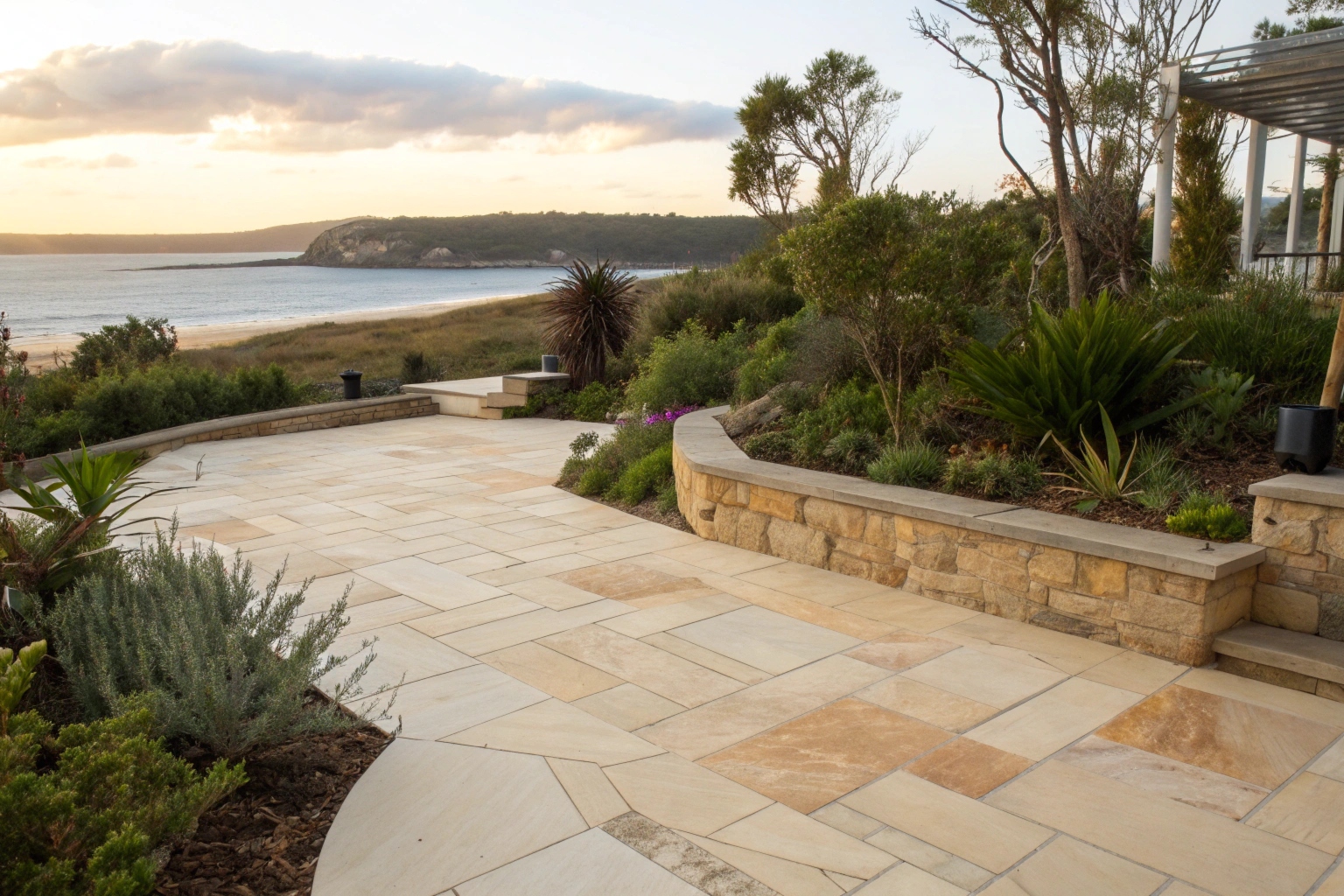
Here’s what you need to know about Australian sandstone – it’s not some imported material that struggles with our climate. This stuff comes from quarries right here in Australia, which means it’s already proven itself in conditions pretty similar to what we’ve got on the Central Coast.
The colours you’ll see are those natural earth tones – creams, beiges, terracottas, sometimes with hints of grey or pink running through them. And here’s the thing that catches people off guard: no two pieces are identical. You’ll get natural grain patterns, colour variations, maybe some fossil marks or mineral deposits. Some people worry about that at first, thinking they want everything uniform, but that organic variation is actually what makes the finished patio or pathway look authentic rather than manufactured.
What makes it different from other paving:
• Stays cooler than concrete – Massive difference on those 35-degree January days when you’re walking barefoot to the pool
• Salt-resistant – Won’t deteriorate from coastal air like some materials do
• Natural slip resistance – The texture provides grip even when wet, which matters around pools and after rain
• Ages gracefully – Develops a patina over time rather than just looking worn out
The finish you choose changes the whole look and feel. Honed smooth gives you that contemporary clean aesthetic. Natural cleft keeps the rustic character with more texture underfoot. Sandblasted sits somewhere in between. Tumbled edges soften the look if you’re going for that Mediterranean or cottage garden vibe.
We can do modular sizes for clean geometric patterns, random layouts for a more organic feel, or even large format slabs if you’ve got the space to make a statement.
Getting Sandstone Paving Installed Right on the Central Coast
The installation method matters more than most people realise, especially with our sandy Central Coast soil and drainage challenges. We’ve seen plenty of DIY attempts and dodgy contractor work that’s failed within a couple of years because they skipped the proper base preparation.
Sand-laid installation is where we set the pavers on a compacted sand bed. This gives you some flexibility – the pavers can shift slightly with ground movement, which actually helps prevent cracking. Good for pathways and some patio areas, but you need proper edge restraints or those pavers will creep outward over time.
Mortar-bedded installation is what we recommend for high-traffic entertaining areas and pool surrounds. The pavers are set in mortar on a concrete base, then properly grouted. Takes longer, costs more, but you’re getting a surface that’ll stay level and stable for decades. No weeds pushing through, no shifting when you’re dragging outdoor furniture around.
The jointing is where a lot of contractors cut corners. Polymeric sand for sand-laid work helps lock everything together and keeps ants from making homes between your pavers. For mortar-bedded jobs, proper grouting prevents water from getting underneath and causing issues with our freeze-thaw cycles (yeah, we get frosts on the Central Coast despite the coastal vibe).
Drainage is critical. We grade everything away from your house, install ag-drains if needed, and make sure water’s got somewhere to go. That’s especially important on sloped blocks around Terrigal and Copacabana where water wants to run downhill toward your foundation.
Sandstone Paving Design Options for Central Coast Homes
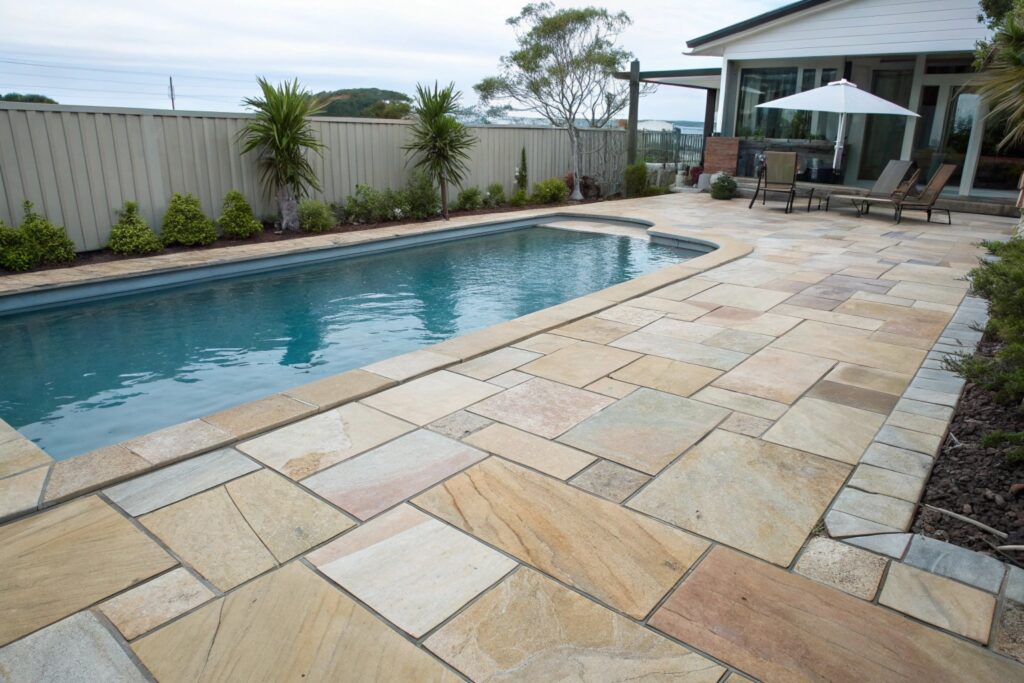
One of the reasons sandstone works so well here is because it fits pretty much any design direction you’re going for. We’ve installed it for everything from ultra-modern minimalist courtyards in Terrigal to rustic coastal cottages in Avoca Beach, and it looks right at home in all of them.
Contemporary clean lines – Large format slabs with tight joints, honed finish, maybe in those lighter cream tones. Pair it with rendered walls and architectural plants. Very popular with the Sydney transplants who want that coastal-modern aesthetic.
Mediterranean style – Tumbled edges, warm terracotta and beige tones, laid in random patterns. Works beautifully with established olive trees, lavender borders, that relaxed entertaining vibe. This is what a lot of empty nesters are going for when they’re finally building their forever outdoor space.
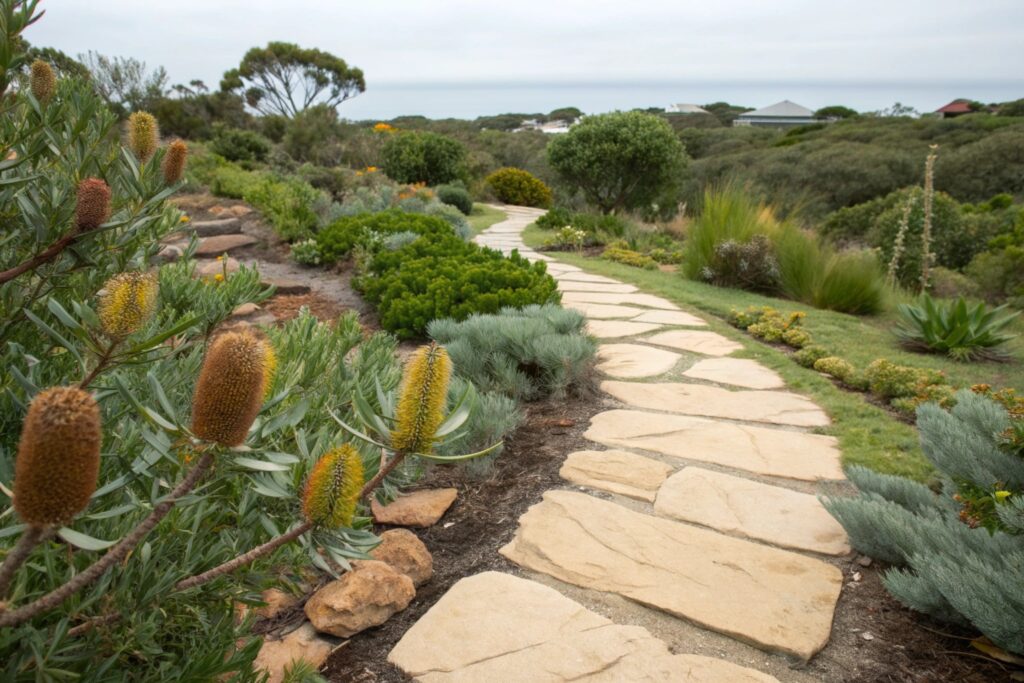
Rustic Australian charm – Natural cleft finish, random sizes, earth tones. Perfect if you’re working with native gardens, ti-tree, coastal banksias. Blends right into the landscape rather than fighting against it.
The format you choose changes everything too. Stepping stones through a garden bed create that informal pathway feel. Modular sizes give you options for patterns – herringbone, running bond, whatever suits your space. Large slabs make a statement and reduce the number of joints (which means less maintenance down the track).
We’ve done pool surrounds where the sandstone wraps the entire area – stays cool underfoot, provides grip, looks amazing when it’s wet. Outdoor kitchens and entertaining areas where you want that natural material connecting to the house but adding warmth the concrete can’t give you. Front entries where you need something that’ll impress but also handle the coastal weather without looking worse for wear.
Maintaining Your Sandstone Paving
Here’s the honest truth about sandstone maintenance – it’s pretty low-fuss, but it’s not zero maintenance. Some contractors will tell you it’s “maintenance-free” which is rubbish. Nothing outdoors is maintenance-free on the Central Coast.
Sealing is optional, not mandatory. Unsealed sandstone will absorb some staining – BBQ grease, red wine, leaf tannins. But it also weathers naturally and develops that lived-in character. Sealed sandstone resists staining better and the colours stay more vibrant, but you’ll need to re-seal every 3-5 years depending on traffic and sun exposure.
We usually recommend sealing for high-traffic entertaining areas and around outdoor kitchens. For pathways and less-used spaces? You can leave it natural and just accept the patina that comes with coastal living.
Cleaning is straightforward – regular sweep or blower to keep debris off, occasional hose-down. For stubborn stains, warm water and a stiff brush usually does it. Avoid high-pressure washers blasting directly at joints because you’ll dislodge the jointing material.
Natural aging happens. The surface might develop some moss or lichen in shaded areas (that’s coastal humidity for you). Some people like that look. Others want to treat it with a mild cleaner designed for natural stone. Your call.
Oil stains from the BBQ? Catch them early with absorbent powder, then clean. Left too long on unsealed stone and they’re there permanently, but honestly – that’s part of the character of a well-used outdoor space.
The material weathers beautifully. Those colour variations become richer. The edges might soften slightly. It develops personality rather than just deteriorating.
Call us at (07) 4351 4011 or …
What to Expect When You Work With Us
We’re not going to waste your time with multiple site visits and dragged-out quotes. Here’s how it actually works.
First visit is about understanding what you’re trying to achieve with your outdoor space and what your property needs. We’ll look at drainage, existing levels, access for equipment, and any problem areas. You’ll get honest feedback about what’s realistic for your budget and timeline – not some inflated quote hoping you won’t notice or a lowball number that’ll blow out once we start.
The quote breaks down everything – materials, labour, site preparation, drainage work if needed, cleanup. No hidden extras appearing halfway through. If we find something unexpected during excavation (old tree roots, dodgy previous work, whatever), we’ll talk to you before proceeding, not just add it to the bill.
Timeline gets locked in before we start. We’ll tell you exactly when we’re arriving, how long each phase takes, and when you can start using the space. And yeah, we actually show up when we say we will – seems basic but you’d be surprised how many contractors treat schedules like suggestions.
During the work, your property gets treated with respect. We’re not leaving tools scattered across your lawn or materials blocking your driveway for weeks. Daily cleanup happens, and we’ll work around your schedule if you’ve got specific needs (kids’ naptime, working from home, whatever).
Once it’s done, we walk you through maintenance requirements, answer any questions, and make sure you’re completely happy with the finished space before final payment. Then you’ve got our contact details for any issues down the track – not that we expect problems, but it’s good to know we’re not disappearing the minute the job’s finished.
Ready to Transform Your Outdoor Space With Sandstone Paving?
If you’ve been putting off that outdoor project because you’re not sure where to start or you’re worried about choosing the wrong contractor, let’s have a conversation. We’ll come out to your property, have a look at what you’re working with, and give you honest advice about what’s actually possible for your space and budget.
No pressure, no inflated quotes, just straight talk from someone who’s been installing sandstone paving on the Central Coast long enough to know what works and what doesn’t.
Call us now to book your free on-site consultation. Let’s get your outdoor space sorted so you can actually start enjoying that Central Coast lifestyle you moved here for.
FAQs About Sandstone Paving on the Central Coast
You’re looking at roughly $120-$180 per square metre installed for quality Australian sandstone, depending on the finish and installation method. That’s more than concrete ($80-$120) but comparable to good quality concrete pavers. The difference is sandstone doesn’t fade, crack from coastal conditions, or need replacing in 10-15 years. It’s one of those investments that actually pays off over time, especially if you’re planning to stay in the property or sell within a few years – outdoor entertaining areas add serious value on the Central Coast.
Absolutely, and it’s actually one of the best materials for pool surrounds. Stays cooler underfoot than concrete or dark pavers (your kids will thank you), natural texture provides slip resistance when wet, and it looks better when it’s wet rather than just looking darker. We typically recommend a honed or lightly textured finish for pool areas – gives you that smooth contemporary look while maintaining safety. Salt-resistant too, which matters if you’ve got a saltwater pool.
Depends on the size and complexity, but a typical patio area around 30-40 square metres usually takes 4-6 days from start to finish. That includes base preparation, laying, and finishing. Bigger projects or complicated layouts with curves and multiple levels take longer. We’ll give you a realistic timeline upfront – not one of those “we’ll be done in two days” promises that turns into three weeks.
That’s exactly why proper installation matters on the Central Coast. We grade everything away from your house, install ag-drains where needed, and make sure water’s directed to appropriate drainage points. Sloped blocks around Terrigal, Wamberal, and Copacabana need extra attention because water wants to run downhill toward foundations. We’ve been doing this long enough to know which solutions actually work rather than just pushing the problem to your neighbour’s yard.
Not really. Warm water and a stiff brush handles most situations. For tougher stains or moss buildup, you can use pH-neutral cleaners made for natural stone – nothing acidic because that’ll damage the surface. Avoid those harsh chemical cleaners and high-pressure washers aimed directly at the joints. The natural aging and occasional mark is part of the character, but if you want to keep it looking fresh, a yearly clean and reseal (if you’ve chosen to seal) does the job.