
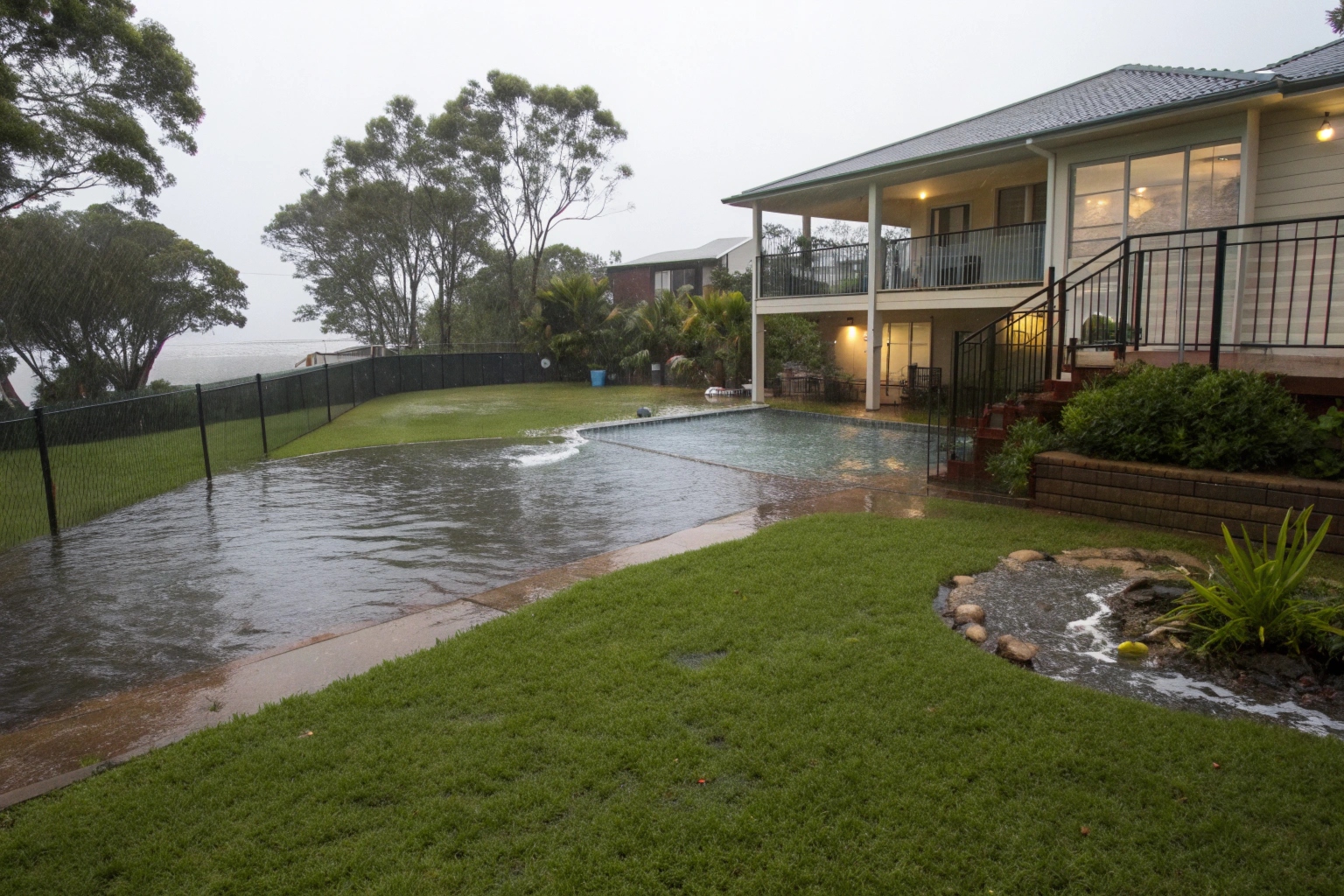
You know that sinking feeling when you walk out after a storm and half your backyard’s turned into a swamp? Yeah, we’ve seen it happen to plenty of Central Coast properties. The thing about living here is we get those intense rainfall events that just don’t quit, and when your yard can’t handle the water, you’re left with soggy lawns, pooling water near the house, and that constant worry about what it’s doing to your foundations.
We’re Central Coast Landscaping, and drainage solutions are one of those things we’ve been fixing for years around Terrigal, Avoca Beach, Wamberal, and right through the Coast. Most folks don’t realise their drainage problems until they’re standing in waterlogged grass or watching topsoil wash down their driveway. But here’s the good news – nearly every drainage issue has a fix, and once it’s sorted, you’ll wonder why you didn’t do it sooner.
Your Central Coast property’s got unique challenges. Sandy soils that don’t drain properly, clay patches that hold water like a sponge, slopes that turn into rivers when it rains. We get it because we work with these conditions every single day. Whether it’s fixing that boggy spot where the kids can’t play, redirecting water away from your house, or stopping erosion on your sloped block, proper drainage solutions protect your property and give you back usable outdoor space you can actually enjoy.
Common Drainage Problems We Fix on Central Coast Properties
Water’s got a mind of its own, and when your property can’t manage it properly, you end up with a whole bunch of headaches. Here’s what we’re constantly helping Central Coast homeowners sort out.
Waterlogging and pooling water are probably the most obvious signs. You’ll see standing water that hangs around for days after rain, usually in low spots or where the ground’s been compacted. That boggy grass where you sink in when you walk? That’s waterlogging, and it’s killing your lawn from the roots up.
Erosion is another big one, especially on sloped blocks. Heavy rain carves channels through your garden beds, washes away topsoil, and leaves ugly gullies. We’ve seen properties lose entire gardens because water wasn’t controlled properly on the way down.
Soggy lawns that never quite dry out make your yard unusable. Kids can’t play, you can’t mow without making a muddy mess, and the grass starts dying off in patches. It’s frustrating when you’ve got this outdoor space you can’t even use half the year.
Then there’s foundation water damage – the serious stuff. Water pooling against your house works its way into the foundation over time. Cracks, dampness in the walls, even structural issues if it’s left long enough. We’ve worked on plenty of properties where fixing the drainage wasn’t optional anymore, it was protecting the house.
The Central Coast makes all this worse with our intense rainfall events and those tricky clay soils that don’t let water through. Add in our sandy patches that drain too fast and wash away, and you’ve got a recipe for drainage problems that need proper solutions.
How We Assess Your Drainage Issues
Before we start digging or laying pipes, we need to figure out exactly what’s going on with your property. Every block’s different, and what works for your neighbour might not work for you.
We’ll walk your entire property and identify where water’s collecting, where it’s coming from, and where it needs to go. Those low spots, boggy areas, and places where you’re seeing erosion – they all tell us a story about how water moves across your land.
Water flow analysis is about understanding the natural drainage patterns. We look at where water enters your property, how it travels when it rains, and where it’s getting stuck or causing damage. Sometimes it’s obvious, other times we need to watch what happens during actual rainfall to see the problem clearly.
Your soil type makes a massive difference to drainage solutions. Central Coast properties can have sandy soil in one area and heavy clay ten metres away. We’ll check soil composition because it determines whether water drains too fast, too slow, or just right. Clay holds water and needs subsurface drainage, while sand might need retention to stop everything washing away.
We also look at your existing drainage setup – downpipes, stormwater drains, any pipes that are already there. Often we’re working with what you’ve got and improving it rather than starting from scratch. Sometimes the existing system just needs redirecting or connecting properly to actually work.
Once we’ve assessed everything, we’ll explain what’s causing your drainage problems and lay out the options for fixing it. No confusing technical talk, just straight answers about what’ll work for your property.
Drainage Solution Types We Install
There’s no one-size-fits-all when it comes to drainage. What you need depends on your specific problems, your soil, and how water behaves on your block.
Surface drains are the visible systems – channel drains, grated drains that sit on top of the ground and collect water before it pools. They’re perfect for patios, driveways, or areas where you need to catch water fast and move it away. You’ll see these around pool areas and entertainment spaces where standing water’s a problem.
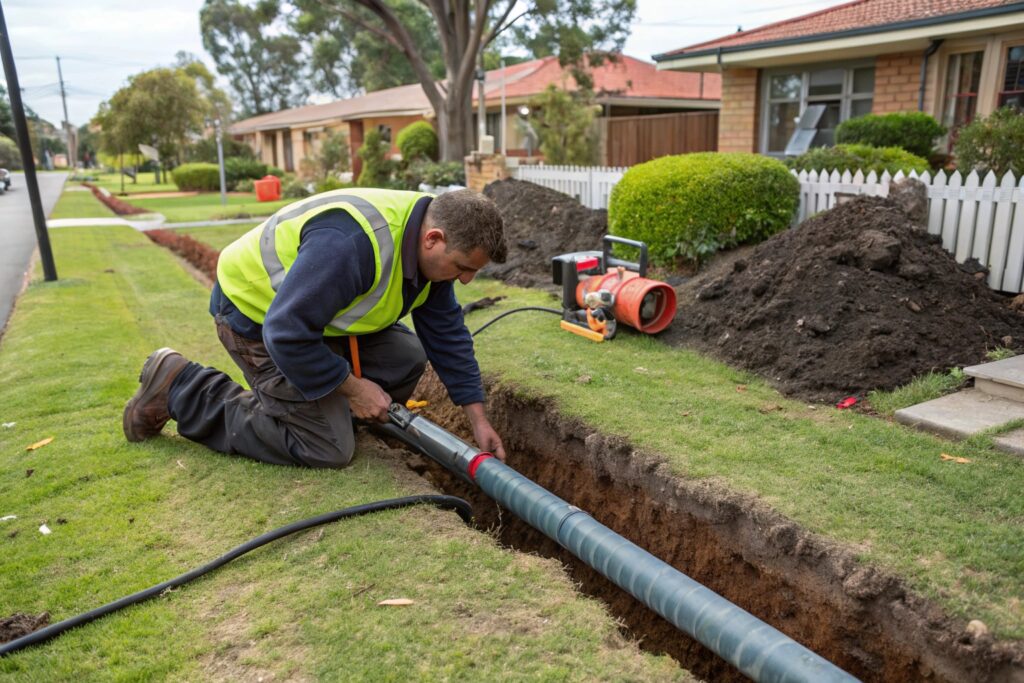
Subsurface ag pipes work underground where you can’t see them. We dig trenches, lay perforated agricultural pipe surrounded by drainage rock, and let water seep into the pipes and flow away. This is your go-to for fixing waterlogged lawns and garden beds without changing how your yard looks.
French drains are basically ag pipe systems with extra drainage rock and sometimes fabric. They’re brilliant for redirecting groundwater and handling areas where water’s coming from multiple directions. We use these heaps on Central Coast properties with high water tables.
Catch basins are the collection points – those grated pits where water flows in and gets directed into pipes. They’re perfect for low spots and areas where multiple drainage lines meet. You’ll often see these at the bottom of driveways or in corners of properties.
Channel drains handle high-volume water flow along pathways, garage entries, and driveways. They’re tough, they move water fast, and they stop flooding in areas that cop the most runoff. We install these when you need serious water-shifting capacity in one spot.
Stormwater Management Solutions
Stormwater’s the big-volume stuff – all that water coming off your roof, driveway, and paved areas when it rains. If it’s not managed properly, it’ll swamp your yard or cause erosion in minutes.
Downpipe redirection is usually the first thing we look at. Those downpipes dumping water right next to your house foundations? That’s asking for trouble. We redirect them into proper drainage systems or across your yard to areas where water can disperse safely. Sometimes it’s as simple as extending the downpipe run, other times we’re connecting into underground pipes.
Retention systems are about slowing water down and letting it soak in rather than rushing off your property. We might install soakage pits, rain gardens, or retention basins that hold water temporarily and release it gradually. This works well on Central Coast properties where you want to keep water on-site for your gardens rather than sending it all to the street.
Connecting to street drainage is the end goal for most stormwater systems. Council’s got stormwater pits in the street for a reason – to take excess water away from properties. We’ll connect your system legally and properly so water flows where it’s meant to go. There’s rules around this stuff though, and we make sure everything’s compliant.
The key with stormwater is moving high volumes fast without causing erosion or flooding along the way. Central Coast rainfall events can dump serious water in short timeframes, so your stormwater system needs to handle peak flow, not just average rain.
Garden & Lawn Drainage Solutions
Your garden and lawn need different drainage approaches than stormwater systems, but they’re just as important if you want outdoor spaces that actually work.
Improving Clay Soils and Garden Beds
Central Coast clay soils are murder on drainage. Water sits on top instead of soaking in, and plant roots basically drown. We fix this by improving soil structure with gypsum and organic matter, but sometimes you need actual drainage systems underneath. Ag pipes running beneath garden beds collect excess water and give plants a fighting chance.
Raised beds are brilliant for areas with really problematic drainage. Elevating your garden beds above ground level means better drainage automatically, plus you’re bringing in quality soil that drains properly. We build these all the time on properties where the natural ground’s just not cooperating.
Drainage rock goes under pathways, around garden edges, and anywhere water needs to move freely through the ground. It creates space for water to flow instead of pooling, and it stops soil from washing away.
Fixing Soggy Lawns
That waterlogged lawn that never dries out? Subsurface pipe systems are usually the answer. We install ag pipes about 300-400mm below the surface across your lawn, and they collect excess water before it turns your grass into a swamp. The lawn looks normal on top, but underneath it’s draining properly.
Sometimes it’s not pipes you need, it’s improving soil structure. Aerating compacted soil, adding gypsum to break up clay, and top-dressing with sand all help water move through instead of sitting on the surface. Combined with proper drainage systems, your lawn becomes usable again.
Call us at (07) 4351 4011 or …
Retaining Wall Drainage, Slopes & Central Coast Considerations
Retaining Wall Drainage
Retaining walls hold back tonnes of soil, and if water builds up behind them, that pressure can crack or collapse the whole structure. Ag pipes behind walls are non-negotiable. We install perforated pipe at the base of the wall surrounded by drainage rock, and it collects water before pressure builds up.
Weep holes are those small openings you see in retaining walls. They let water escape and relieve pressure. Without proper drainage behind the wall and weep holes to release water, you’re looking at structural failure down the track. We’ve repaired walls where someone skipped this step, and it’s never pretty.
Controlling Runoff on Sloped Blocks
Slopes turn into rivers when it rains hard, and that’s when erosion does serious damage. Terracing solutions break up long slopes into manageable levels. Water slows down, has a chance to soak in, and doesn’t carve channels through your property. We combine terracing with retaining walls and drainage systems to control water at every level.
Erosion prevention might mean stabilising slopes with plants, installing drainage swales that redirect water safely, or using rock and timber to slow water flow. Central Coast slopes cop intense rainfall, so whatever we install needs to handle peak flow without washing away.
Coastal & Council Requirements
Central Coast’s heavy rainfall events and clay soils create unique drainage challenges. Properties here can also have water table issues where groundwater sits close to the surface. We design drainage systems that account for all these local conditions.
Council regulations cover stormwater discharge and connection approvals. We handle the compliance side – making sure your drainage connects legally to street systems and meets environmental requirements. No surprises, no rejected applications.
Get Your Central Coast Drainage Problems Sorted
Look, drainage issues don’t fix themselves, and they only get worse the longer you leave them. That soggy lawn, those erosion gullies, water sitting against your house – they’re all doing damage while you’re waiting.
We’ve been fixing drainage problems across Central Coast properties for years. Terrigal, Avoca Beach, Wamberal, Erina – we know the soil, we know the rainfall patterns, and we know what works on blocks around here. Every property we assess gets a proper solution designed for how water actually behaves on your land, not some cookie-cutter approach that might work somewhere else.
The best part? Once your drainage’s sorted, you get your yard back. No more avoiding those boggy spots, no more watching topsoil wash away, no more worrying about foundation damage. Your outdoor space becomes usable again, and that’s what Central Coast living’s supposed to be about.
We’ll come out, assess what’s going on with your property, and give you straight answers about what you need and what it’ll cost. No pressure, no confusing technical rubbish, just honest advice from locals who’ve done this hundreds of times.
Give us a call and let’s get your drainage issues sorted properly. Your yard’s got potential, it just needs water flowing where it’s meant to go instead of pooling where you don’t want it. Simple as that.
Contact Central Coast Landscaping today for your free drainage assessment.
Frequently Asked Questions About Drainage Solutions
Depends entirely on what you need. Simple surface drains might be a few thousand, while comprehensive drainage systems with multiple zones and stormwater connections can run $8,000-$15,000+. We give you upfront quotes after assessing your property so there’s no surprises.
Most residential drainage projects take 2-5 days depending on complexity. Surface drains are quick, subsurface systems take longer because we’re digging trenches and laying pipe. We’ll give you realistic timeframes when we quote.
Sometimes yes, especially if you’re connecting to street stormwater systems. We handle council requirements and make sure everything’s compliant. Most on-site drainage doesn’t need approval, but connecting to public systems does.
Yeah, if it’s done properly. Once we install the right drainage system for your soil and slope, water moves away like it should. You might still get soft spots after massive storms, but the constant boggy mess disappears.
You can try, but drainage needs proper fall, correct pipe sizing, and understanding where water can legally go. We fix plenty of DIY drainage that didn’t work because the grades were wrong or pipes weren’t connected properly. Getting it right the first time saves money long-term.
Standing water that hangs around for days, soggy patches where grass won’t grow, erosion gullies, or water pooling near your house foundations – these all scream drainage problems. If your yard’s unusable after rain, you need drainage.