
Your beachside property should be your sanctuary – that place where salt air meets garden beds and outdoor living actually means something. But here’s what happens across Terrigal, Avoca, Wamberal, and the Central Coast: beautiful beach houses with gardens that can’t handle the conditions. Plants look sad and wind-battered. Decking’s seen better days. Sandy soil won’t hold water or nutrients.
We’ve been doing beach house landscaping on the Central Coast for years. Coastal properties have their own rules. That perfect garden from a magazine? Won’t survive three months of salt spray. Your mate’s inland timber decking? Grey and splitting within a year here.
Here’s the pattern: couple buys dream beach house, hires regular landscaper, year later they’re staring at dead plants and unusable outdoor spaces. The vision was there – outdoor entertaining, low-maintenance natives, indoor-outdoor flow. But execution didn’t account for coastal conditions.
That’s where proper beach house landscaping comes in.
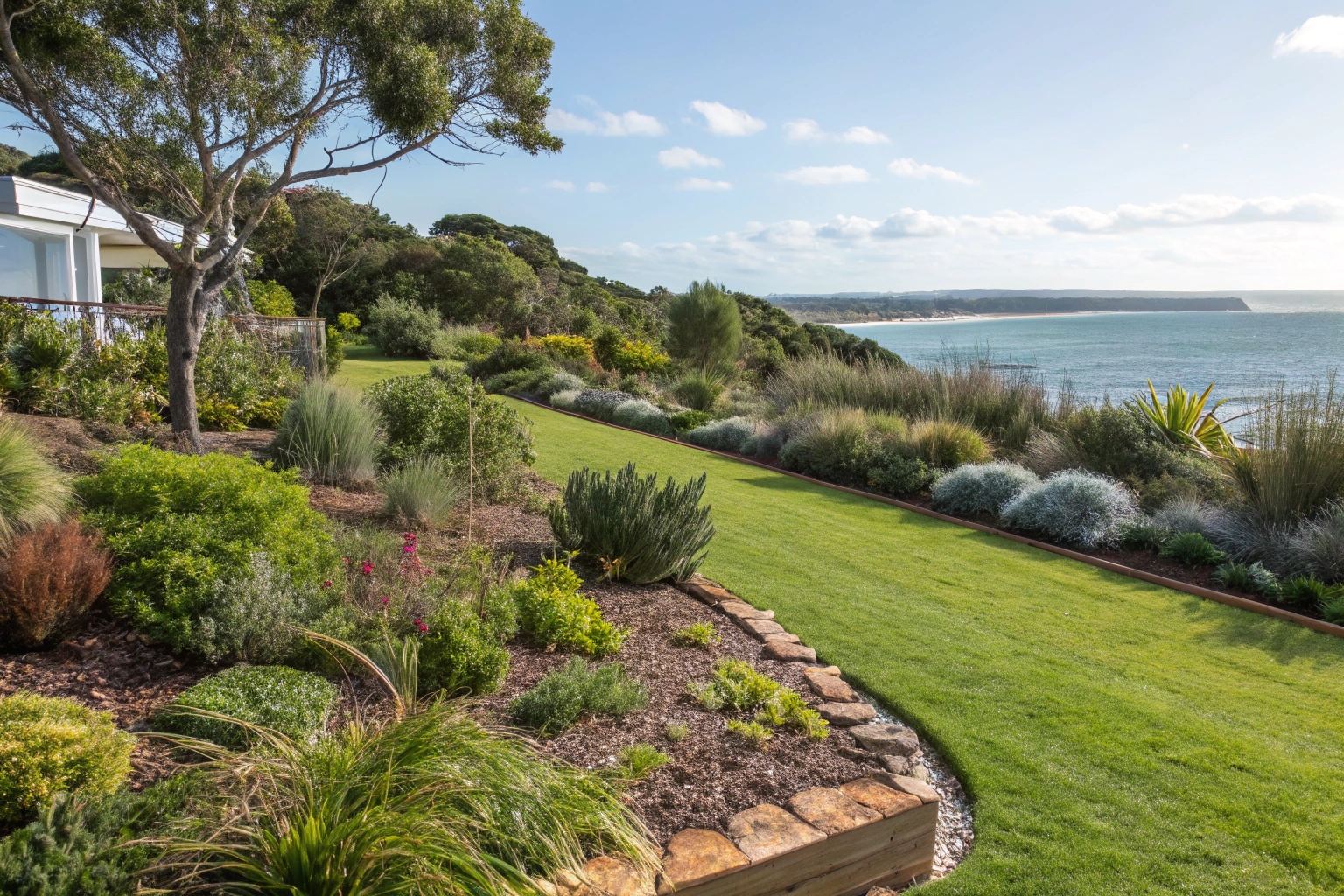
Creating That Relaxed Coastal Aesthetic
There’s a look that belongs at the beach – and it’s not what most landscapers default to. Coastal style means natural materials, weathered timber, soft colour palettes echoing sand and sea. Think greys, whites, soft blues, sage greens. Nothing too formal or manicured.
Weathered timber works beautifully if you choose right species. Spotted gum and ironbark handle coastal conditions better than treated pine. We often leave timber to silver naturally rather than fighting to keep it stained. That grey patina? That’s beach house aesthetic right there.
Coastal Material Palette:
- Weathered timbers and natural stone
- River rocks, sandstone, crushed shells
- Powder-coated aluminium fixtures
- Outdoor-grade weather-resistant fabrics
Garden beds want that casual, slightly wild look. Clumped plantings instead of rigid rows. Native grasses moving in breeze. Ground covers spilling over edges. Your outdoor furniture should handle weather without constant maintenance. Everything contributes to beachside vibe while actually lasting in coastal conditions.
Outdoor Living Spaces for Beach House Properties
This is where beach house landscaping pays off. Your outdoor areas should get used as much as indoor spaces – maybe more during summer.
Entertaining decks want positioning that maximizes use. Morning sun for breakfast, afternoon shade for summer lunches, protection from south-west winds. Ironbark or spotted gum over cheaper timber options. Covered pergolas with louvered roofs extend usable seasons without losing flexibility.
Built-in BBQ areas with prep space and storage transform how you use outdoor space. Stainless steel handles coastal conditions. Position them with weather protection and kitchen access.
Fire pits create gathering spots for cool evenings. Gas heaters extend autumn and spring use without going inside.
Beach houses need outdoor showers. Rinse off salt and sand before entering. Simple post-and-mixer setup works, or build privacy screens with hot water.
Pool areas want minimal fuss materials. Sandstone or concrete pavers that don’t get slippery. Salt-tolerant plantings. Storage for surfboards, kayaks, beach chairs – built-in solutions under decks or weatherproof cupboards.

Salt-Tolerant Plants That Actually Thrive
Here’s what survives and looks good in beach house landscaping on the Central Coast. Not just anything salt-tolerant, but species giving you coastal aesthetic while handling the conditions.
Native coastal species form the backbone of proper beach gardens. Pigface ground cover loves sandy soil and handles salt spray while giving colour. Coastal banksia works for screening, attracts birds, tough as nails. Lomandra with strappy foliage needs zero fuss, perfect for mass planting. Native grasses give movement and texture while handling wind and salt. Hardy exotics earn their place too – agapanthus survives because it actually handles conditions, cycads bring architectural interest, coastal tea tree provides screening with wind resistance.
The trick isn’t just picking salt-tolerant plants. You need species handling wind, sandy soil, full sun exposure, and occasional neglect when you’re not at the beach house for weeks. They need looking relaxed together, not like someone grabbed whatever was labelled “coastal” at the nursery.

Privacy Solutions That Keep Your Views
Beach houses want privacy without losing what you paid for – ocean views, coastal breezes, connection to surrounding landscape.
Glass fencing with posts and panels creates barriers without blocking views. Frosted sections at eye level give privacy while clear panels maintain sight lines. Works beautifully for pool fencing and balcony screening. Strategic plant placement blocks sight lines from specific angles while leaving views open. Takes more planning than hedge rows but gives you both privacy and views. We map sight lines from neighbouring properties and position tall specimens to interrupt them.
Layered plantings mix heights creating privacy at ground level while keeping upper areas open. Low ground covers and mid-height shrubs screen lower sections. Leave space above for views. Works especially well for beach houses on elevated blocks.
Architectural screens – slatted timber, laser-cut metal panels, decorative concrete blocks – create privacy zones without solid barriers. Large pots with screening plants give flexible privacy too. Move them seasonally, reconfigure for entertaining, adjust as vegetation matures.
Call us at (07) 4351 4011 or …
Erosion Control and Dune Stabilization
Beachfront and near-beach properties face erosion challenges. Wind removes sand. Heavy rain creates runnels. Even foot traffic wears paths that start erosion.
Native coastal grasses stabilize sand better than anything else. Their root systems bind soil while flexible stems handle wind. Spinifex, coastal sword grass, lomandra varieties – plant them densely across vulnerable areas.
Ground covers add another erosion control layer. Pigface spreads quickly, roots as it goes, creates living mat that holds sand. Carpobrotus and other native succulents work similarly. These plants actually prefer sandy, well-drained conditions.
Retaining solutions make sense for properties with level changes. Sandstone walls, timber sleepers, even geotextile-reinforced slopes – each has applications depending on height and location. We often combine structural retention with heavy planting for best results.
Strategic pathways channel foot traffic away from vulnerable areas. Timber boardwalks, stepping stones, gravel paths – give people defined routes and they’ll use them. Protects surrounding plantings and prevents new erosion tracks forming.
Service Areas Across the Central Coast
We provide beach house landscaping services throughout coastal Central Coast areas: Terrigal, Avoca Beach, Wamberal, Copacabra, Forresters Beach, Bateau Bay, Shelly Beach, Toukley beachfront properties, and surrounding coastal suburbs. Each location has slightly different conditions – we adjust designs accordingly.
Your beach house deserves landscaping that handles coastal conditions while creating beautiful, functional outdoor living spaces. Native plantings, proper soil preparation, salt-tolerant species, weather-resistant materials, and designs that work with the coast instead of fighting it.
Contact us for beach house landscaping that actually lasts on the Central Coast.
Frequently Asked Questions About Beach House Landscaping
Native coastal species handle salt spray and wind better than anything else. Pigface, coastal banksia, lomandra, native grasses – these evolved for exactly these conditions. Some hardy exotics like agapanthus and coastal tea tree work well too. The plants that fail are the ones people bring from inland gardens expecting them to cope. Camellias, azaleas, most standard roses – they struggle with salt and wind. Stick with proven coastal performers and you’ll actually have gardens that thrive instead of just survive.
No, and honestly trying to replace all your sandy soil fights a losing battle. Sand migrates back, wind erodes improved areas, water drains through regardless once you get below that top layer. Better approach is working with the sand – mixing in serious amounts of organic matter, building raised beds for specific areas, choosing plants that actually prefer well-drained sandy conditions. Native coastal species evolved for this exact soil type. They don’t need rich loamy soil to thrive.
Done right, surprisingly little. Native coastal plantings established properly need occasional pruning, annual mulch top-up, maybe some fertilizing. Automated irrigation handles watering. Main ongoing work is controlling weeds before they establish and replacing mulch as it breaks down. We design specifically for low maintenance because most beach house owners aren’t there full-time. You want gardens that survive two-week absences without stress.
Absolutely. Glass fencing gives barriers without blocking sight lines. Strategic plant placement blocks views from specific angles while leaving vistas open. Layered plantings create privacy at ground level, leave upper areas clear. Even architectural screens positioned carefully give privacy zones without solid barriers. Takes more planning than just planting hedge rows everywhere but you get both privacy and the views you paid for.