
Living on the Central Coast means you get those stunning ocean views and that relaxed beachside lifestyle everyone dreams about. But here’s what nobody tells you when you buy that coastal property – your garden’s cop it pretty hard from the salt spray, coastal winds, and that sandy soil that just won’t hold moisture.
You’ve probably noticed how your plants look great for a few months, then start looking sad and burnt around the edges. Or maybe you’ve watched the wind absolutely hammer anything you try to plant on the exposed side of your property. That’s just life on the coast, right? Well, not really.
Here’s the thing about coastal garden design on the Central Coast – it’s not about fighting against the conditions. It’s about working with them. About choosing plants that actually thrive in salt air instead of just tolerating it. About creating windbreaks that look beautiful while protecting your outdoor living areas. About building garden beds that drain properly in our sandy soils while still holding enough moisture to keep your plants happy through summer.
Central Coast Landscaping’s been designing coastal gardens around Terrigal, Avoca, Wamberal, and the surrounding beaches for years now. We’ve seen what works and what doesn’t when you’re this close to the ocean. And we’ve helped plenty of coastal property owners transform their struggling gardens into those relaxed, textured, beachy landscapes that actually suit where they live.
Your coastal property deserves a garden that looks good year-round without you constantly replacing dead plants or spending every weekend trying to fix salt damage.

Understanding Central Coast's Coastal Garden Challenges
Salt spray’s probably the biggest issue you’re dealing with. When those onshore winds blow in, they’re carrying salt particles that settle on your plants’ leaves. Over time, that salt draws moisture out, and you end up with burnt leaf tips, brown patches, and plants that just look stressed all the time. The closer you are to the beach, the worse it gets.
Then there’s the wind itself. Central Coast gets those strong easterlies and nor-easters that can absolutely shred delicate plants. You’ll see leaves tattered, stems snapped, and anything that grows tall just bent over permanently. A lot of people try planting what they see in Sydney suburban gardens, and it just doesn’t cut it up here on the coast.
Sandy Soil Problems
Your soil’s another story. That sandy Central Coast soil drains so fast that water and nutrients just wash straight through. You can water in the morning and by afternoon the soil’s bone dry again. Plus, it doesn’t hold organic matter well, so even when you add compost or fertilizer, it breaks down quickly and you’re back where you started.
Erosion and Drainage Issues
If you’ve got any slope on your property, you’ve probably noticed how the soil just washes away when it rains. Sandy soil and coastal weather create perfect conditions for erosion. Garden beds lose their shape, mulch disappears, and you’re left with exposed roots and uneven ground.
These aren’t problems you can solve with regular suburban gardening techniques. Coastal garden design on the Central Coast needs a completely different approach.
Salt-Tolerant Plants That Actually Thrive Here
The secret to a great coastal garden isn’t trying to make suburban plants survive – it’s choosing species that love salt air and sandy conditions. Native coastal plants are your best bet because they’ve evolved to handle exactly what your garden’s throwing at them.
Top Performers for Central Coast Gardens
Banksias are absolute champions in coastal conditions. They handle salt spray, wind, and sandy soil without batting an eyelid. Coastal rosemary (westringia) is another ripper – it looks good year-round, handles salt beautifully, and you can use it as a hedge or feature plant. Pigface is perfect for ground cover, especially on slopes where you need erosion control. Those thick succulent leaves just laugh at salt spray.
Native grasses like lomandra and dianella are bulletproof in coastal gardens. They move gracefully in the wind instead of fighting it, they handle salt exposure, and they need barely any water once established. Plus they give you that relaxed, textured look that suits beachside properties.
Beyond Natives
Some non-native plants work brilliantly too. Succulents like agave and aloe handle our conditions perfectly. Ornamental grasses add movement and texture. Even some Mediterranean plants do well here because they’re adapted to coastal climates overseas.
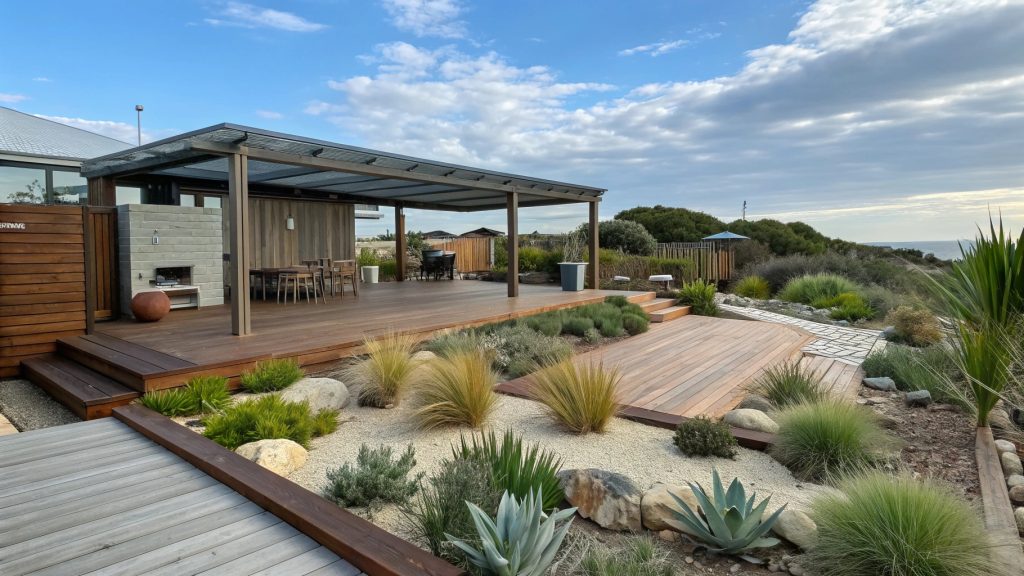
The trick is layering different heights and textures. Low groundcovers, mid-height shrubs, and taller screening plants all working together. That creates wind protection while giving you that lush, layered look instead of the sparse, struggling garden most coastal properties end up with.
Wind Protection and Strategic Garden Design
Wind’s doing more damage to your coastal garden than you probably realise. It’s not just the physical damage to leaves and stems – wind also increases evaporation, so your plants are drying out faster even when you’re watering regularly. That’s why creating proper wind protection is the foundation of good coastal garden design on the Central Coast.
Layered Planting for Wind Reduction
The best windbreaks don’t try to stop wind completely – they filter it. A solid fence or wall actually creates turbulence on the downwind side that can be worse than no protection at all. Instead, you want permeable barriers that slow the wind down gradually.
Start with tough, low-growing plants on your windward side – the side that cops the worst of it. These take the initial hit and create a buffer zone. Behind them, you can plant slightly taller, more sensitive species. Then taller shrubs and screening plants further back. Each layer’s protected by what’s in front of it.
Microclimate Management
Every coastal property’s got sheltered spots where plants can thrive – maybe on the western side of your house, or behind an existing structure. These microclimates are gold for growing species that wouldn’t survive in the exposed areas. Your entertainment areas and outdoor living spaces should be positioned in these protected zones too.
We often create deliberate windbreaks using hardy species like coastal rosemary or native grasses planted densely. Once they’re established, they open up possibilities for more diverse planting behind them. That’s how you get from a sparse, wind-battered garden to something lush and varied.

Preparing and Maintaining Coastal Garden Soil
That sandy Central Coast soil you’re working with needs serious help before it’ll support a proper garden. Just throwing plants in and hoping for the best doesn’t work – the sand drains too fast, doesn’t hold nutrients, and won’t support healthy root systems.
Building Better Soil Structure
The first step is adding bulk organic matter – and we’re talking serious amounts, not just a bag or two from Bunnings. Compost, aged manure, and composted pine bark all help your sandy soil hold moisture and nutrients. You need to work this through the entire planting area, not just dig a hole and backfill it.
Mulch is your best friend in coastal gardens. A thick layer of quality mulch slows evaporation, keeps roots cooler, and breaks down over time to add more organic matter to your soil. You’ll need to top it up regularly because it breaks down faster in our warm coastal climate, but it makes a massive difference to how well your plants perform.
Ongoing Maintenance Essentials
Salt buildup on plant leaves needs regular attention. After periods of strong onshore winds, give your plants a good wash-down with fresh water. It sounds simple, but it prevents that accumulated salt from burning foliage.
Fertilising coastal gardens is different too. Slow-release fertilisers work better than liquid feeds because they won’t just wash straight through your sandy soil. Native-specific fertilisers are important if you’re using Australian plants – they’re sensitive to high phosphorus levels that general fertilisers contain.
Call us at (07) 4351 4011 or …
Creating Outdoor Living Spaces in Your Coastal Garden
You bought a coastal property to actually use the outdoors, not just look at it through the window. But without proper planning, those entertainment areas and alfresco spaces become unusable because of wind, salt spray, or lack of privacy from neighbours.
Integrating Gardens with Entertainment Areas
Your deck, patio, or outdoor dining area needs strategic planting around it. Not just for looks – though that matters – but for practical wind protection and creating that sense of enclosure that makes outdoor spaces feel comfortable. Screening plants along fence lines give you privacy without blocking breezes completely. Lower plantings soften hard edges and tie your paved areas into the broader garden.
Pool surrounds are tricky in coastal conditions. You need plants that can handle salt from the pool, salt from the air, and often reflected heat off paving and water. Succulents, lomandra, and coastal rosemary all work brilliantly around pools. They won’t drop leaves into your water constantly either, which saves you cleaning time.
The Relaxed Coastal Aesthetic
Coastal garden design on the Central Coast shouldn’t look formal or manicured – it should feel relaxed and natural. Textured foliage in silvers, greys, and soft greens suits the beachside vibe. Ornamental grasses moving in the breeze, rounded plant forms instead of clipped hedges, and natural stone or timber materials all contribute to that laid-back coastal feel.
Your outdoor living areas become usable year-round when the garden design works properly – sheltered enough to be comfortable, but still connected to that coastal environment you moved here for.
Ready to Transform Your Coastal Garden?
Your coastal property’s got so much potential that’s being wasted right now. Instead of struggling with burnt plants, wind damage, and that sandy soil that won’t cooperate, you could have a garden that actually works with Central Coast conditions instead of fighting them.
Central Coast Landscaping’s designed coastal gardens from Terrigal to Wamberal and everywhere in between. We know which plants thrive in salt spray, how to create wind protection that looks natural, and how to build garden beds that’ll actually support healthy growth in sandy soil. More importantly, we know how to create outdoor spaces you’ll actually use – entertainment areas that are sheltered and comfortable, pool surrounds that look great and handle coastal conditions, and gardens that complement your beachside lifestyle instead of creating constant maintenance headaches.
Your Free Coastal Garden Consultation
We’ll come out to your property, assess what you’re dealing with in terms of exposure, soil conditions, and microclimates, and give you honest advice about what’ll work in your specific situation. No cookie-cutter solutions – every coastal property’s different, and your garden design needs to reflect that.
Whether you’re starting from scratch with a bare block or renovating a struggling garden that’s never quite worked, we’ll help you create something that suits where you live. Something resilient, beautiful, and actually sustainable for Central Coast coastal conditions.
Give us a call to book your consultation. Let’s turn your coastal garden into something you’re proud to show off.
Frequently Asked Questions About Coastal Garden Design
You’ll see decent coverage within 6-12 months if you choose the right plants and prepare the soil properly. Native coastal species establish faster than you’d think once they’re in the ground. The first few months are about regular watering while roots develop, then they’re pretty self-sufficient.
Absolutely. Mediterranean plants, succulents, and certain ornamental grasses all handle Central Coast conditions brilliantly. The key is choosing species adapted to coastal climates somewhere in the world. You’re not limited to just banksias and lomandra, though they’re fantastic options.
Less than you’d think once it’s established properly. Monthly mulch top-ups, occasional salt wash-down after big storms, and seasonal pruning keeps things looking good. Way less work than trying to maintain a lawn or suburban garden that’s constantly struggling against coastal conditions.
If you’ve built good soil structure and chosen drought-tolerant coastal plants, you’ll only need occasional deep watering through summer once everything’s established. The first summer after planting needs more attention, but after that your coastal garden design should handle dry periods without you stressing about it every day.