
The Central Coast gives us something special – that coastal lifestyle, the space, the pace that makes you remember why you live here. And your garden should be part of that, not working against it. We’ve been creating drought-resistant gardens across Terrigal, Avoca Beach, Wamberal and surrounding areas that actually celebrate what makes this region great. Gardens that look beautiful year-round, handle our climate naturally, and give you more time at the beach instead of standing around with a hose.
Drought-resistant garden design Central Coast homes are built around works with our sandy soils, coastal conditions, and sunshine rather than fighting them. Native plants that thrive in salt air. Mediterranean species that love the heat. Smart irrigation that waters efficiently when needed. And outdoor spaces that stay green and inviting while your water bills drop.
This is about creating gardens that fit the lifestyle you moved here for – low maintenance, sustainable, and beautiful enough that your backyard becomes where everyone wants to gather on Saturday afternoons.
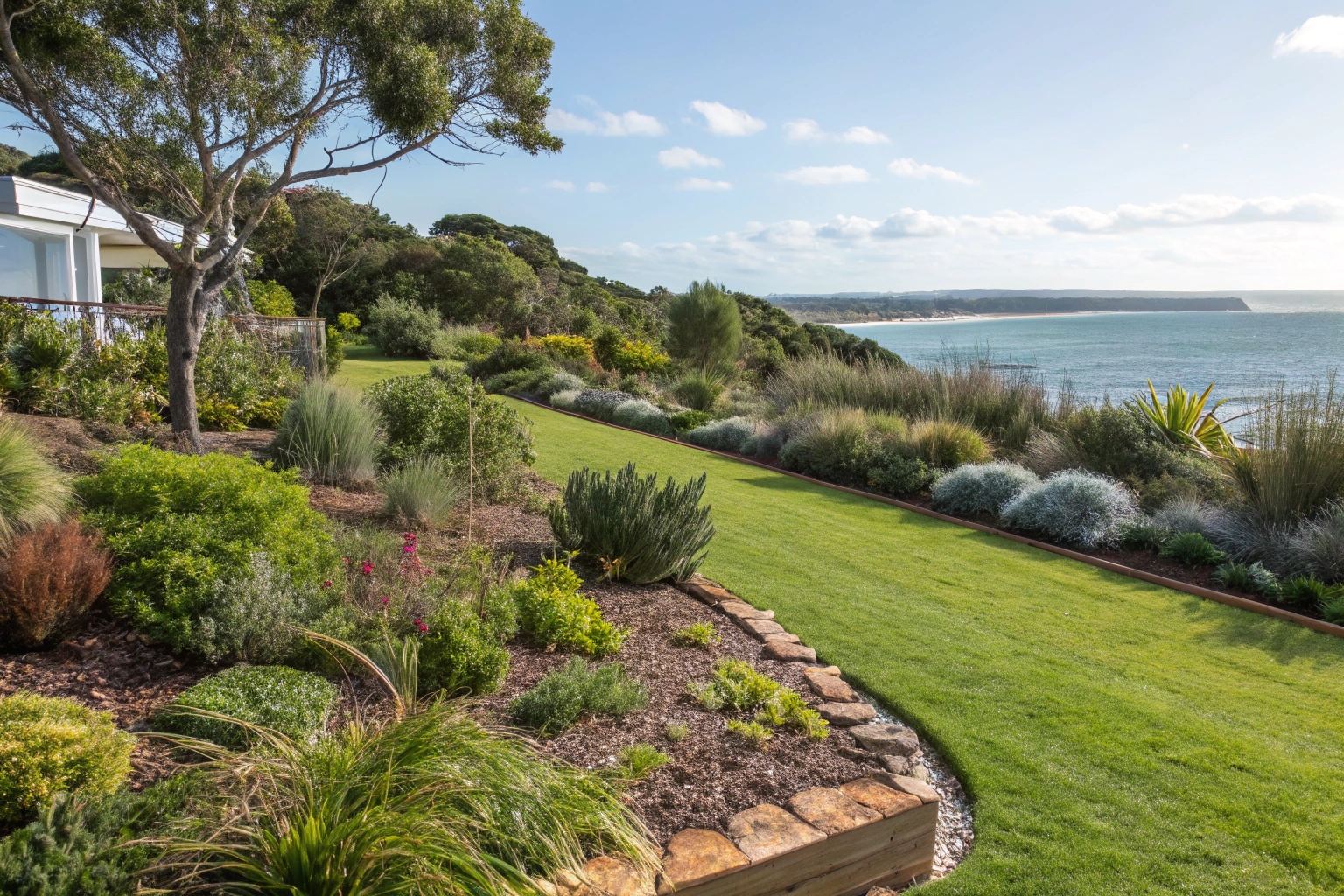
Water-Wise Plant Selection That Actually Looks Good
The whole point of drought-resistant design is creating something you want to look at. Nobody moved to the Central Coast to stare at a yard full of rocks and sad-looking cacti. We’re building gardens that look lush and inviting while using half the water.
Native Australian plants give you that foundation:
- Grevilleas with spider flowers that bring in the birds
- Banksias handling the salt air naturally
- Kangaroo paw adding bold colour pops
- Coastal rosemary that smells amazing and thrives here
- Bottlebrush creating structure and year-round interest
Mediterranean species fit perfectly with our climate – lavender, rosemary, salvias, and ornamental grasses create that relaxed coastal feel while barely needing water once established.
Succulents and drought-tolerant perennials fill in beautifully. Agaves, aloes, echeverias – these create stunning focal points and ground covers that stay looking good through summer restrictions.
The trick is mixing these together for year-round colour, different heights and textures, and that lush feeling even though you’re using a fraction of the water.
Creating That Lush Appearance With Minimal Water
This is where design actually earns its keep – making a water-wise garden look abundant and inviting rather than sparse and struggling.
Texture and colour variety create visual interest that makes a garden feel full. Mix fine-textured grasses with bold succulent shapes. Pair silver-grey coastal species with deep green natives. Add flowering plants that give you seasonal colour without needing constant water.
Layering plants at different heights – groundcovers, mid-height shrubs, feature plants, maybe a small tree – creates depth and that lush feeling even though you’re using species that barely drink. Your eye sees a full, established garden rather than individual plants spread out.
Strategic placement of feature plants draws attention where you want it. An established agave as a focal point, a beautiful grass catching the light, a flowering native that becomes a talking point – these create impact without needing to fill every space.
Year-round interest comes from choosing plants that don’t all peak at once. Some for spring flowers, some for summer texture, some for autumn colour, some that look good in winter. The garden always has something happening, always feels alive, even though the plant selection is entirely drought-resistant.

Long-Term Savings That Actually Add Up
Water bills drop significantly once your garden’s established. Clients regularly tell us they’re using 40-50% less water than before, sometimes more. During summer restrictions, they’re not stressed because their garden was designed for exactly this situation. That’s real money back in your pocket every quarter.
Maintenance time goes down because you’re not constantly trying to rescue struggling plants or keep up with a lawn that needs weekly attention. Most drought-resistant gardens need seasonal care rather than weekly intervention. That’s time back for beach walks, Saturday sports, or just not working in the yard every weekend.
Long-term plant replacement costs basically disappear. When you’re working with plants suited to Central Coast conditions, they establish well and last. You’re not replanting the same bed every year because everything died over summer. Property value benefits from landscaping that looks great and handles our climate are genuine selling points when the time comes.
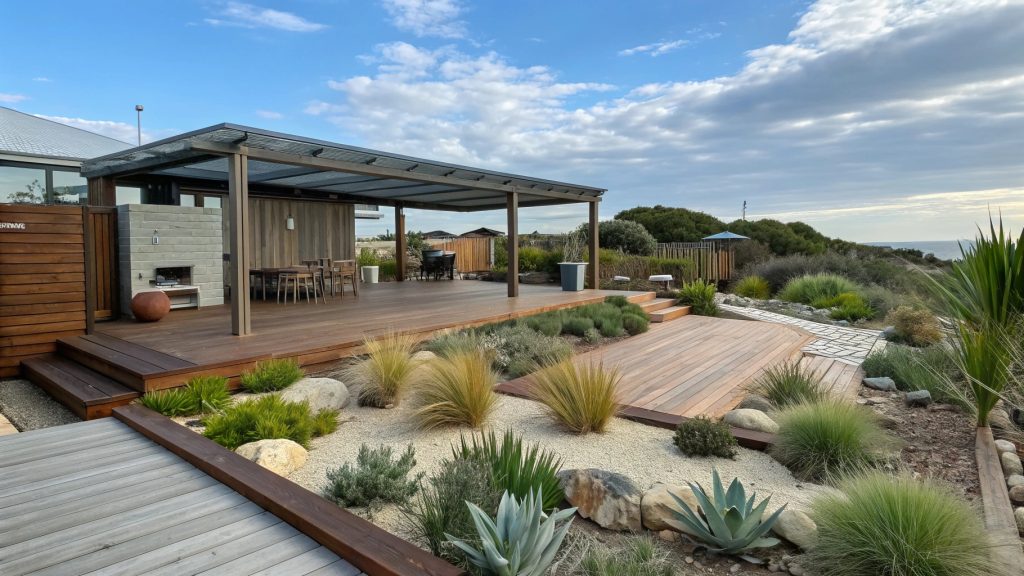
Garden Zoning and Design Strategy
A smart drought-resistant garden design isn’t treating your entire property the same way. Some areas matter more for how you actually live. Your outdoor entertaining area – the deck, the space where you host Saturday BBQs, where the kids play – gets designed for regular use with good-looking plants and irrigation attention. Street-facing beds and front garden need to look great year-round for first impressions, but these can be almost entirely drought-resistant plants that stay attractive without constant watering.
Low-traffic or utility areas become your water-saving zones. That strip down the side of the house, the back corner nobody uses – these are perfect for hardy natives that establish quickly and look after themselves. This zoned approach puts your water and maintenance effort where it actually matters, not spreading resources thin trying to keep every square metre at the same level while still creating beautiful outdoor spaces.
Call us at (07) 4351 4011 or …
Smart Irrigation That Doesn't Waste a Drop
You can have the right plants and perfect soil, but if your irrigation system is spraying water everywhere except where it’s actually needed, you’re still fighting an uphill battle. Drip irrigation systems deliver water right to the root zone where plants use it. Nothing’s evaporating in the wind, nothing’s watering the driveway. They use around 30-50% less water than traditional sprinklers while keeping plants healthier with consistent moisture. Smart controllers adjust watering based on weather, soil moisture, and what your plants actually need. Rained overnight? System doesn’t run.
Hydro-zoning groups plants with similar water needs together, each zone getting its own schedule. Your entertaining area gets more attention, established natives get watered less frequently but more deeply. Rainwater collection systems capture heavy rain in tanks for free water during dry months, cutting your mains water use significantly on Central Coast properties.
Ready to Create Your Water-Wise Central Coast Garden?
Your garden should be working with our coastal climate, not fighting it. Let’s talk about what’s possible for your property – the plants that’ll thrive, the design that fits how you actually live, and the water savings that add up every quarter.
We offer free on-site consultations across Terrigal, Avoca Beach, Wamberal, Erina and surrounding Central Coast areas. We’ll assess your space, talk through what you’re wanting to achieve, and show you exactly how drought-resistant design creates the outdoor space you’re after.
Call us today to book your consultation and start creating a garden that looks beautiful, handles our conditions naturally, and gives you more time enjoying the Central Coast lifestyle you moved here for.
Frequently Asked Questions
You’ll see immediate improvement once it’s planted, but the real transformation happens around 6-12 months when plants establish their root systems. After that first year, your garden looks lush while needing way less water. Natives and Mediterranean plants actually look better as they mature – fuller, more flowers, better structure.
Absolutely. That’s the whole point of good design – creating gardens that look lush and inviting while using less water. We’re mixing different textures, colours, heights and flowering periods so your garden always has something happening. This isn’t about rocks and brown sticks, it’s about smart plant selection that thrives here.
Yes, and we do this all the time. We’ll assess what’s already working, remove plants that are constantly struggling, improve your soil preparation, and phase in drought-resistant species that complement what’s staying. Most conversions happen over a few months and you maintain some established plants while building in the water-wise ones.
Not at all. Natives form a great foundation because they’re evolved for Australian conditions, but we mix in Mediterranean species, ornamental grasses, and drought-tolerant perennials that all thrive in Central Coast climate. The design comes from combining plants that work together and suit your property’s specific conditions.