
What Garden Terracing Actually Does for Your Property
Garden terracing changes all that. What we’re talking about here is transforming that slope into multiple flat levels – usable spaces where you can actually do something. Entertainment area up top. Garden beds on the middle tier. Maybe a veggie patch down the bottom where it stays a bit more sheltered. Suddenly you’ve got a property that works instead of one that’s half wasted.
Why Local Conditions Make DIY Terracing Risky
And here’s the thing about the Central Coast – our sandy soil, coastal conditions, and those summer storms mean you can’t just wing it with terracing. You need proper retaining structures, drainage that actually handles our rainfall, and materials that won’t fall apart in the salt air. That’s where the difference between a professional job and a DIY disaster shows up real quick.
Our Experience with Central Coast Garden Terracing
We’ve been building garden terraces around the Central Coast long enough to know what works here and what doesn’t. The slope that seems impossible? We’ve done steeper. The drainage nightmare? We’ve solved worse. That vision you’ve got of actually using your whole property instead of just the flat bit near the house? Yeah, we can make that happen.
What Garden Terracing Actually Gives You
Creating Flat Usable Spaces Where There Were None
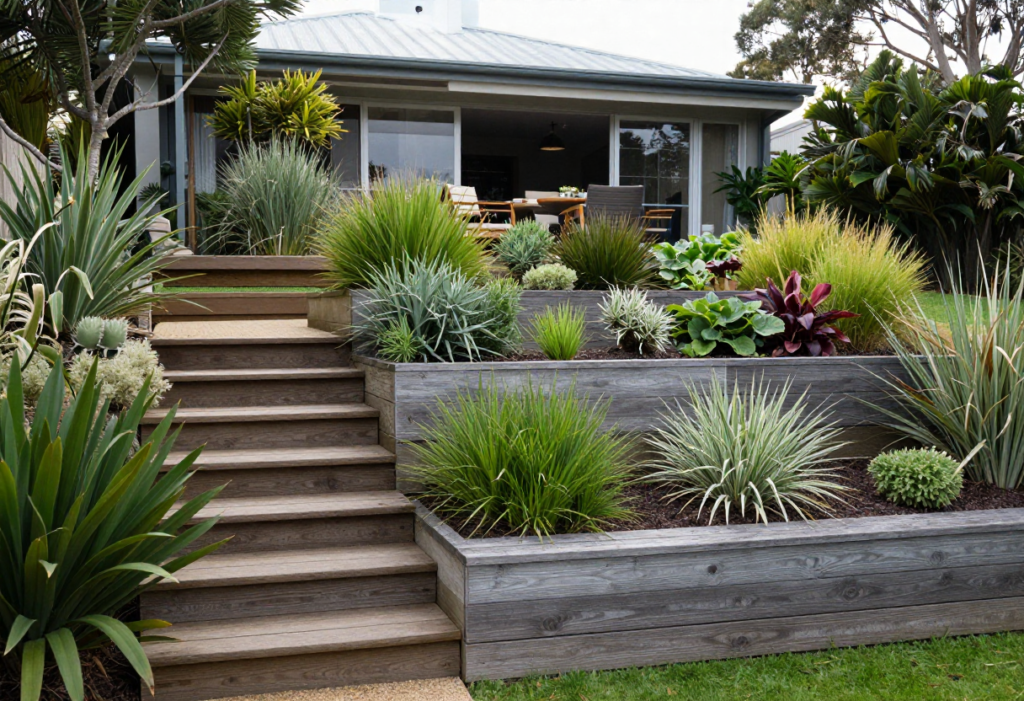
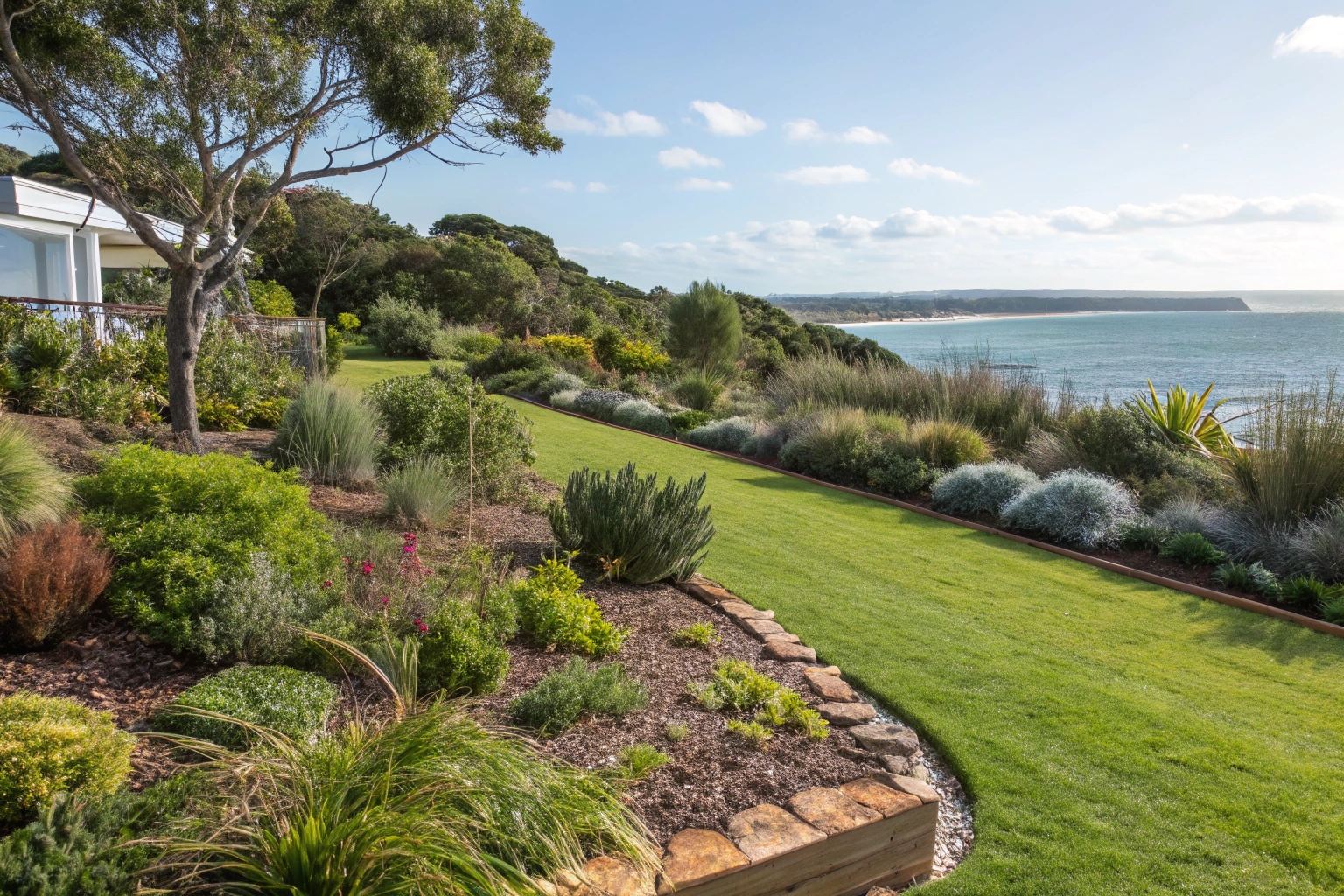
This is the big one. You've probably walked your property a hundred times thinking "if only this bit was flat." Garden terracing makes that happen. We're carving out level platforms where you can put furniture, plant a proper garden, let the kids kick a ball around - stuff you just can't do on a slope. Most Central Coast blocks we work on end up with 2-4 terrace levels depending on how steep you're dealing with. Each level becomes its own zone.
Stopping Erosion Before It Gets Worse
See those bare patches where nothing grows anymore? That's erosion. Every time it rains, you're losing topsoil. Over years, that adds up to serious problems - undermined paths, exposed tree roots, even foundation issues if it's getting close to the house. Properly built garden terracing stops this dead. The retaining walls hold everything in place. Drainage systems move water where it needs to go instead of letting it carve channels through your soil
Maximizing Your Planting Space
That slope you've got now? Maybe you can squeeze a few hardy natives in there and hope they hang on. Proper terracing? You're looking at established garden beds, veggie patches, feature plantings, even fruit trees if you want them. Different conditions on each level mean you can grow different stuff - sun-lovers up top, shade-tolerant plants down low, moisture-lovers where the natural drainage collects.
Planning Your Garden Terracing Design
Working Out How Many Levels You Need
The number of terraces depends on your slope and how you plan to use each space. Terraces usually work best between 600mm–1200mm high to balance cost, stability, and functionality. We assess your slope and goals to determine the most practical number of levels for your property.
Deciding Terrace Width and Depth
Terrace depth is based on intended use—3–4m for entertainment areas, 1.5–2m for garden beds, and variable sizes for veggie patches. We walk the site with you to design terraces that are sized properly and make the space genuinely usable.
Creating Flow Between Levels
Good terracing connects levels naturally. We plan clear sight lines, logical path routes, and steps where movement feels natural. This creates a cohesive, intentional layout rather than disconnected platforms.

Retaining Wall Solutions for Central Coast Terracing

Treated Pine Sleepers
A popular and affordable option for many Central Coast properties. Treated pine sleepers look great and generally last 15–20 years when installed correctly. Proper treatment, drainage, and anchoring are essential to prevent movement and early deterioration.

Natural Stone Walls
A premium choice that offers unbeatable longevity and coastal durability. Whether sandstone or fieldstone, dry-stacked or mortared, stone walls deliver a timeless look and can last for generations. Higher cost reflects the material and skilled installation.

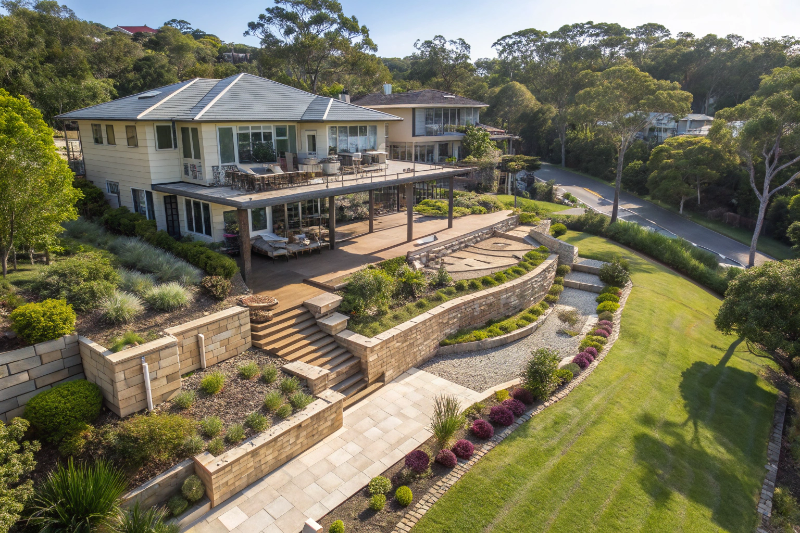
Concrete Block Systems
Modern interlocking block systems offer strength, style, and mid-range pricing. With built-in drainage features and attractive finishes, they’re ideal for larger terracing projects where you want a polished look without the cost of natural stone.

Built-In Planters and Garden Edges
Retaining walls can double as landscape features by incorporating planters, garden pockets, or even seating. This approach softens the look of the structure and creates a cohesive, functional garden design—perfect near outdoor living areas.
We can do many things for your backyard including Garden terracing landscaping lawn replacement retaining walls
Connecting Your Terrace Levels with Steps
- Positioning Steps Where They Make Sense
Steps are placed based on natural movement patterns—where you’d naturally walk. Whether that’s the side, the middle, or multiple points, the locations are chosen to make daily use practical and intuitive. - Building Steps That Are Safe and Comfortable
We follow proper rise-and-tread proportions to ensure the steps feel natural and safe. Non-slip surfaces, comfortable widths, and optional handrails or lighting make them easy to use in all conditions. - Matching Step Materials to Your Terraces
Step materials are matched to the retaining walls—stone with stone, timber with sleepers, concrete with block systems—to create a cohesive, well-designed look instead of an afterthought. - Creating Feature Steps as Garden Elements
Steps can also become visual features with wide landings, curves, planting pockets, or integrated lighting. These elevate the terraced garden and add value by enhancing the overall landscape design.

Water Features, Shade Structures, and Family-Friendly Design
Different Growing Conditions on Each Level
Terracing creates distinct microclimates on each level—sunny, shaded, or cooler areas—allowing each terrace to support plants that thrive in its specific conditions.
Creating Garden Zones with Different Purposes
Each level can serve a different function: native gardens, cottage gardens, entertaining spaces, or productive veggie and fruit areas, all arranged based on access and sunlight.
Using Cascading and Climbing Plants
Retaining wall faces are perfect for trailing or climbing plants that soften the structure and visually connect the levels. Planting pockets can be incorporated for better growth.
Establishing Plants Across Slope Aspects
Terrace orientation matters—north-facing for heat-loving plants, south-facing for shade lovers. Planning plant placement around sun exposure ensures healthier, low-maintenance gardens.
Drainage Systems That Actually Work
Managing Water Flow Between Terrace Levels
Terracing changes how water moves on your property, so drainage needs to be done right. We install ag pipes behind every wall and create a system that safely moves water from the top terrace down to a proper discharge point.
Preventing Erosion at Terrace Edges
Terrace edges are erosion hotspots. We protect them with drainage channels, reinforced edges, and strategic planting to slow water and keep soil stable over time.
Installing Proper Drainage Behind Retaining Walls
Every wall gets ag pipe, gravel, and filter fabric to prevent water buildup. This stops pressure from saturated soil, which is one of the main causes of wall failures.
Surface Water Management and Runoff Control
We control surface runoff using channel drains, proper grading, and pits connected to stormwater. The goal: no uncontrolled water flowing over terrace edges, especially on steep Central Coast blocks.
Call us at (07) 4351 4011 or …
Choosing Materials for Central Coast Conditions
What Works in Coastal Salt Air
The Central Coast’s salt air can corrode metal and break down timber and concrete. That’s why we only use materials proven to survive coastal conditions—H4/H5 treated pine, galvanized or stainless fixings, and marine-grade concrete. These choices last decades, while standard materials can fail in just a few years.
Balancing Budget with Longevity
Premium materials like stone and hardwood look amazing but can be expensive. Most families need options that balance cost and durability. We guide you through smart combinations—investing more where it matters visually or structurally and saving where function is the priority. Doing fewer terraces properly is always better than building cheaper ones that won’t last.
Matching Your House Style and Property Character
Terracing should complement your home’s style. A modern beach house needs different materials than a classic coastal cottage. We help you choose options that suit both the structure and overall aesthetic, so the terracing looks like it belongs—not like it was picked just because it was on sale.
Material Durability for Long-Term Performance
Terracing should be built to last. Treated pine offers 15–20 years, while quality concrete or stone can last 50+ years. Even within timber, hardwood significantly outperforms basic treated pine. We give honest lifespan estimates so you can choose what fits your budget and long-term plans.
Creating Functional Zones Across Your Terraced Garden
Terracing lets you turn unusable slopes into practical, enjoyable spaces by creating level zones with clear purposes. The top terraces are often ideal for entertainment areas—flat, spacious platforms for outdoor furniture, BBQ setups, and gathering spaces that make your yard truly functional. Lower terraces work well for vegetable gardens, where protection from coastal winds and easier irrigation help plants thrive. Families also value terraced lawns, giving kids and pets a safe, flat place to play.
Mid-level terraces can become feature garden spaces that add visual interest from every angle, making the landscape feel layered and dynamic. Whether it’s for entertaining, gardening, relaxing, or showcasing plants, terracing transforms your outdoor area into multiple usable zones instead of just a steep slope.
Frequently Asked Questions About Garden Terracing on the Central Coast
Look, I wish I could give you a straight number but it depends on how steep your slope is, how many levels you need, and what materials you’re going with. Most properties we work on end up somewhere between $15,000 and $45,000 for complete terracing, but that’s covering everything from basic two-level sleeper setups to multi-tier stone systems with lighting and fancy steps. We can give you a proper quote once we’ve seen your property and talked through what you’re after – no point guessing when every Central Coast block is different.
For a typical Central Coast property with two or three terrace levels, you’re looking at around 2-4 weeks from start to finish, weather depending. That includes the retaining walls, drainage installation, steps, and getting everything compacted and ready for planting. Bigger projects with multiple high walls or engineering requirements can push out to 6-8 weeks. We try to get in and get it done because nobody wants construction dragging on forever, but we also won’t rush and do a dodgy job just to finish faster.
On the Central Coast, retaining walls under 1 meter usually don’t need approval, but over that you’re looking at either a complying development certificate or full DA depending on the specifics. If you’re near bushland, steep land, or your walls are going over 1.5 meters, council definitely wants to know about it. We can guide you through what’s needed for your property – sometimes it’s just certifier approval, other times it’s engineering plans and formal submission, but we sort that out before we start so there’s no surprises.
Absolutely, and we actually recommend this approach for bigger projects because it spreads the cost and lets you see how you use each level before committing to the next stage. We’ll design the whole system upfront so everything ties together properly, then you might do the main entertainment terrace this year, add the middle garden level next year, finish with the lower terrace when budget allows. The key is planning it all together from the start so each stage works on its own but also connects to what comes next – can’t just make it up as we go.
Once it’s established, terraced gardens are actually easier to maintain than slopes because you’re working on flat ground instead of trying to mow or weed on an angle. You’ll want to check drainage outlets stay clear after big Central Coast storms, keep an eye on any timber retaining for signs it’s aging, and obviously maintain the gardens themselves. Most retaining structures need basically zero maintenance if they’re built right – the main ongoing work is just normal gardening on each level, which is way simpler than trying to maintain a slope.
Depends where they are and what you want to keep – sometimes we can work around established trees you love, building the terracing to flow around them. Other times trees are right where a retaining wall needs to go and they’ve got to come out, or they’re half-dead coastal banksias that were struggling on the slope anyway. We walk the property with you before we start and identify what’s worth keeping and what’s better off replaced with plants that’ll actually thrive in the new terraced conditions.