
Paving Repair and Restoration Services Central Coast
Want A FREE QUOTE? Click To Call Now!
Ever walk across your driveway and feel that wobbly paver under your foot? Or maybe you’re sick of looking at those sunken areas around your patio where the water pools up after every rain. You’re not alone — heaps of Central Coast homeowners are dealing with the same frustration right now. The thing is, those pavers you laid down 10, 15 years ago? They weren’t installed with Central Coast’s sandy soil and coastal conditions in mind, and now they’re showing their age.
Here’s what we’re seeing across Terrigal, Erina, Wamberal, and Avoca Beach — driveways with cracked pavers creating trip hazards for the kids, patios that look faded and tired from all that salt air, and pathways where the weeds are growing faster than anyone can pull them out. It’s the kind of thing that makes you cringe every time you pull into your driveway or have friends over for a BBQ.
That’s where proper paving repair and restoration comes in. We’re talking about fixing those structural issues at the base level, not just slapping a band-aid on the surface. Whether it’s releveling sunken areas, replacing damaged pavers, or bringing back that fresh-installed look with professional restoration techniques, we help Central Coast property owners get their outdoor spaces back to something they’re actually proud of — without the massive cost of ripping everything out and starting from scratch.
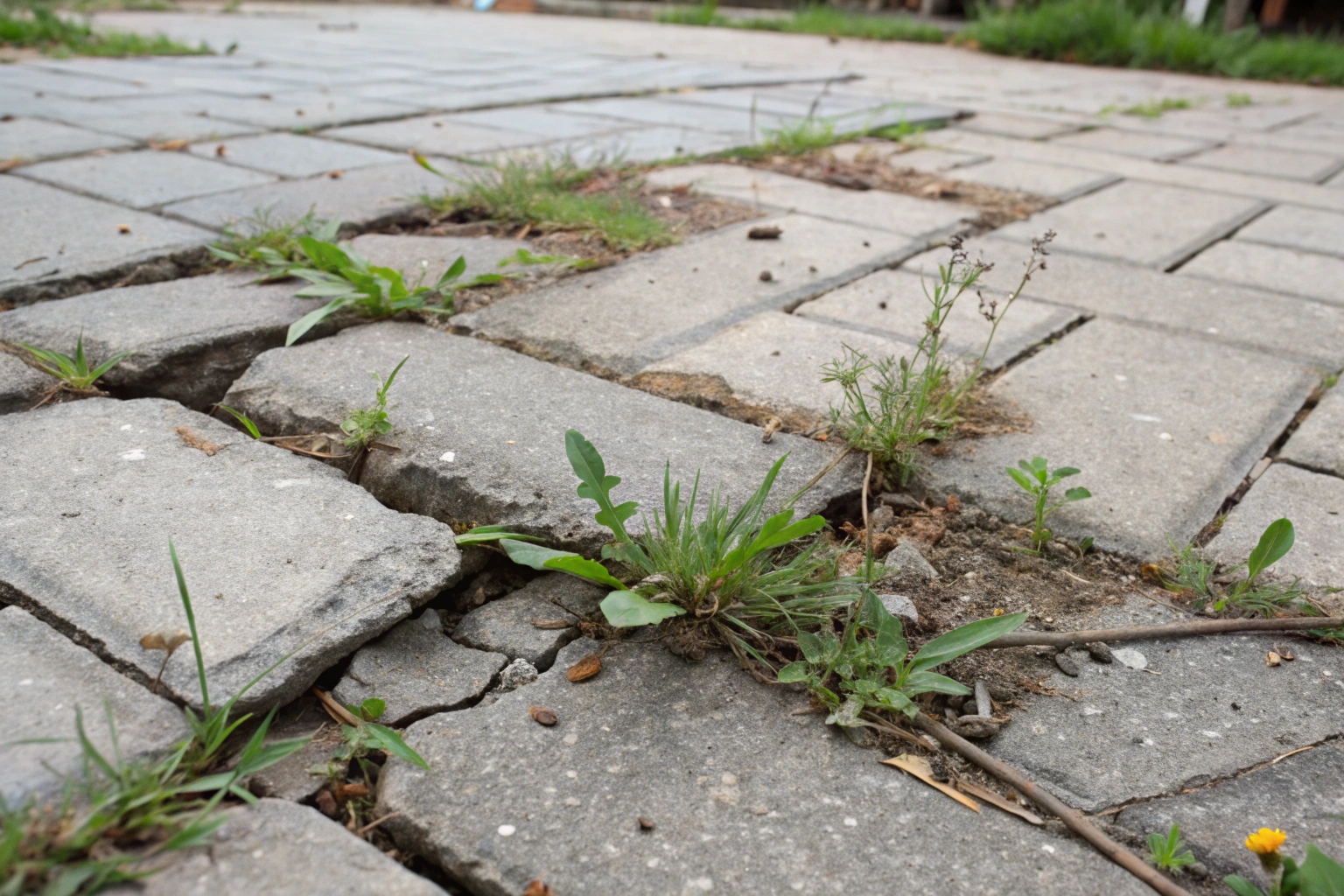
Common Paving Problems We Fix Across Central Coast
Sunken pavers are probably the biggest complaint we hear. You’ll have sections of your driveway or patio that’ve dropped down 20, 30mm below the rest, and water just sits there in puddles every time it rains. That’s your base layer settling — happens all the time in our sandy Central Coast soil where the compaction wasn’t done properly to begin with. Once the base goes, everything on top follows.
Then there’s the cracked pavers themselves. Could be from vehicles driving over areas that weren’t designed for that weight, or tree roots pushing up from below, or just the natural expansion and contraction that happens with our coastal temperature swings. Either way, those cracks aren’t just ugly — they’re weak points where more damage spreads out from.
Weeds growing between your pavers is another dead giveaway that something’s not right. When the jointing sand breaks down or washes away (especially with our heavy summer storms), you’re left with gaps where weeds move straight in. And once they’re established, those roots actually push your pavers further apart, making the problem worse.
Loose pavers that rock when you step on them, faded colours from years of salt spray and UV exposure, uneven surfaces that’ve developed over time — all of these issues point back to the same thing: your paving needs professional attention before it gets to the point where you’ve got no choice but to replace everything.
Our Paving Repair Services
When we come out to assess your paving, we’re looking at the full picture — not just what’s happening on the surface, but what’s going on underneath that’s causing the problems in the first place.
Releveling and Base Repairs
This is where most paving fixes need to start. We lift the affected pavers, fix whatever’s happened with the base layer (usually adding proper compacted road base or concrete), then relay everything so it’s sitting level again. For Central Coast properties, we pay extra attention to drainage grading because that sandy soil just doesn’t hold water the way it should.
Replacing Damaged Pavers
Sometimes pavers are too far gone to save. The tricky part here is matching your existing pavers — especially if they’re 10, 15 years old and the style’s been discontinued. We’ve got contacts with most suppliers and can usually source something that blends in, or we’ll work with what’s salvageable from less visible areas to patch the main spots.
Re-sanding and Joint Stabilisation
Once everything’s level and secured, we re-sand all the joints properly. We’re using polymeric sand for most jobs now because it hardens up and resists washout way better than regular sand — means you won’t be dealing with weed growth coming back in six months.
Structural Reinforcement
For pavers that are taking vehicle weight or sitting on problem areas, we’ll add edge restraints, install proper concrete haunching, or reinforce the base with geotextile fabric to stop future movement.
Why Paving Fails: Base and Subsidence Issues
Here’s the thing most people don’t realise — when pavers fails, it’s almost never the pavers themselves that are the problem. It’s what’s underneath them that’s gone wrong.
Inadequate Compaction
This is the number one culprit we see across Central Coast properties. Original installers either didn’t compact the base layer properly, or they skipped layers altogether trying to save time and money. With our sandy soil, you need multiple layers of compacted road base to create a stable foundation. Miss that step, and you’re watching your pavers sink within a few years.
Drainage Problems
Water pooling under your pavers is a recipe for base failure. When water can’t drain away properly, it softens the base material and causes it to shift. Then you get that settling and sinking effect. Coastal properties cop this worse because of our heavy rain events — when 50, 60mm falls in an afternoon, any drainage issues show up fast.
Tree Root Damage
Those beautiful established trees in your yard? Their roots are searching for water and nutrients, and they’ll lift pavers right up to get at what’s underneath. We see this heaps around Terrigal and Avoca Beach where the properties have mature native trees. Sometimes the roots are pushing up from below, other times they’re actually growing through the base layer.
Soil Movement
Sandy Central Coast soil moves more than people expect, especially on sloped blocks. Without proper edge restraints and base preparation, that movement transfers straight up into your paving.
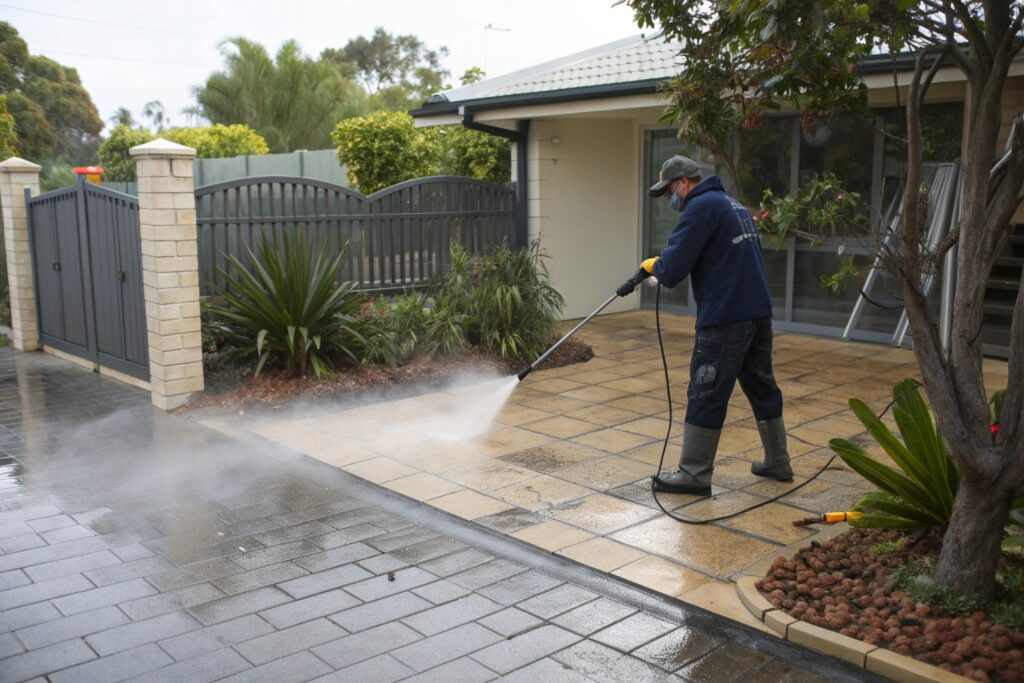
Paving Restoration Techniques
Sometimes your pavers don’t need repair — they just need bringing back to life. We’re talking about pavers that are structurally sound but looking tired, faded, or stained from years of coastal weather and use.
Pressure Washing and Deep Cleaning
First step is always a proper clean. High-pressure washing removes years of built-up grime, salt residue, oil stains, and organic growth. You’d be surprised how much difference a professional clean makes — pavers you thought were grey might actually be terracotta once all that coastal dirt comes off.
Re-sealing
Sealing your pavers protects them from salt air, UV damage, and staining. It brings back colour depth and makes future cleaning way easier. For Central Coast properties, we recommend re-sealing every 2-3 years because that salt spray accelerates the breakdown of the sealer. Quality sealers also enhance colour and give you that just-installed look again.
Re-grouting and Joint Restoration
Old grout or jointing sand breaks down and washes away over time. We strip out what’s left, clean the joints properly, then re-fill with fresh polymeric sand or specialised jointing compound. This stops weed growth and prevents pavers shifting around.
Colour Restoration
For badly faded pavers, we can apply tinted sealers that restore the original colour while adding that protective layer. Works particularly well on concrete pavers that’ve gone pale from sun exposure.
The goal here is extending the life of your existing paving by 10, 15 years without the cost and disruption of full replacement.
Safety Concerns and When Repairs Become Urgent
Trip hazards are no joke, especially if you’ve got kids running around or elderly family visiting. Those sunken pavers or lifted edges where tree roots have pushed through — that’s the kind of thing that causes serious injuries. We’ve had clients call us after someone’s twisted an ankle at a family BBQ, and suddenly that paving issue they’ve been putting off becomes an urgent priority.
From a liability standpoint, if you’re aware of trip hazards on your property and someone gets hurt, you could be looking at insurance claims or worse. Uneven pavers on your front path, loose stones that rock when you step on them — these are documented hazards that need addressing before someone goes down.
Preventing Further Deterioration
Here’s what happens when you ignore paving problems — they get worse, and they get more expensive. That small sunken section in your driveway? Water pools there, softens more of the base, and before you know it, the whole area’s compromised. Those couple of cracked pavers? Water gets in, freeze-thaw cycles do their damage (yeah, we get cold enough nights on Central Coast for that), and suddenly you’re looking at replacing a whole section instead of just a few pavers.
The cost difference between fixing issues early versus waiting until they’re urgent is massive. Releveling a 2-3 square metre section might run you a couple hundred dollars. Waiting until the base has failed under half your driveway? You’re into thousands for the repair.
Call us at (07) 4351 4011 or …
Repair vs. Replacement: Making the Smart Financial Choice
Most Central Coast homeowners assume that once their paving starts showing problems, they’re up for a complete replacement. That’s just not true most of the time — and it’s costing people thousands more than they need to spend.
When Repair Makes Sense
If 70-80% of your pavers are still in good condition and the issues are localised to certain areas, repair is almost always the better option. We’re talking about fixing sunken sections, replacing damaged pavers in high-traffic zones, and addressing base problems in problem areas while leaving the rest intact. You might spend $2,000-$4,000 on repairs versus $12,000-$20,000 for complete replacement of a typical driveway.
Extending Pavement Life
Proper repairs and restoration can add another 10-15 years to your existing paving. Regular maintenance — re-sealing every few years, addressing small issues before they spread, keeping joints filled — means you’re pushing that full replacement cost way down the line. For most families, that’s the difference between tackling it now versus putting it off until the kids are through school or the mortgage is smaller.
When Replacement is Necessary
If your base has failed across the entire area, if 40-50% of pavers are damaged beyond repair, or if the original installation was so poorly done that patching won’t hold — then yeah, you’re looking at replacement. But even then, you might be able to stage it. Do the front driveway this year for curb appeal, tackle the back patio next year when budget allows.
Get Your Central Coast Paving Back to Its Best
Your paving issues aren’t going to fix themselves — and they’re definitely not getting better with time. Every rain event, every car driving over those weak spots, every winter freeze is making the damage worse and the eventual repair more expensive.
The good news? Most paving problems are way more fixable than people think. That driveway you’ve been avoiding looking at, the patio you’re embarrassed to have guests sit on — chances are it doesn’t need replacing. It just needs proper repair from someone who understands how Central Coast conditions affect paving and knows how to fix it properly.
We’ll come out to your property, assess what’s actually going on (not just on the surface but underneath where the real problems are), and give you honest advice about whether you need repairs, restoration, or if you’re genuinely looking at replacement. No pressure, no inflated quotes trying to sell you more than you need.
Most of our clients wish they’d called sooner. Those trip hazards get fixed, the water stops pooling, the weeds disappear, and suddenly their outdoor areas look like something they can actually be proud of again — all without the massive cost and disruption of starting from scratch.
Give us a call or send through an enquiry. We’ll book a time that suits your schedule, come out and have a proper look, and you’ll know exactly what you’re dealing with and what it’ll cost to sort it out.
Frequently Asked Questions About Paving Repair
Depends on the size of the job. Minor repairs — fixing a few sunken pavers, replacing damaged ones — can be done in a day. Larger jobs where we’re releveling sections and addressing base issues might take 2-3 days. Restoration work like cleaning and sealing is usually a day or two depending on drying time.
We do our best. If your pavers are still being manufactured, no problem. If they’ve been discontinued, we’ve got relationships with suppliers who often have old stock sitting around. Worst case, we can take pavers from less visible areas to patch the main spots, then use close matches for those hidden sections.
Fresh pavers stand out for a few months until they weather to match the rest. Professional cleaning and sealing of the entire area helps blend everything together. Most repairs are pretty much invisible once everything’s settled and weathered in.
Small repairs start around $500-$800. Larger jobs with base work and multiple areas can run $2,000-$5,000 depending on extent. Full restoration with cleaning and sealing typically runs $15-$25 per square metre. We’ll give you an exact quote after assessing what’s needed.
Yeah, we warranty our workmanship. If something fails because of how we’ve done the repair, we’ll fix it. Can’t warranty against things like future tree root damage or soil movement from external factors, but the repair work itself is covered.