
There’s nothing worse than stepping out to your pool on a scorcher and burning your feet on those old pavers that’ve been baking in the sun all morning. Or watching the kids running around the pool deck and holding your breath every time because those tiles are slippery as anything when they’re wet.
Pool area paving on the Central Coast isn’t just about making things look good – though that’s part of it. It’s about creating a space that’s actually safe and comfortable to use year-round. We’re talking non-slip surfaces that give you grip even when they’re soaking wet, cool-touch materials that don’t turn into hotplates in summer, and proper drainage that stops water pooling where it shouldn’t.
Your pool area takes a beating out here on the Coast. You’ve got the salt air working away at everything, chlorine splash from the pool, and probably a few BBQ mishaps over the years. Not every material’s up for that kind of punishment. That’s where choosing the right pavers and getting the installation done properly makes all the difference.
Whether you’re upgrading a dated pool surround that’s seen better days or you’ve just put in a new pool and need the whole area sorted, we work with Central Coast families to create pool spaces that look resort-quality but are built for real life – kids doing cannonballs, mates coming round for a swim, and those lazy Sunday arvo pool sessions that go on till sunset.
Safe surfaces, materials that handle our coastal conditions, and proper drainage sorted. That’s what pool area paving should be about.

Safety First – Non-Slip Surfaces That Actually Work
Why Slip Resistance Matters Around Pools
Here’s the thing about pool areas – they’re wet. Like, constantly wet. You’ve got people climbing out dripping, kids splashing water everywhere, and that morning dew that hangs around till midday. If your pavers don’t have proper slip resistance, you’re basically creating an accident waiting to happen.
We always recommend materials with textured finishes and high slip-resistance ratings for wet conditions. You want something that gives you grip when it matters – not smooth tiles that turn into an ice rink the second they get wet. Your insurance company probably cares about this too, by the way.
Materials That Stay Cool Underfoot
Ever done the hot-foot dance across dark pavers in January? Yeah, not fun. The Central Coast gets plenty of sun, and some materials just soak up that heat and hold onto it.
Travertine tiles are brilliant for this – they’ve got this natural property where they stay surprisingly cool even in direct sun. Light-coloured pavers reflect heat instead of absorbing it, which is why you’ll see a lot of pale sandstone and cream-toned concrete around pools. Natural sandstone works well too, especially for that coastal aesthetic that suits our area.
Dark pavers might look stunning in the showroom, but trust me, your feet won’t thank you come summer. We usually steer clients toward lighter tones – not just for comfort, but because they handle our climate better and don’t fade as noticeably under our sun.
Paver Options for Central Coast Pool Areas
Choosing Materials That Last
You’ve got plenty of choices when it comes to pool area paving, but not all of them are created equal – especially out here on the Coast. Salt air, chlorine exposure, and our weather patterns mean you need materials that can handle it all without falling apart in five years.
Travertine tiles are popular for a reason. They stay cool, they’ve got natural slip resistance from their textured surface, and they look absolutely stunning around pools. Bit more expensive upfront, but they last. Concrete pavers give you heaps of design flexibility and they’re cost-effective – you can get them in pretty much any colour or finish you want. They need sealing though, especially around pools.
Natural stone options like sandstone bring that classic coastal look. Each piece is different, which some people love and others find a bit inconsistent. Porcelain pavers are newer to the scene but they’re gaining ground – tough as nails, low maintenance, and they come in designs that mimic natural stone without the upkeep.
Pool Coping Makes a Difference
The edge of your pool – that’s your coping – cops the most wear. You need something that can handle constant water exposure and people sitting on it. Bullnose coping is the classic choice, gives you that rounded edge that’s comfortable and looks finished. Square edges work for a more modern aesthetic, while drop-face options create clean lines if you’re after that resort vibe.
Don’t skimp on the coping. It protects your pool structure and takes the most punishment of any part of your paving.

Getting Drainage Right (Because Nobody Wants a Swamp)
Why Proper Falls Matter
This is where a lot of DIY jobs and dodgy contractors fall apart – they don’t get the drainage right. Your pool area needs to slope away from the pool and away from your house. Sounds obvious, but you’d be surprised how many pool surrounds we’ve fixed that were actually pooling water back toward the house foundation. That’s asking for problems.
The standard fall is about 1-2% – enough to move water but not so much you feel like you’re standing on a slope. Water needs somewhere to go, and “sitting in puddles on the pavers” isn’t the answer. Those puddles become slip hazards, they stain your pavers, and they’re breeding grounds for mozzies in summer.
Deck Drainage Solutions
Depending on your setup, you might need channel drains along certain edges, especially if you’ve got a big entertainment area. Slot drains are popular because they’re barely noticeable but they shift water efficiently. Some layouts work fine with water draining to garden beds or lawn areas – that’s actually ideal because you’re not wasting the water.
On the Central Coast, we get those heavy downpours that dump water fast. Your drainage needs to handle that, not just the everyday splash from the pool. And if your property’s on a slope – which plenty around here are – you need to think about how water’s moving across your whole yard, not just the immediate pool area.
Get this wrong and you’ll be dealing with water issues forever. Get it right and you’ll never think about it again.
Layout Design and Colour Choices
Creating Zones That Actually Work
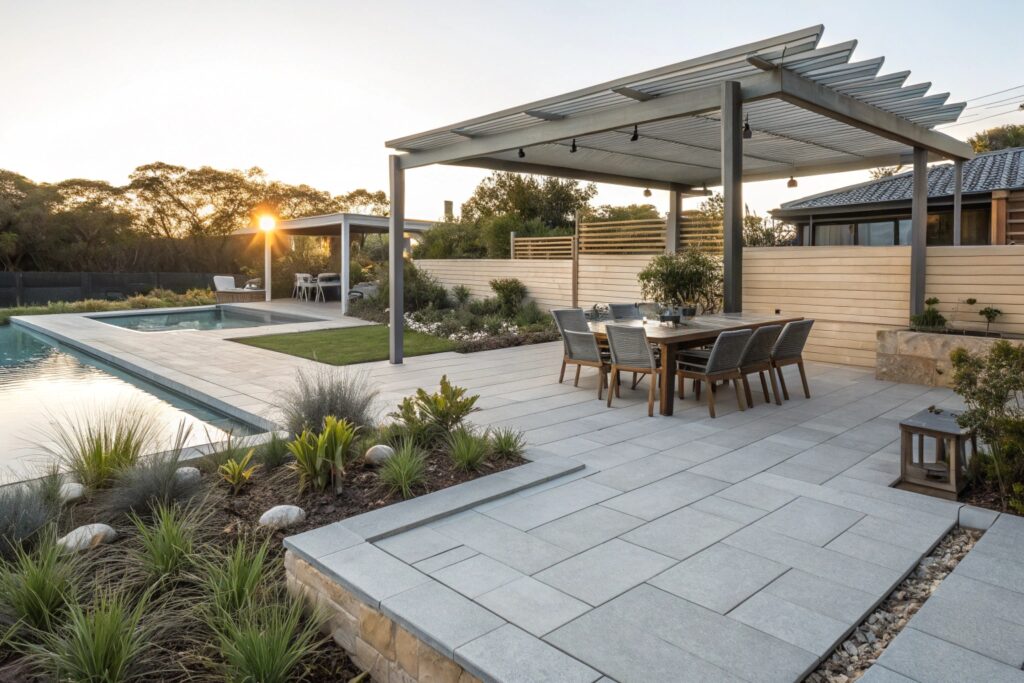
Your pool area isn’t just one big space – or at least, it shouldn’t be. You want different zones for different things. Entertaining areas where you can set up tables and chairs without blocking pool access. Sunbathing spots that get the afternoon sun and have room for a few loungers. Pathways that let people move around safely without cutting across wet areas where kids are playing.
Think about where furniture’s going to sit before the pavers go down. Nothing worse than realising your outdoor setting doesn’t fit properly or it’s blocking the best access point to the pool. We usually map out furniture placement during design so you know everything works before a single paver’s laid.
Colour Choices for Coastal Living
Light tones aren’t just about keeping the surface cool – they’re about creating that coastal aesthetic that suits Central Coast properties. Pale sandstone, cream, light grey – these colours complement most pool tiles without fighting with them. They also make your pool area feel bigger and brighter.
If you’ve got blue or aqua pool tiles, stick with neutral tones in your paving. If you’ve gone for darker pool interiors, you’ve got more flexibility with paver colours. But remember, out here on the Coast, you want materials that won’t show salt residue badly and won’t fade into patchy messes after a few summers in the sun.
The colours you choose set the whole vibe. Resort-style, modern coastal, classic Aussie backyard – your paver selection makes that call.
Call us at (07) 4351 4011 or …
Materials That Handle Central Coast Conditions
Chemical Resistance Around Pools
Your pool pavers are sitting in a pretty harsh environment when you think about it. Chlorine splash from the pool, saltwater if you’ve got a salt system, cleaning chemicals, sunscreen residue – it all adds up. Not every material handles that exposure well. Some pavers will fade, others get stained, and cheap options might even start breaking down.
That’s why sealing is so important for most paver types. A good quality sealer protects against chlorine damage, makes cleaning easier, and stops those white salt stains that appear on unsealed pavers. You’ll need to reseal every few years depending on the product and how much use the area gets.
Built for Coastal Living
Salt air’s a fact of life on the Central Coast. It gets into everything and it’s murder on materials that aren’t up to the job. We recommend pavers that are specifically rated for coastal environments – materials that won’t corrode, pit, or deteriorate from constant salt exposure.
Natural stone generally handles salt well, though some types need sealing. Porcelain is pretty much bulletproof against salt and chemicals. Quality concrete pavers work fine as long as they’re properly sealed and maintained.
Installation That Lasts
Getting pavers level and maintaining consistent falls for drainage takes skill – it’s not just whacking pavers down and hoping for the best. Expansion joints are crucial too, especially in our climate where materials expand and contract with temperature changes. Proper waterproofing underneath prevents water getting where it shouldn’t and causing movement or cracking later.
Ready to Sort Your Pool Area?
Get Your Pool Surround Sorted Properly
If you’re tired of dodgy pavers that are either burning your feet or trying to trip you up when they’re wet, it’s time to get it done properly. Pool area paving that’s built for Central Coast conditions, installed right, and designed to handle everything from summer pool parties to winter storms.
We work with families across Terrigal, Avoca Beach, Wamberal, Copacabana, and Erina who want their pool areas to be safe, practical, and actually nice to look at. Whether you’re upgrading an old pool surround that’s past its best or you’ve got a new pool that needs finishing, we’ll walk you through material options that suit your budget and your property.
Free on-site consultation – we’ll come have a look, talk through what you’re after, and give you honest advice on what’ll work for your space. No obligation, no pressure. Just straight talk about what your pool area needs and what it’ll cost.
Your pool should be the best part of your property, not something you’re embarrassed about or constantly worrying someone’s going to slip on. Let’s fix that.
Call us to book your consultation or send through some photos of your current setup and we’ll give you an idea of what’s possible. Time to get your pool area sorted so you can actually enjoy it.
FAQs About Pool Area Paving
Depends on your budget and what you’re after, but travertine and light-coloured concrete pavers are hard to beat. They stay cool, handle the salt air, and give you that slip resistance you need. Porcelain’s brilliant if you want minimal maintenance, and sandstone works great for that coastal aesthetic.
Anywhere from $100-$250 per square metre depending on materials and complexity. Travertine and natural stone sit at the higher end, concrete pavers are more budget-friendly. Your pool surround’s probably 40-80 square metres, so you’re looking at $8,000-$15,000 for most standard jobs. Custom designs, levels changes, or premium materials push that higher.
Not usually for just replacing pavers, but if you’re doing major changes to levels, adding retaining walls, or significantly altering drainage, you might need to check with council. We can guide you through what needs approval for your specific project.
Most pool surrounds take 3-5 days once we start – depends on size and whether we’re dealing with drainage issues or level changes. Weather can push timelines out, especially if we get rain during base preparation.
Regular hosing down to remove salt and chlorine residue. Reseal every 2-4 years depending on the product. Pressure clean annually if you want to keep them looking fresh. Pretty low maintenance compared to timber decking.