
Pool landscaping transforms the area around your water into a complete outdoor living space. We’re talking about quality paving that stays cool underfoot, tropical plants positioned for privacy and aesthetics, entertainment zones with outdoor kitchens and seating, and proper lighting that extends your pool use into the evenings. Every element is designed to work together – not just functional, but creating that resort aesthetic you see in high-end properties around the coast.
The Central Coast gives us specific opportunities with pool landscaping. Our climate supports year-round outdoor living, coastal conditions demand materials and plants that handle salt air, and the lifestyle here centres around making the most of outdoor spaces. We work with travertine and quality pavers, install shade structures that actually provide relief, choose plants that deliver tropical looks without constant maintenance, and create entertainment zones people naturally gravitate toward.
We’ve been doing pool landscaping around Terrigal, Avoca Beach, and Wamberal long enough to know what works in these conditions. The materials that last, the plants that thrive, the layouts that turn basic pool surrounds into spaces you’ll use constantly. From simple upgrades to complete resort-style transformations, we deliver pool landscaping that suits how you want to use your outdoor area.
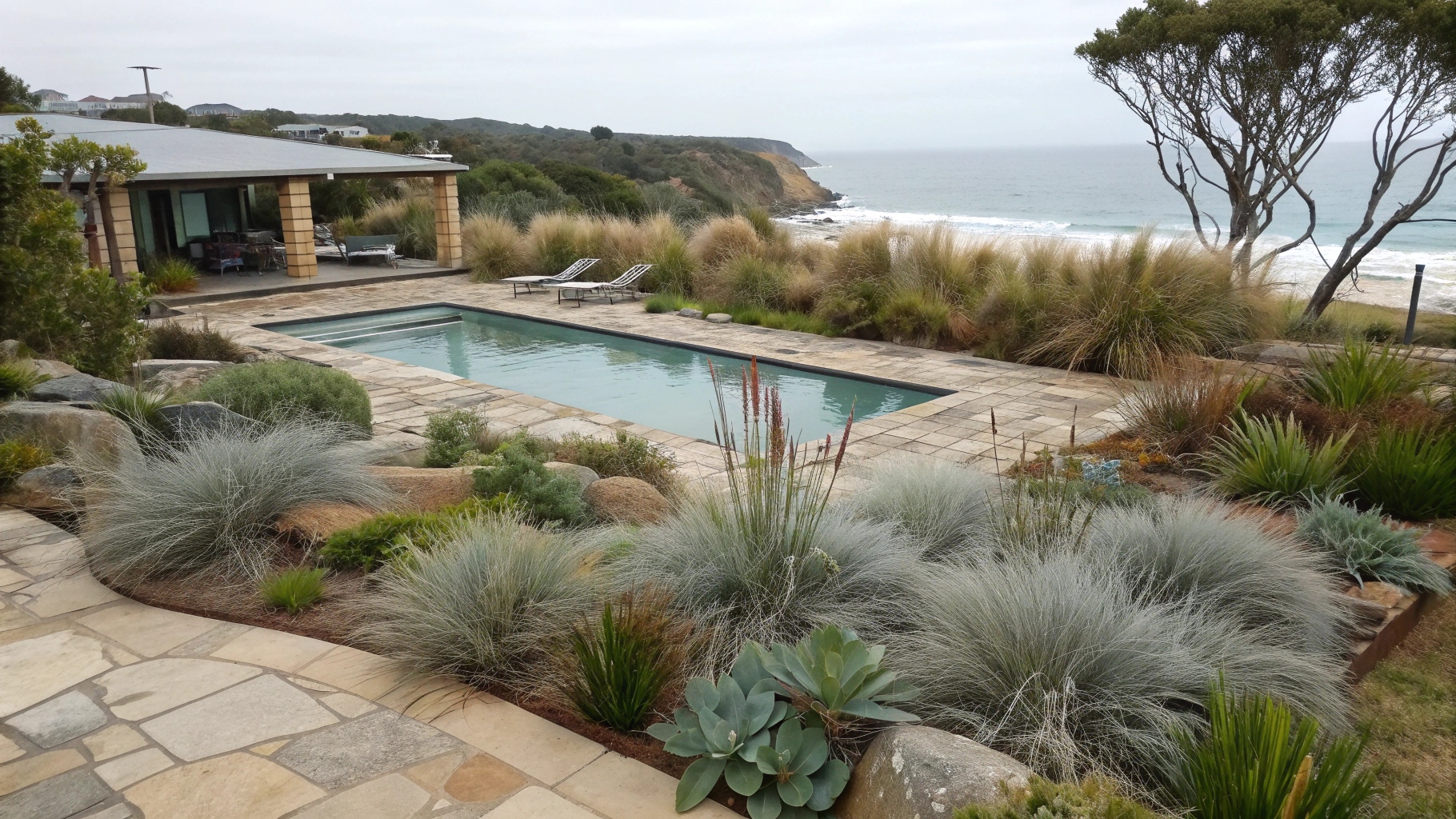
Pool-Friendly Plants That Actually Survive Around Water
Here’s where most pool landscaping goes wrong. You plant whatever looks tropical, then spend years fishing leaves out of the filter and watching roots crack your expensive pavers. The families getting this right choose plants based on what they won’t do – won’t drop debris constantly, won’t invade pool infrastructure, won’t die from chlorine splash.
What actually works around Central Coast pools:
- Agaves, aloes, and cordylines – that architectural tropical look without any leaf drop worth mentioning
- Lomandra and dianella – native grasses that handle salt, wind, and chlorine without complaining
- Bromeliads and cycads – resort aesthetic with basically zero maintenance
Skip anything deciduous, flowering plants that constantly shed, and trees with aggressive roots. Chlorine tolerance matters more than people realize – splash-out water’s hitting your plants with diluted bleach several times a week. We position sensitive species further back and use bulletproof varieties close to the water where they’ll cop regular exposure.
Safety Compliance That Blends Into Your Pool Area
Pool fencing regulations aren’t optional, and your landscaping needs to work with safety requirements, not against them. The families getting this right create setups where safety features blend into the design instead of dominating it.
Glass fencing costs more but disappears visually, letting you see the whole space. Aluminium fencing’s more affordable and works when you soften it with strategic planting that doesn’t compromise the barrier.
Gate placement affects how you actually use the space – self-closing, self-latching gates positioned for natural traffic flow between house and pool. You want them where people will use them properly, not take shortcuts that compromise safety.
Visibility from the house is something regulations require for good reason. Your landscaping should create privacy from neighbours without blocking sightlines from inside to the pool. Parents need to see the water – it’s non-negotiable for safety and peace of mind.
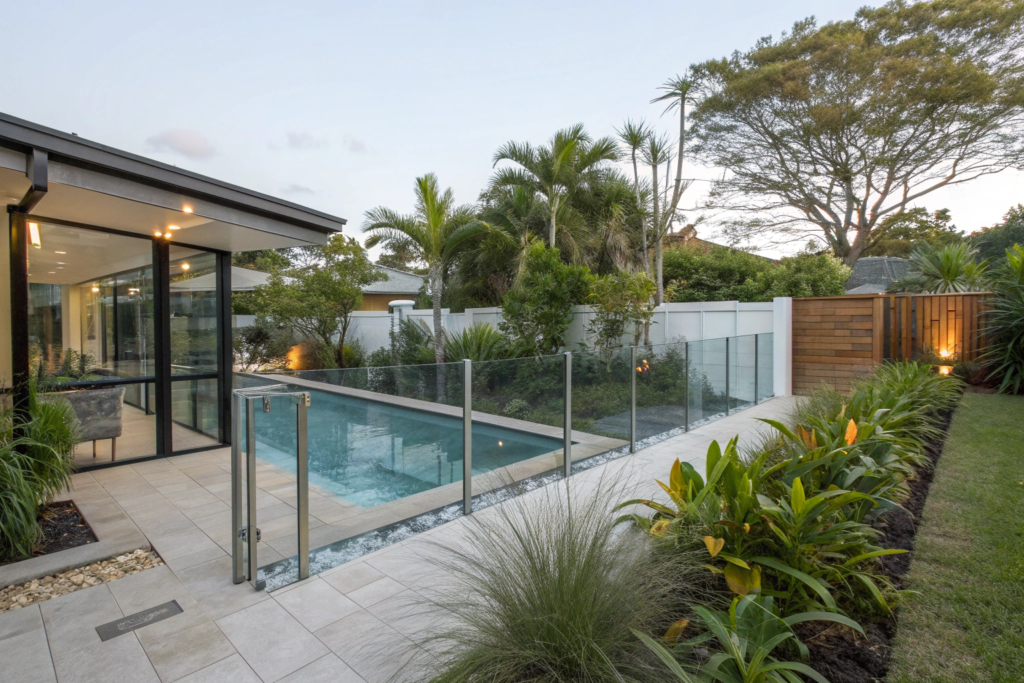
Hardscaping and Privacy Solutions for Coastal Properties
Hardscaping is what separates amateur backyards from professionally designed spaces. Patios and decking create defined areas that actually drain properly and don’t turn into mud pits when it rains. We use materials rated for coastal exposure—not the cheap stuff that starts deteriorating after one winter of salt air.
Pathways connect your spaces without killing the grass or creating trip hazards. Retaining walls solve the slope problems that plague so many Central Coast blocks. These aren’t just functional—they create usable flat space from areas you’re currently wasting. Raised garden beds built into retaining walls give you planting opportunities that work with your property’s natural levels instead of fighting them.
Creating Privacy Without Feeling Boxed In
Nobody moved to the Central Coast to stare at their neighbour’s fence. Privacy screening needs to block sightlines without making your yard feel like a prison courtyard. We use layered plantings—fast-growing screening plants behind feature trees and lower shrubs—to create natural barriers that improve over time.
Pergolas with climbing vines provide overhead privacy from two-story neighbours while creating shade. Strategic fencing gets softened with coastal plantings so you’re not looking at bare timber. The result is privacy that feels organic, not like you’re hiding from the world. Your backyard becomes a retreat that’s actually private enough to relax in.
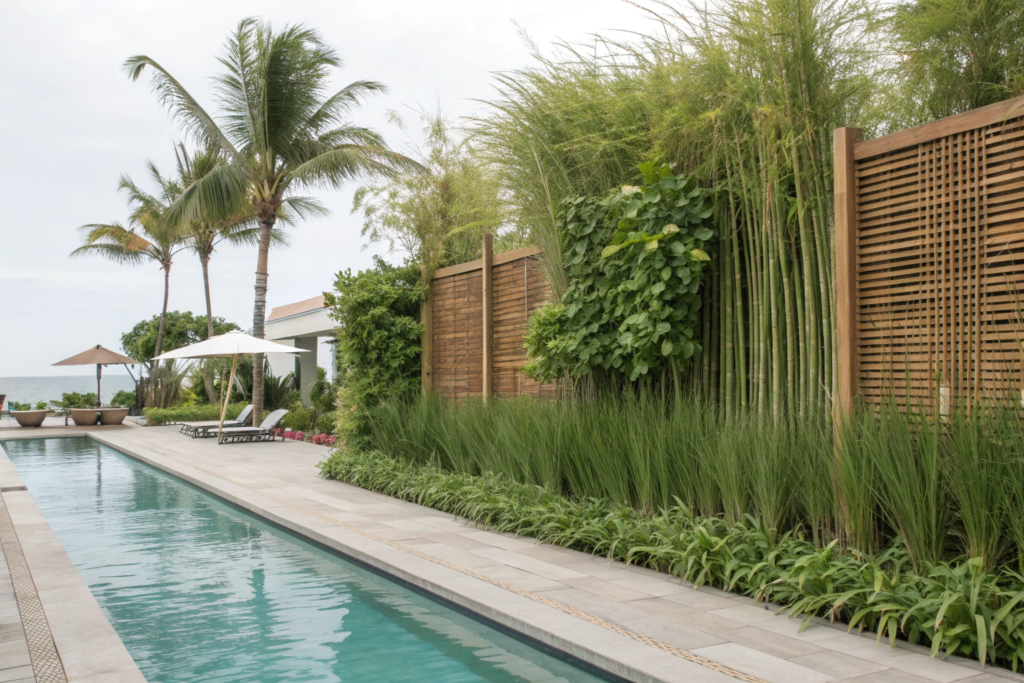
Privacy Screening Without Blocking Your Coastal Breeze
You want to swim without the neighbours watching, but solid fencing around pools creates dead air zones that make everything feel stuffy. Central Coast blocks often sit close together – privacy matters, but so does airflow.
Bamboo works if you choose clumping varieties, not running types that’ll invade everything. Slender weavers bamboo grows tall enough for proper screening, handles the coastal wind, and that rustling sound adds to the resort feel. Tall ornamental grasses like lemongrass or vetiver create see-through barriers that still give you privacy – you get movement, sound, tropical look, and they’re basically indestructible in our climate.
Privacy walls with greenery work when you need immediate screening. Render walls, timber slat screens, or Colorbond with climbing plants give you control over exactly how much privacy and shade you’re creating. Star jasmine or pandorea climb without getting out of control, and they don’t damage structures like vigorous climbers do. Strategic placement matters more than plant choice sometimes – we position screening to block sightlines from specific windows next door.
Call us at (07) 4351 4011 or …
Proper Drainage That Keeps Your Pool Area Dry and Safe
Water goes everywhere around pools – splash-out, wet feet, rain runoff – and eventually it needs to go somewhere that isn’t pooling on your pavers or draining towards your house.
Proper grading around the pool directs water away from the pool shell and towards drainage points. Sounds basic, but you’d be surprised how many pool surrounds hold water in low spots that become permanent puddles or, worse, undermine pavers over time.
Deck drains positioned strategically handle the constant splash and wet foot traffic. Stainless steel grates that don’t corrode in chlorine-laden water, properly sized to handle heavy rain events, and connected to stormwater systems that can cope with the volume.
Paving materials affect drainage as much as grading does. Permeable pavers let water drain through rather than pooling on the surface – less slip hazard, less standing water attracting mosquitoes. The edges matter too – where your pool surrounds meet garden beds or lawn. If water’s constantly washing soil onto pavers, your drainage transitions aren’t right.
Pool Landscaping That Matches Where You're At
Pool owners upgrading existing surrounds know exactly what’s been bothering them – those basic pavers that burn your feet, the lack of shade, the neighbours seeing everything. You’ve lived with it long enough to know what needs fixing. We take what’s there and transform it into the outdoor space you’ve been picturing.
New pool installations need landscaping done right from the start. Builders give you basic surrounds and call it finished – you’re left with a pool sitting in bare yard with zero thought to how you’ll actually use the space. Getting the landscaping sorted now means you’re not redoing everything in three years when you realize the original setup doesn’t work.
Creating that full resort-style entertaining space around your existing pool changes everything about how your family uses the backyard. Proper shade, entertainment zones, tropical planting, lighting that makes evening swims possible – this is where a pool becomes the centrepiece of your outdoor living instead of just something that’s there taking up space.
Frequently Asked Questions About Pool Landscaping Central Coast
Agaves, aloes, and cordylines give you tropical looks without leaf drop. Lomandra and dianella handle salt air, wind, and chlorine splash. Bromeliads and cycads deliver resort aesthetics with minimal maintenance. The key is non-invasive roots that won’t crack pavers and minimal debris that won’t clog filters. Avoid anything deciduous, flowering plants that constantly shed, or trees with aggressive root systems like figs.
Basic surround upgrades take 2-3 weeks. Mid-range transformations run 4-6 weeks. Full resort-style projects take 8-12 weeks when including covered structures and extensive features. Timeline depends on council approvals, material delivery, and weather. Most families do this in stages – fixing immediate issues first, then adding entertainment zones later. Phasing lets you use parts of the space while other sections are being worked on.
We work around existing pools constantly. If pavers are decent, we refresh surrounds with new planting and features without ripping everything out. If pavers are cracked or cheap builder-grade, replacing makes sense. We keep mature trees or established features that work and replace what’s creating problems. The consultation shows what’s worth keeping versus what should go. Working with existing infrastructure saves money if it’s salvageable.
Sloping blocks need careful grading to direct water away from the pool shell and house. We position deck drains strategically and create transitions that manage runoff properly. Retaining walls often create flat entertaining areas and prevent erosion. Permeable pavers let water drain through rather than pooling. Sandy Central Coast soil drains fast naturally, but proper grading still directs water where you want it going.