
Your Central Coast property’s already sitting in one of Australia’s most naturally beautiful regions—and sustainable landscaping lets you extend that natural beauty right into your own backyard while protecting the coastal environment that makes this area so special.
We specialise in eco-friendly garden design and sustainable landscaping across the Central Coast, from Terrigal and Avoca Beach through to Wamberal, Copacabana, and Erina. Our approach works with the region’s natural coastal conditions rather than fighting against them, creating outdoor spaces that thrive with less water, fewer chemicals, and minimal ongoing maintenance while supporting local wildlife and native ecosystems.
Sustainable landscaping on the Central Coast isn’t just about being environmentally responsible—though that’s certainly part of it. It’s about creating resilient gardens that handle our sandy soils, salt-laden coastal winds, and periods of heavy rain followed by dry spells without requiring constant intervention. Native plants that evolved right here already know how to handle these conditions. Water-wise irrigation systems reduce your bills while keeping plants healthy. Organic maintenance practices mean your kids and pets aren’t exposed to harsh chemicals.
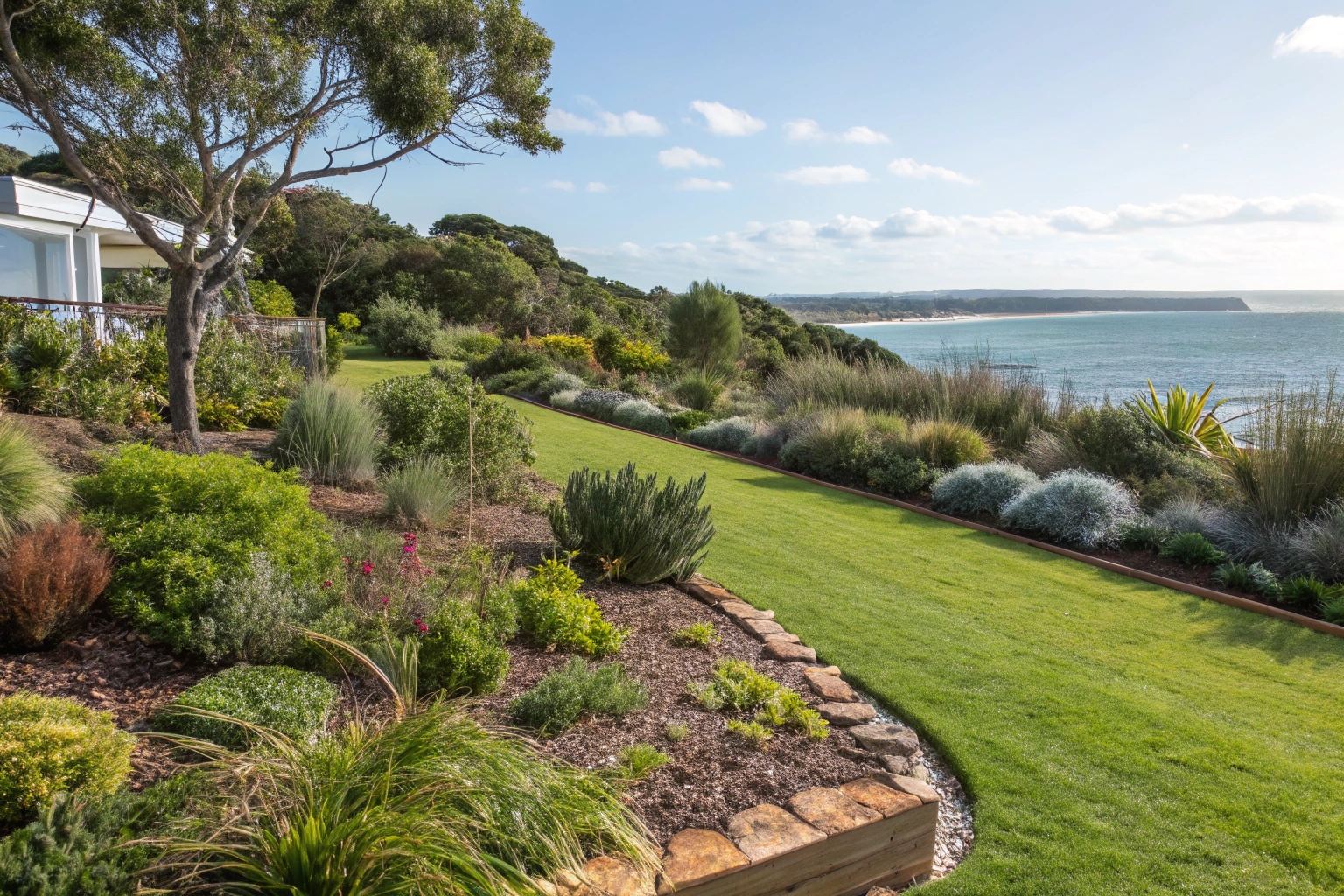
Native Plants That Actually Belong Here
Central Coast gardens perform best when you work with indigenous species rather than trying to force exotic plants to survive in conditions they weren’t designed for. We focus on plants native to the Sydney Basin and Central Coast region—species like Coastal Banksia, Flannel Flowers, Native Hibiscus, and a range of grass trees and groundcovers that have spent thousands of years adapting to our exact soil and climate conditions.
These native plantings create habitat for local wildlife that exotic species simply can’t match:
- Grevillea species provide nectar sources for honeyeaters and lorikeets
- Native grasses shelter small birds and provide nesting material
- Coastal tea trees attract native bees and butterflies
- Deep root systems handle sandy soils without constant watering
- Salt-tolerant varieties withstand coastal spray without leaf burn
We select species based on your specific microclimate—whether you’re exposed to direct ocean winds at Copacabana or slightly sheltered inland at Erina. The right plant in the right position means you’re not fighting nature.
Strategic Planting for Natural Cooling
Your landscape design impacts your home’s energy efficiency through shade provision, wind modification, and thermal mass effects—and getting these elements right reduces cooling costs while creating more comfortable outdoor spaces.
Shade trees planted on western and northern exposures block summer sun from hitting walls and windows during the hottest parts of the day. Deciduous natives or appropriate exotic deciduous species allow winter sun through when you want passive heating while providing summer shade.
The Central Coast’s afternoon sea breezes provide natural cooling—but landscapes can either channel these breezes toward living areas or block them. We design plantings that direct prevailing winds through outdoor entertaining areas and toward windows while creating sheltered zones for wind-sensitive plants.
Reduced lawn area means less mowing—which directly cuts fossil fuel consumption. Every hour of mowing with a conventional petrol mower produces emissions equivalent to driving a car over 100 kilometers. Ground covers and mulched surfaces around your home reduce heat reflection compared to bare soil or paving.

Permeable Surfaces That Manage Stormwater
The Central Coast gets intense rainfall events—and when your entire property is covered in impermeable surfaces like concrete and asphalt, all that water runs straight off carrying soil, nutrients, and pollutants into stormwater drains and eventually our beaches. Permeable landscaping captures and filters this runoff while creating attractive outdoor spaces.
Gravel pathways allow water to infiltrate directly where it falls rather than creating runoff channels. We install properly constructed gravel paths with base layers that ensure drainage while maintaining a stable walking surface.
Permeable pavers provide the durability and clean appearance of paving while allowing water infiltration through joints filled with sand or small stones. These work well for driveways, patios, and entertaining areas where you need solid footing but want to reduce runoff.
Lawn alternatives like native groundcovers, ornamental grasses, and low-growing plants reduce impermeable surface area. Rain gardens and swales capture runoff from hard surfaces and allow it to slowly infiltrate while filtering pollutants through plant roots and soil.

Organic Maintenance That Protects Your Family
Organic maintenance creates gardens where kids and pets can play freely without worrying about chemical residues on grass or plants. Natural approaches work with biological systems rather than against them, building gardens that become healthier and more resilient each season.
Natural pest control works with beneficial insects that handle problems before they escalate. Ladybugs eat aphids, parasitic wasps control caterpillars, predatory mites manage spider mites. Creating habitat for these beneficial species through diverse plantings means your garden develops its own pest management system that improves over time. Companion planting uses plant relationships to support growth and deter pests naturally—strong-smelling herbs like rosemary and lavender create barriers many pests avoid while marigolds attract beneficial insects.
Mulching suppresses weeds without herbicides while improving soil health. A 75-100mm layer of organic mulch blocks light that weed seeds need to germinate, moderates soil temperature, and retains moisture. Organic fertilizers release nutrients slowly as soil biology breaks them down, providing steady nutrition that builds long-term soil fertility.
Call us at (07) 4351 4011 or …
Water Conservation Systems That Cut Your Bills
Water costs keep rising, and the Central Coast’s sandy soils drain fast—which means traditional gardens can cost hundreds of dollars per quarter just to keep alive through dry periods. Our sustainable landscaping approach flips this around with systems designed to capture, store, and efficiently distribute water exactly where plants need it.
Rainwater harvesting captures winter rainfall that typically runs off roofs into stormwater drains. A properly sized tank connected to your downpipes can handle significant portions of your garden’s water needs without touching town supply.
Drip irrigation delivers water directly to root zones rather than spraying it into the air where Central Coast’s afternoon sea breezes carry it away. These systems reduce water use by up to 60% compared to conventional sprinklers.
Smart irrigation controllers adjust watering schedules based on weather conditions and soil moisture levels—no more watering while it’s raining or during high winds.
Get Started With Sustainable Landscaping
Your Central Coast property can showcase environmental responsibility while providing beautiful, functional outdoor spaces that improve year after year. Sustainable landscaping isn’t about sacrifice or compromise—it’s about working with nature to create resilient, thriving gardens that handle our local conditions brilliantly while supporting the coastal environment that makes this region special.
We work with existing landscapes, making strategic improvements that build on what’s already working while addressing problem areas and incorporating sustainable principles progressively. Initial consultations assess your current situation, identify opportunities for improvement, and develop a staged approach that fits your budget and timeline.
Contact us to discuss sustainable landscaping options for your Central Coast property. We’ll assess your situation, explain what’s possible, and develop an approach that matches your goals and timeline while reducing your environmental impact and ongoing maintenance costs.
Frequently Asked Questions About Sustainable Landscaping
Most native plants establish within 6-12 months with proper soil preparation and regular watering during the first season. Once established, they typically survive on rainfall alone except during extended dry periods. Groundcovers fill in within one growing season, while shrubs reach mature size in 2-3 years, and trees develop full canopies in 5-7 years depending on species.
Initial costs are comparable or sometimes slightly higher due to quality soil preparation and irrigation systems. However, you’ll recover this investment within 2-3 years through reduced water bills, eliminated chemical purchases, and lower maintenance costs. Native plants cost similar to exotic species, and many sustainable materials like recycled pavers actually cost less than new products.
Absolutely. We’re not suggesting eliminating lawn completely—it’s great for kids and pets. Sustainable landscaping means rightsizing lawn to actual use areas rather than covering every open space with grass. Native grass species and hardy varieties that need less water and fertilizer can replace traditional lawn in areas that don’t need manicured appearance or heavy foot traffic.
Coastal Banksia, Coastal Rosemary, Westringia, Native Hibiscus, Pigface, and various Lomandra species all handle direct salt exposure beautifully. For slightly more sheltered positions, you’ve got options like Lilly Pilly, Grevilleas, and Coastal Tea Trees. We select species based on your specific exposure level—whether you’re right on the beach at Copacabana or a few streets back.