
Water Feature Installation Services Central Coast
Want A FREE QUOTE? Click To Call Now!
Ever walk past your backyard and feel like something’s missing? You’ve got the deck, the garden beds are looking better, but there’s no real focal point. Nothing that makes you want to actually sit out there and relax after a long day commuting from Sydney or dealing with work stress.
Water features change that completely. We’re talking about creating that peaceful atmosphere you moved to the Central Coast for in the first place. The sound of water trickling over rocks or a gentle fountain bubbling away – it’s what turns a standard backyard into your own private retreat right here in Terrigal, Avoca, or Wamberal.
Here’s the thing about water feature installation on the Central Coast though. You can’t just stick any old pond in the ground and hope it works. The sandy soil we’ve got around here, the coastal winds, the salt in the air – it all matters when you’re building something that’s going to last and actually look good year after year.
We’ve been installing water features across the Central Coast for years now. Ponds that attract native birds, fountains that become the talking point when you’re entertaining, even pondless waterfall systems for families who want the sound without worrying about young kids around deep water. Each project gets designed specifically for your property’s conditions and how you actually want to use your outdoor space.
Whether you’re after a koi pond that’ll impress the neighbours or just a simple bubbling rock feature that helps you unwind on the weekends, we’ll walk you through exactly what works best for your block and your budget.
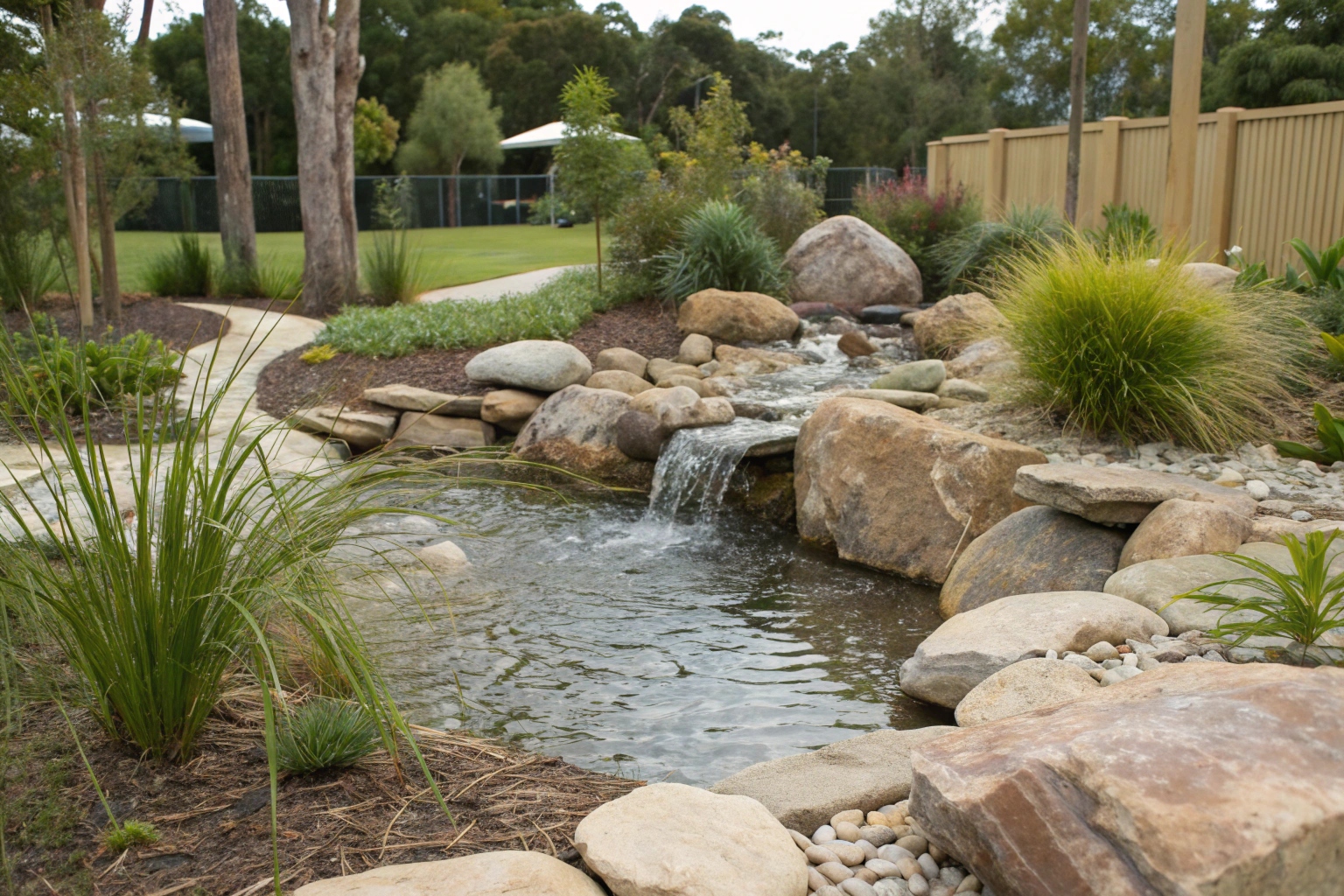
Water Features That Actually Work for Central Coast Properties
Not every water feature makes sense for every backyard. What works beautifully in a sprawling Copacabra property might be completely wrong for a compact Erina yard. Let’s break down what we install and who each option suits best.
Garden Ponds are the classic choice when you want to create a proper ecosystem. These are your go-to if you’re thinking about keeping koi or goldfish, adding water plants, and creating a real feature that attracts wildlife. They need space – usually at least 2-3 metres across to maintain healthy water quality – but they become the absolute centrepiece of your garden.
Fountains give you that water sound without taking up massive space. We install everything from modern minimalist bowl fountains that suit contemporary homes to classical tiered designs that work with traditional garden styles. The bubbler features are particularly popular with families because there’s no standing water to worry about, just water circulating through river rocks.
Waterfalls and streams are perfect if you’ve got any slope in your yard. Instead of fighting the natural levels, we work with them to create cascading water that looks like it belongs there. These can be standalone features or connect to a pond at the bottom.
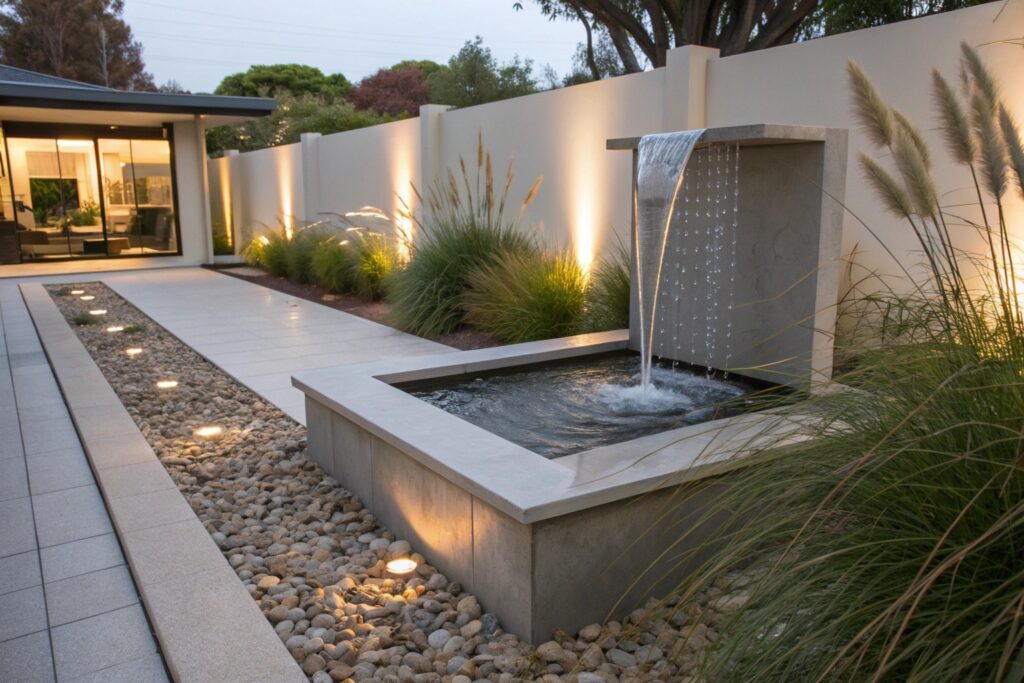
Wall water features are the solution for courtyard areas or when you’re tight on space. Water sheets down a wall or stone surface, giving you all the ambience without eating into your usable yard area.
Pondless systems are gaining popularity, especially with younger families. You get the soothing water sounds and visual interest of a waterfall, but the water disappears into a hidden reservoir underground. No open water means no safety concerns and way less maintenance.
Building Ponds the Right Way for Central Coast Conditions
Here’s where a lot of DIY pond projects fall apart – literally. Central Coast soil is sandy, shifts around, and doesn’t hold water like clay soils do. You need proper construction or you’ll be dealing with leaks, collapsing edges, and murky water within the first year.
Liner installation is the foundation of everything. We use high-grade rubber liners designed for Australian conditions, not the cheap stuff that degrades under our UV exposure. The liner needs proper underlay protection from our sharp shell grit and rocks, plus careful positioning so it doesn’t create pockets where debris accumulates.
Rock edging does more than look good. It holds the liner in place against coastal winds, hides the edges so your pond looks natural, and creates planting pockets for marginal plants. We use locally-sourced stone when possible because it blends with Central Coast landscapes and handles the salt air without degrading.
Depth matters more than people think. Koi ponds need at least 1.2 metres deep in one section so fish can escape summer heat and have protection in winter. Goldfish can manage with 80cm. Shallower areas around the edges create different temperature zones and give you spots for varied aquatic plants.
Filtration systems are non-negotiable if you want clear water. Between the leaf litter from surrounding gum trees, the fish waste, and algae growth in our warm climate, your pond needs mechanical and biological filtration. We size the system properly to your pond volume – undersized filters are the number one cause of green, smelly water that people end up draining and abandoning.
Plant zones at different depths keep everything balanced naturally. Oxygenating plants at the bottom, water lilies in the middle depths, marginal plants around the edges – they all work together processing nutrients and keeping algae under control.
Finding the Right Fountain for Your Space
Fountains are probably the most versatile water feature you can add. They work in tiny courtyards or sprawling gardens, suit modern or traditional homes, and you’ve got way more options than just the basic birdbath setup.
Tiered fountains are the traditional choice that never really goes out of style. Water cascades from one level down to the next, creating that classic fountain sound. These work beautifully with heritage-style homes around Terrigal or established gardens where you want something that feels like it’s been there forever. They need a decent amount of space though – you don’t want them cramped.
Modern minimalist fountains are what we’re installing more and more for contemporary Central Coast homes. Clean lines, simple shapes, often just a single bowl or column with water sheeting over the surface. They make a statement without overwhelming your design, and they suit those new builds going up around Wamberal and North Avoca.
Bubbler features are the practical family option. Water bubbles up through drilled rocks or decorative urns, then disappears back into a hidden reservoir. Kids can play around them safely, they need minimal space, and maintenance is dead simple compared to open ponds.
Statement pieces are for when you want your fountain to be the hero of your garden. We’re talking sculptural designs, large-scale installations, or custom pieces that reflect your personality. These need proper planning for positioning, scale, and ensuring they get the attention they deserve without dominating everything else you’ve got going on in the yard.
The key is choosing something that fits your home’s style and the way you actually use your outdoor space, not just what looks good in someone else’s Instagram photos.
The Equipment That Makes Water Features Actually Work
You can build the most beautiful pond or fountain, but if the pump’s wrong or the filtration’s inadequate, you’ll spend every weekend dealing with problems instead of enjoying your outdoor space.
Equipment selection needs to match your specific setup. A small bubbler fountain needs maybe a 2000 litre-per-hour pump. A large pond with a waterfall might need 10,000+ litres per hour to get proper circulation and that nice flowing water effect. We calculate the flow rates based on your feature’s size and what you’re trying to achieve, not just guessing and hoping it works.
Energy efficiency actually matters when these things run 24/7. Modern pumps use way less power than older models, and variable speed options let you dial the flow up during the day when you’re home, then reduce it overnight to save on running costs. Solar-powered options work for some smaller features, though our climate means you need decent battery backup for cloudy stretches.
Maintenance access is something DIY projects always forget about. You need to get to that pump every few months for cleaning. Filters need regular maintenance or they stop working properly. We design everything so you can actually reach the equipment without dismantling half your pond or crawling through garden beds.
Water quality management comes down to circulation, filtration, and biology working together. Stagnant water breeds mosquitoes and smells terrible. Proper flow keeps everything oxygenated. Biological filtration processes fish waste and organic matter. UV clarifiers knock out algae before it turns your pond green. Getting this balance right means the difference between a feature you love and one you end up covering with a tarp.

Creating a Healthy Ecosystem for Fish
Fish turn a pond from a garden feature into a living ecosystem. But there’s a fair bit more to it than buying some goldfish and tossing them in.
Koi ponds are the premium option. These fish are beautiful, they get big, and they can live 20+ years when conditions are right. But koi are demanding. They need that deeper water we mentioned earlier, serious filtration because they produce tonnes of waste, and enough space to actually swim properly. A koi pond that’s too small stresses the fish and creates constant water quality battles you’ll never win.
Goldfish compatibility is way more forgiving. They handle our Central Coast climate well, don’t need the same filtration levels as koi, and adapt to smaller pond sizes. Comets and shubunkins are your best bet – they’re hardy, colourful, and won’t break the bank if a cheeky kookaburra decides to go fishing.
Creating healthy ecosystems means thinking beyond just fish. You need aquatic plants to process nutrients, beneficial bacteria to break down waste, proper oxygenation for warm summer nights, and enough depth so fish aren’t cooked when temperatures spike. Overfeeding is the number one mistake people make – uneaten food rots, ammonia levels spike, and suddenly you’re dealing with sick or dead fish.
Fish requirements change with the seasons too. Summer heat means more oxygen demand and careful monitoring. Winter means fish slow down and need less food. New ponds need cycling time before adding fish – jumping straight in with expensive koi usually ends badly.
Start small with hardy goldfish, get the system stable, then consider upgrading to koi if you’re really keen. Your pond will thank you, and so will your wallet.
Call us at (07) 4351 4011 or …
Making Your Water Feature Work Year-Round
Getting a water feature installed is one thing. Making sure it keeps working beautifully without becoming a maintenance headache is where the real planning matters.
Lighting features completely transform your water feature once the sun goes down. Underwater LED lights highlight the water movement and create that evening ambience that makes you actually want to sit outside after dinner. Spotlights positioned on surrounding rocks or garden beds throw interesting shadows and make your feature visible from inside the house. We use low-voltage systems that are safe around water and won’t spike your electricity bill.
Sound considerations are more important than people think. That soothing water sound is the whole point, but if it’s too loud you’ll be yelling over it during conversations or hearing it from the bedroom at night. We control volume through design – adjusting pump flow rates, changing how water hits the surface, positioning features away from windows if needed. The goal is peaceful atmosphere, not constant noise.
Maintenance requirements vary heaps depending what you’ve installed. Simple bubbler fountains might just need the pump cleaned quarterly and reservoir topped up in summer. Full ponds with fish need weekly feeding, monthly filter cleaning, seasonal plant trimming, and occasional water quality testing. We’re upfront about this stuff during planning because the last thing you want is a feature you can’t keep up with.
Coastal considerations make Central Coast water features different from inland properties. Salt air means using corrosion-resistant pumps and fittings. Coastal winds can blow fountain water all over the place if positioning isn’t thought through. Plant selection needs to account for salt tolerance. We’ve learned what works around here through years of trial and error, so your feature doesn’t become a lesson in what not to do.
Ready to Add a Water Feature to Your Central Coast Property?
You’ve been thinking about this for a while now. Every time you’re out in the yard, you can picture where a pond would go, or you hear a fountain at a mate’s place and think “yeah, that’s what our backyard needs.”
The difference between thinking about it and actually having that peaceful water feature you’ll use every weekend comes down to just getting started with the planning.
We offer free on-site consultations across the Central Coast – Terrigal, Avoca Beach, Wamberal, Erina, Copacabra, and surrounding areas. We’ll come out, have a look at your space, talk through what you’re hoping to achieve, and give you honest advice about what’ll actually work for your property and budget. No pressure, no obligation, just straightforward information so you can make a proper decision.
We’ve installed water features across the Central Coast for years now, so we know what works in our sandy soil, how to handle coastal winds, and which designs hold up long-term in our climate. You’re not getting cookie-cutter solutions or guesswork – you’re getting someone who understands Central Coast properties specifically.
Whether you’re after a simple fountain to add some ambience, a full koi pond that becomes your weekend project, or something in between, let’s have a conversation about making it happen. The backyard you’ve been imagining is more achievable than you probably think.
Give us a call or fill out the contact form and we’ll be in touch within 24 hours to arrange your free consultation.
Your peaceful outdoor retreat is one conversation away.
Frequently Asked Questions
Depends completely on what you’re after. A basic bubbler fountain with rocks and hidden reservoir starts around $3,500-$5,000. Mid-range garden ponds with proper filtration and edging run $8,000-$15,000. Full koi ponds with waterfalls, extensive planting, and high-end filtration can hit $20,000-$35,000+. We price every project individually because your site conditions, access, and design choices all affect the numbers. Free on-site quotes give you actual figures, not guesswork.
Usually no for standard garden ponds and fountains, but there’s exceptions. If you’re building a pond over a certain depth, if it’s close to boundaries, or if you’re in a bushfire-prone area, council might want to know about it. Retaining walls over 1 metre as part of your water feature definitely need approval. We check this stuff during your consultation and handle any permit requirements if needed.
Not if it’s designed properly. Mosquitoes need stagnant water to breed. Flowing water from fountains and waterfalls prevents that. Ponds with fish are even better because goldfish and koi eat mosquito larvae like it’s their job. Pondless features have no standing water at all, so zero mosquito risk.
Ranges from minimal to regular depending on your setup. Pondless bubblers might need the pump cleaned every 3-4 months and water topped up occasionally. Ponds with fish need weekly feeding, monthly filter maintenance, seasonal plant care, and keeping an eye on water quality. We explain exactly what’s involved before installation and offer maintenance packages if you’d rather someone else handle it.
Ponds with open water need supervision, same as any pool. That’s why pondless systems are popular with families – you get all the water sounds and visual appeal with zero drowning risk because there’s no accessible water. Fencing or barriers around ponds is an option if you want both fish and peace of mind.
Small fountain features might be done in a day or two. Standard garden ponds typically take 3-5 days from excavation to finished product. Large koi ponds with extensive rockwork and planting can take 1-2 weeks. Weather affects timing too – we don’t pour concrete or lay liners during heavy rain. We give you realistic timeframes upfront and keep you updated if anything changes.
Quality water features definitely add appeal and can boost property value, especially if they’re well-maintained and suit the property style. They’re a lifestyle feature that buyers either love or are neutral about – rarely a negative. The biggest value comes from how they improve your overall landscaping and outdoor living space. Think of it as part of your complete garden transformation rather than a standalone investment.
Native plants that handle our coastal conditions and occasional salt exposure are your best bet. Lomandra, native grasses, coastal rosemary, and pigface all thrive around water features here. For in-pond planting, water lilies handle our climate well, and native sedges work brilliantly in shallow areas. We avoid plants that drop excessive leaves into the water or have invasive root systems that’ll damage liners.
Absolutely. Most of our installations are retrofits into established gardens. We work around existing plants, paving, and structures. Sometimes we’re even rescuing failed DIY water feature attempts and rebuilding them properly. The key is proper planning so the new feature looks like it belongs rather than being an afterthought plonked in the corner.